Can ACFT Deadlift Scores Affect Your Army Fitness Results?
The ACFT deadlift is one of the most important strength assessments included in the Army Combat Fitness Test. It measures lower body strength, explosive power and the ability to safely lift heavy loads. Unlike traditional fitness tests that focused mainly on endurance, the ACFT evaluates multiple areas of physical fitness that reflect actual military demands.
The ACFT deadlift scores is determined by the amount of weight a soldier can successfully lift using proper technique. The event is designed to test muscle strength while encouraging Soldiers to develop balanced fitness. A strong deadlift performance can make a significant contribution to your overall ACFT score and can affect your fitness rating.
Understanding the scoring system is essential for anyone preparing for the test. Many participants only focus on lifting heavier weights, but proper preparation involves learning proper form, gradually building strength, and avoiding common mistakes.
The deadlift requires both physical and technical skills. Small tweaks to training methods can make a big difference in the final results. This article explores key details about the ACFT deadlift score, preparation methods, and strategies for better performance. visit more.
Why Do ACFT Deadlift Scores Matter for Soldiers?
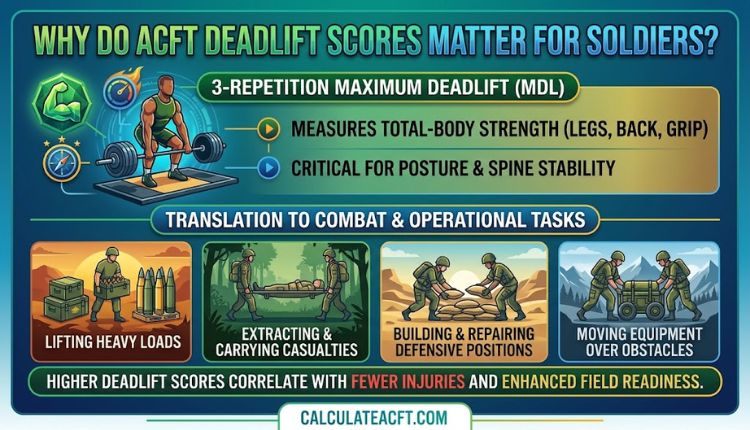
ACFT deadlift scores are important because they represent a soldier’s ability to perform physically demanding tasks. Military activities often require lifting, carrying, moving equipment, and maintaining strength in demanding situations. The deadlift measures the basics of many of these movements.
A successful deadlift requires coordination between the legs, hips, back, and core muscles. Because of this, the action provides a broad measure of functional strength rather than targeting just one muscle group.
Many soldiers use the ACFT deadlift score as a measure to improve their overall fitness. Better scores often mean improved strength, stability, and fitness.
The deadlift section also helps identify areas where additional training may be needed. Someone with strong endurance but poor lifting skills may need more resistance training, while someone with strength but poor technique may need skill improvement.
Important factors that affect deadlift performance include:
- Consistency of training
- Correct lifting technique
- Recovery habits
- Strength development
- Mental preparation
Special preparation for the deadlift can improve confidence and reduce the risk of performing poorly on test day. Soldiers who understand the importance of this event typically create better training plans and approach ACFT with a stronger mindset.
How Are ACFT Deadlift Scores Calculated During Testing?
The ACFT deadlift scores is calculated based on the amount of weight successfully lifted during the event. The test uses a three-rep max deadlift format, meaning participants attempt to lift increasing weights until they reach their best successful effort.
The scoring system varies depending on factors such as age and gender categories. Each participant earns points based on their performance against established standards. A higher weight lifted generally results in a higher score.
The deadlift requires proper execution. The lift may not count if the participant does not meet the required movement standards. Correct starting position, controlled lifting and correct completion of repetitions are required to receive credit.
Many people underestimate the importance of technology. A person may have enough strength to lift more weight, but lose points due to improper form or failed attempts.
Successful preparation includes practicing:
- Correct setting position
- Controlled movement
- Breathing technique
- Safe weight gain
Understanding how scores are calculated allows Soldiers to set realistic training goals. Instead of randomly increasing weight, they can focus on reaching the desired level while maintaining safety and consistency.
Which Factors Improve ACFT Scores Faster?
Improving your ACFT deadlift scores requires a combination of strength training, technique development, and proper recovery. Simply lifting heavy weights every day is not the best approach, as the muscles need time to adapt and recover.
Improvements in strength usually come from gradually increasing the difficulty of training. This process allows the body to get stronger without unnecessary fatigue.
The most effective improvements often come from focusing on the core movement patterns that support deadlift ability, to know more click here. Exercises that strengthen the legs, hips, and core can contribute to better performance.
Common training areas include:
- Lower body strength development
- Basic stability exercises
- Improved adhesion
- Mobility training
Nutrition and rest also affect progress. Without proper recovery, strength gains may slow and performance may decrease.
Mental preparation is another important factor. Many athletes perform below their true capabilities because they lack the confidence to attempt heavier lifts. Practicing realistic test conditions can help improve concentration.
A balanced training approach produces better long-term results than trying to increase weight too quickly.
What Training Methods Help Increase Deadlift Performance?
Training methods to improve ACFT deadlift scores should focus on building strength while maintaining proper movement patterns. A solid base allows participants to lift more efficiently and safely.
Many successful training programs include a mixture of heavy lifting days, technique training, and support exercises. The goal is not only to increase maximum power, but also to improve control.
A typical approach might involve regularly practicing deadlift movements and adding exercises that strengthen the associated muscles. Consistency is usually more important than extreme workouts.
Useful training principles include:
- Weight increases gradually
- Regular training sessions
- Proper rest between workouts
- Correct lifting form
Beginners often benefit from learning technique before attempting very heavy weights. Bad habits can be difficult to correct later.
Experienced lifters can focus more on increasing their strength levels and improving their maximum attempts. However, everyone benefits from maintaining safe training habits.
You usually get the best results by combining strength development with patience. Improving your ACFT deadlift score is a process that requires dedication and smart preparation.
Can Technique Change Your ACFT Scores?
Technique can significantly affect ACFT deadlift scores because the event relies on efficient movement. Two people with similar strength levels can achieve different results because one uses better form.
Proper technique helps transfer power from the lower body through the lifting motion. Improper placement can make the lifter heavier and more likely to fail.
Good deadlift technique involves maintaining control from the beginning of the movement until completion. Rushing or using poor posture may reduce performance.
Common technical issues include:
- Incorrect starting position
- Poor body control
- Lifting too fast
- Loss of stability
Exercising with lighter weights allows participants to improve movement patterns before testing heavier loads. Coaches or training partners can also provide useful feedback.
A technically strong lifter can often achieve better results without dramatically increasing muscle strength. This shows why preparation should include both physical preparation and skill development.
What Mistakes Lower ACFT Deadlift Scores?
Many participants struggle with ACFT deadlift scores due to avoidable mistakes. These mistakes can happen during training or the actual test.
One common problem is gaining weight too quickly. While lifting heavier can improve strength, rushing the process can lead to poor form and reduced progress.
Another mistake is ignoring recovery. Muscles get stronger during the recovery period, not just during training.
Other common problems include:
- Lack of consistent practice
- Poor lifting technique
- Without preparation for test conditions
- Poor concentration during attempts
Some participants also fail because they underestimate the importance of preparation before test day. Proper sleep, nutrition and warm-up can affect performance.
Avoiding these mistakes helps create a more reliable path to better results. A smart training approach focuses on continuous improvement rather than rapid changes.
How Can You Prepare for Better Deadlift Scores?
Preparing for a better ACFT deadlift score takes planning and consistency. Strong preparation combines strength training, technique training and regeneration habits.
The first step is to understand your current abilities. Knowing your starting point helps create realistic improvement goals.
Training should be focused on gradually increasing strength while maintaining proper movement. Participants should avoid directly comparing their progress with others, as fitness levels develop differently.
Effective preparation includes:
- Regular strength training
- Trial style lift practice
- Improved tracking
- Maintaining recovery
Self-confidence also plays a role. Familiarity with the event reduces stress and helps participants perform closer to their true abilities.
A well-prepared soldier approaches the ACFT Deadlift with both physical readiness and mental focus. The goal is not just to complete the deadlift, but to achieve a score that reflects personal improvement and fitness.
What Should You Know Before Taking the ACFT Deadlift Event?
Before taking the ACFT deadlift scores, participants should understand the requirements, scoring expectations, and the importance of preparation. Knowing what to expect can make testing easier.
The deadlift measures strength, but success depends on more than just strength. The final result is influenced by technique, confidence, and preparation.
Participants should avoid major changes in training immediately before the test. Intense last-minute workouts can reduce performance instead of improving it.
A successful approach includes:
- Exercise in advance
- After proper form
- Stay consistent
- Stay focused
The ACFT deadlift is designed to measure functional strength and readiness. With proper preparation, participants can improve their performance and achieve better results.
The Bottom Lines
The ACFT deadlift scores is an important part of assessing strength and physical fitness. This event measures more than just lifting ability as it requires proper technique, control, and preparation. Understanding the scoring system and effective training can help participants achieve better results.
Improving your deadlift performance takes time and consistency. A combination of strength development, proper form, recovery, and confidence creates the best path to success. By focusing on smart preparation rather than quick fixes, Soldiers can build the capabilities needed for stronger ACFT results.
FAQs
What is a good ACFT deadlift score?
A good ACFT deadlift score depends on official standards, category, and individual goals. A higher score usually requires more lifting capacity and consistent preparation.
How often should I train the ACFT deadlift?
The frequency of training depends on the level of experience and ability to recover, but in general, regular exercise with adequate rest is important.
Does Technique Affect ACFT Deadlift Scores?
Yes, technique can greatly affect performance as proper movement helps to complete the lifts.
Can beginners improve their deadlift scores?
Yes, beginners can improve by gradually building strength, practicing proper form, and following a structured routine.
Why isn’t my deadlift score improving?
Slow progress can occur due to inconsistent training, poor technique, insufficient recovery, or unrealistic expectations.