Can the ACFT Scale Improve Your Army Fitness Score?
Provides a structured scoring system for the Army Combat Fitness Test (ACFT) to help Soldiers understand how their performance translates into official scores. Unlike older fitness assessments, the ACFT focuses on multiple aspects of physical fitness, including strength, endurance, agility, power, and cardiovascular capacity. Understanding the ACFT scale allows Soldiers to identify strengths, address weaknesses, and create effective training plans.
Whether you’re preparing for an upcoming assessment or simply learning how military competency standards work, knowing the scoring scale is essential. This guide explains the purpose of the ACFT, how scores are calculated, events covered in the test, common challenges, training strategies, and future developments. By understanding the scale in detail, individuals can better prepare for success and achieve higher levels of fitness performance while meeting military standards and expectations.
The Army Combat Fitness Test has changed the way physical fitness is assessed in the military. At the heart of this rating system is the ACFT, a scoring framework designed to assess overall fitness through multiple performance categories. Rather than focusing on just a few exercises, the ACFT measures functional strength, endurance, speed, agility, and cardiovascular health.
For soldiers and military enthusiasts alike, understanding the scope of the ACFT is essential. The scale determines how performance in each event contributes to the overall score and whether the participant meets the required standards. Learning how the weight works can improve preparation, boost confidence, and help individuals maximize their performance. This article explores every aspect of the ACFT, including scoring methods, event requirements, training strategies, and practical tips for achieving better results.
Understanding the Purpose of the ACFT Scale
The ACFT scale was created to provide a more comprehensive assessment of physical fitness than previous military fitness assessments. Modern military operations require a combination of strength, endurance, speed, and agility. As a result, the military developed a scoring system to reflect these different physical requirements.
The primary purpose of the scale is to ensure that Soldiers have the physical capabilities needed to perform demanding tasks in a variety of environments. Instead of relying on a limited set of exercises, the ACFT assesses multiple fitness domains.
The scale also creates consistency across ratings. Each Soldier is measured using the same standards, allowing commanders and trainers to fairly and accurately evaluate readiness.
The main objectives of the ACFT include:
- Measurement of overall physical fitness
- Support for the balanced development of fitness
- Supporting military operational requirements
- Identifying strengths and weaknesses
- Supporting long-term health and resilience
By focusing on multiple components of fitness, the scale provides a more realistic representation of a soldier’s ability to perform in real-world situations.
Why the ACFT Scale Matters for Military Readiness
Military readiness is heavily dependent on physical performance. Soldiers often face situations that require strength, endurance, speed and mental toughness. The acft scale serves as a benchmark for assessing whether staff can meet these requirements.
A strong ACFT score indicates that a soldier is physically prepared for challenging environments. It also provides leaders with valuable information in assessing unit readiness and planning training programs.
Weight helps reduce gaps in fitness development. Under older testing methods, individuals could excel in a few areas while neglecting others. ACFT promotes a more balanced approach by rewarding performance in multiple categories.
Advantages of the ACFT range include:
- Improved physical fitness
- Better injury prevention
- Increased performance in operational tasks
- More accurate fitness assessment
- Greater accountability in training programs
The significance of the scale goes beyond test days. It affects daily training routines, fitness goals, and overall readiness across the military.
Events Included in the ACFT
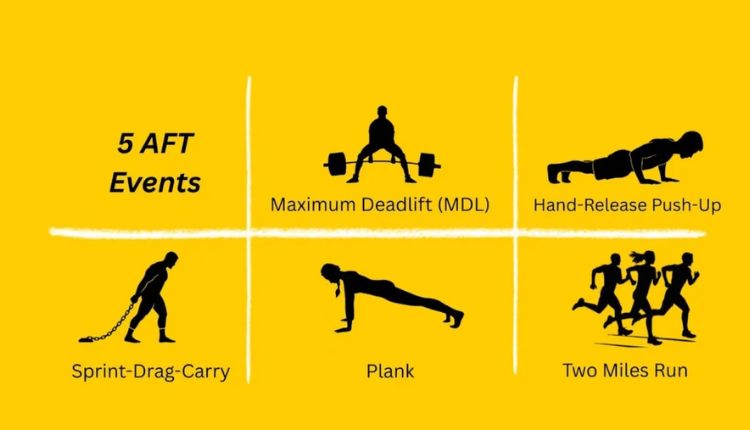
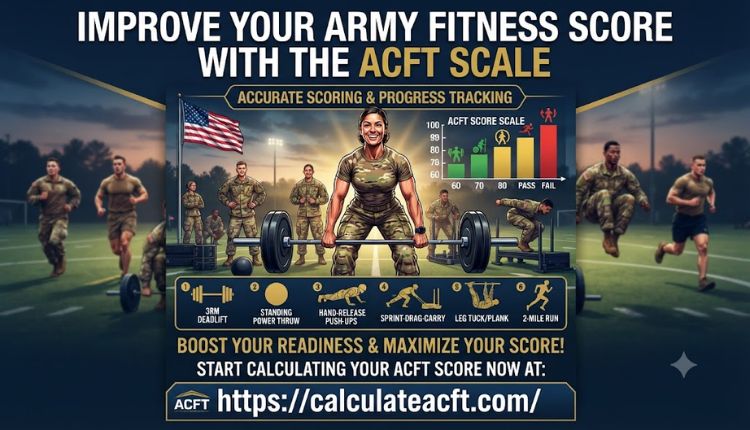
The ACFT scale is based on performance in six separate events. Each event measures a different aspect of physical fitness, providing a comprehensive assessment.
Three rep max deadlift
This event assesses lower body strength and overall strength. Participants lift the weighted bar three times using proper technique.
Standing throw
The standing throw measures explosive power. Soldiers throw the medicine ball backwards over their heads for maximum distance.
Push-Up Manual Release
This exercise assesses the muscular endurance of the upper body. Participants perform push-ups, fully releasing their hands from the ground with each repetition.
Sprint-Drag-Carry
This event combines speed, agility, strength, and endurance. Participants sprint, pull weighted sleds, carry weights, and complete lateral movements.
Plank
The board measures core strength and stability. Maintaining proper form is essential to achieving a high score.
Two-mile run
Running assesses cardiovascular endurance and stamina. Strong aerobic fitness is essential for success in this event.
Together, these six events create a balanced rating system that reflects the physical demands of military personnel.
How Scores Are Calculated on the ACFT
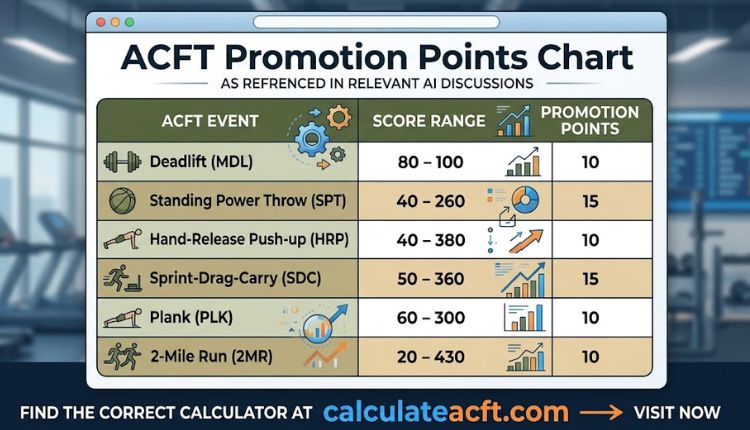
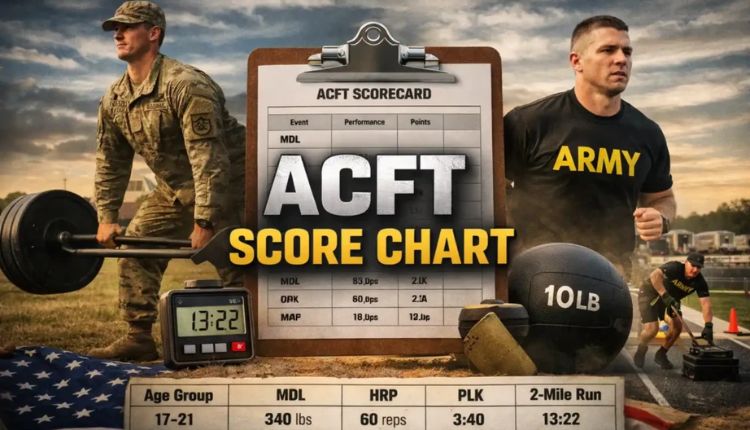
Understanding the scoring is one of the most important aspects of the acft scale, to know more visit more. Each event has its own performance standards and corresponding point values. Scores are awarded based on how well the participant performs in each category.
Participants earn points for each event, and the total adds up to their overall ACFT score. A strong performance in all six events leads to a higher final result.
Several factors affect scoring:
- Weight lifted during deadlift
- Distance covered by the pitch
- Number of cranks completed with manual release
- Time recorded in sprint-pull-carry
- Duration preserved in the board
- Time to complete a two-mile run
Since every action contributes to the final score, balanced training is essential. Focusing exclusively on one event can limit your overall performance and reduce your total points.
Understanding the benchmarks allows individuals to set realistic goals and track progress effectively.
Common Challenges When Using the ACFT
Although the ACFT scale provides a thorough assessment of aptitude, many individuals encounter difficulties in preparing for the test.
One common problem involves balancing training across all fitness categories. Improving strength may require different training methods than increasing endurance or speed.
Another challenge is maintaining proper technique. Poor form can negatively affect performance and increase the risk of injury. Consistent practice and professional guidance can help resolve these issues.
Other barriers include:
- Limited training time
- Recovery Management
- Nutritional deficiencies
- Psychological pressure before testing
- Inconsistent exercise routines
Many participants also underestimate the importance of preparing for a specific event. While general fitness is valuable, targeted training often produces better results on the ACFT.
Recognizing these problems early allows individuals to develop effective strategies and avoid common mistakes that could affect their scores.
Effective Training Strategies for Better ACFT Results
ACFT scale success requires a structured and balanced training program. Since the test assesses multiple fitness components, preparation should cover all areas rather than focusing on a single skill.
Strength training forms the basis of many ACFT events. Exercises such as deadlifts, squats, lunges and kettlebell movements help develop strength and stability.
Cardiovascular fitness is equally important. Running, interval training, and endurance training improve performance in the two-mile run and promote recovery during other events.
Helpful training strategies include:
- Progressive strength development
- Basic stability exercises
- Sprint interval training
- Mobility and flexibility of work
- Consistent endurance running
- Exercises for specific events
Restoration should also be a priority. Adequate sleep, hydration and nutrition contribute significantly to long-term performance improvement.
Individuals who follow a well-rounded training plan often experience steady progress and increased confidence when test day arrives.
Mistakes That Can Lower ACFT Performance
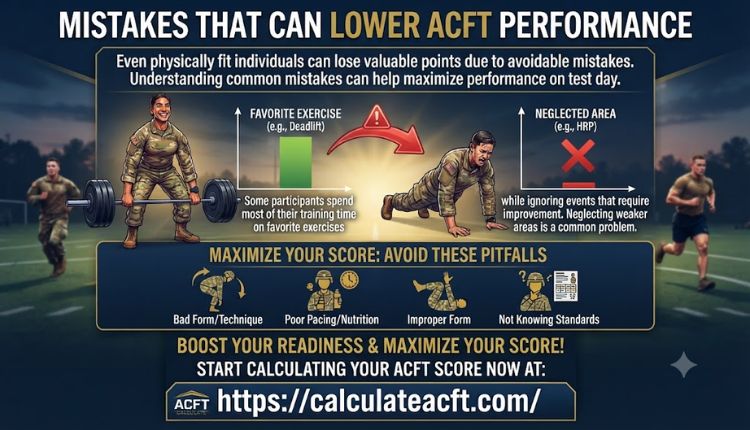
Even physically fit individuals can lose valuable points due to avoidable mistakes. Understanding common mistakes can help maximize performance on test day.
Neglecting weaker areas is a common problem. Some participants spend most of their training time on favorite exercises while ignoring events that require improvement.
Another mistake is the wrong pace. Starting too aggressively can lead to fatigue and reduced performance in later events.
Other errors include:
- Skipping warm-up routines
- Using incorrect lifting technique
- Ignoring recovery needs
- Inconsistent training plans
- Poor hydration practices
- Lack of familiarity with events
Mental preparation is also important. Anxiety and lack of self-confidence can negatively affect performance despite adequate physical preparation.
Avoiding these mistakes helps ensure that your training efforts translate into higher scores and better overall results.
What the Future Holds for the ACFT
Technology may also play a greater role in fitness assessment. Wearable devices, performance tracking systems, and digital training platforms could provide additional insight into physical fitness.
Future priorities may include:
- Enhanced injury prevention measures
- Improved performance analytics
- More personalized training recommendations
- Ongoing validation of fitness standards
- Greater integration of technology
Regardless of future modifications, the main objective of the ACFT will remain the same: to ensure that Soldiers maintain the physical capabilities necessary for mission success.
Conclusion
The acft scale plays a vital role in measuring physical fitness within the military. By evaluating strength, endurance, agility, power and cardiovascular fitness, it provides a comprehensive picture of an individual’s overall performance. Understanding how the scale works allows participants to prepare more effectively, identify areas for improvement, and achieve better results.
Success on the ACFT requires balanced training, consistent effort, proper recovery, and a clear understanding of the grading standards. Whether you’re active duty, a recruit, or someone interested in military fitness, learning the ins and outs of the ACFT can help you develop a smarter, more effective approach to physical fitness.
FAQs
What is the ACFT?
The ACFT scale is a scoring system used for the Army Combat Fitness Test that measures performance in six fitness events.
How many events are included in ACFT?
ACFT includes six events: deadlift, standing power throw, push-up with hand release, sprint-pull-up, plank, and two-mile run.
Why is the ACFT scale important?
It helps evaluate overall physical readiness and ensures that soldiers meet the fitness standards required for military operations.
Can training improve ACFT scores?
Yes. Consistent strength training, endurance training, range of motion exercises, and event-specific exercises can significantly improve scores.
Does each event affect the final ACFT score?
Yes. Each event contributes points to the overall score, so a balanced performance is important.
How often are ACFT standards revised?
Military capability standards are regularly reviewed to ensure they remain relevant, effective and aligned with operational needs.