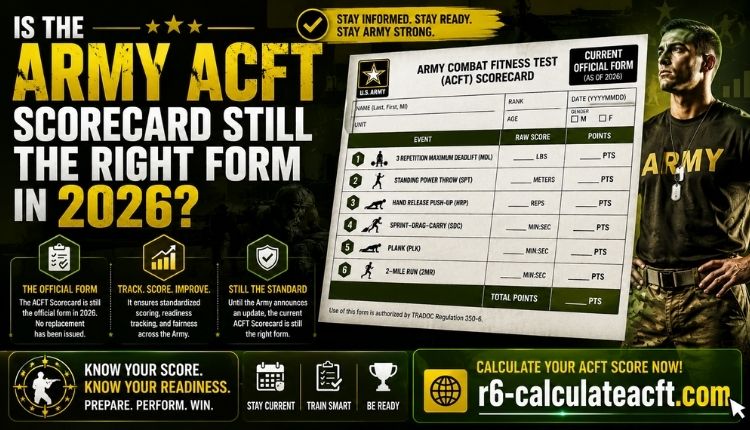
Is the Army ACFT Scorecard Still the Right Form in 2026?
If you are searching for an Army ACFT scorecard, you are usually trying to solve one of three problems: you want to know which events count, you need to understand how raw performance becomes points, or you are checking whether the old ACFT rules still apply. That confusion is understandable, because the Army has officially moved from the ACFT to the Army Fitness Test (AFT). The Army says the AFT became the official physical fitness test of record for all Soldiers on June 1, 2025, replacing the Army Combat Fitness Test. It also says combat specialties now use a sex-neutral, age-normed standard of 350 total points with at least 60 points per event, while combat enabling specialties still use sex- and age-normed scoring with a 300-point total requirement.
That means the best way to think about the Army ACFT scorecard today is this: it is still a useful search term and a useful worksheet concept, but you should read it through the lens of the current Army Fitness Test rules. In practice, the scorecard helps Soldiers and leaders track performance, convert raw results into scaled points, and see whether the test is a pass or a fail under the current standard. This article breaks down the scorecard in plain English so you can use it correctly, avoid common mistakes, and understand what actually matters on test day.
What the Scorecard Tracks
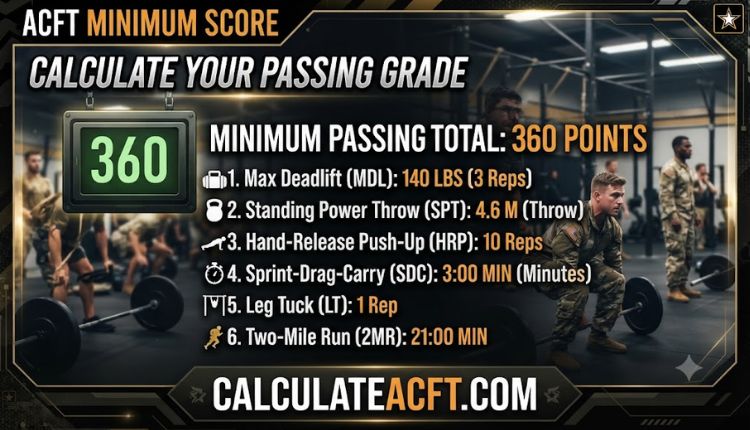
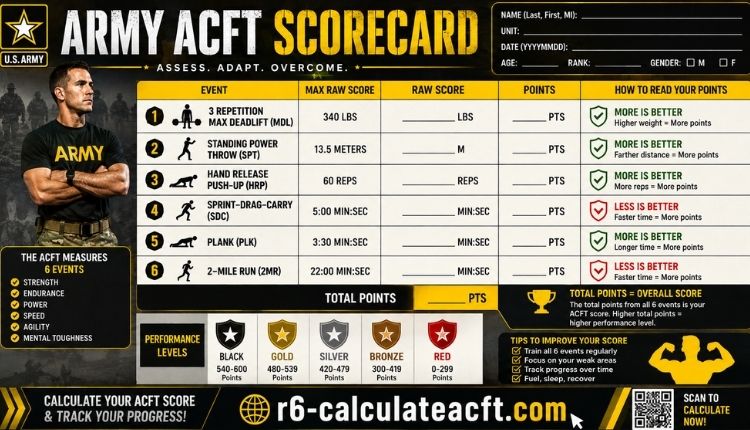
The official scorecard form lists the main test events Soldiers record on test day. Those events are the 3-repetition maximum deadlift, standing power throw, hand-release push-up, sprint-drag-carry, plank, and 2-mile run. The form also includes the alternate cardio options now shown in the Army materials: 5K row, 1K swim, 12K bike, or 2.5-mile walk. That is important because many search results still discuss the old Army ACFT scorecard layout without explaining how the Army’s current materials present the test.
Why this matters
If you are looking at an old sample scorecard, it can be easy to miss that the Army’s current fitness program has already changed. The scorecard is not just a blank form. It is the bridge between your raw performance and your official score, which is why the Army tells Soldiers to use the published score conversion tables rather than guessing their points.
How to Read the Points: Army ACFT scorecard
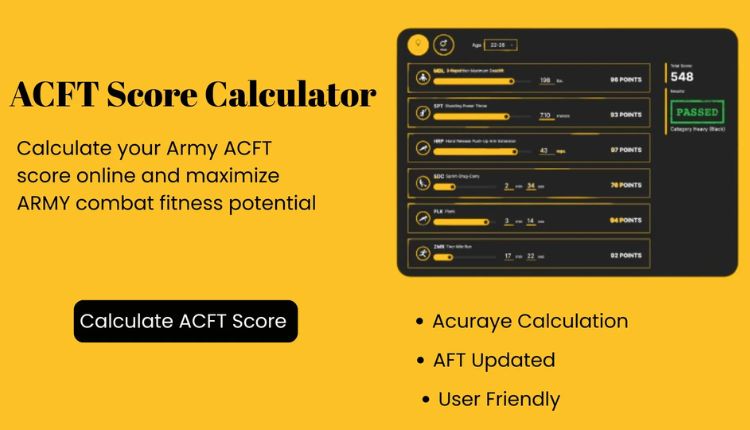
The most common mistake is confusing raw score with scaled score. Raw score is the actual result: pounds lifted, repetitions completed, distance thrown, or time run. Scaled score is the point value the Army ACFT scorecard assigns using its official conversion tables. The scorecard itself tells users to convert raw results with the Army’s event score conversion tables posted on the Army Fitness Test website.
Here is the cleanest way to interpret a scorecard:
- Record the raw result for each event.
- Convert each raw result using the official scoring table.
- Add the scaled points.
- Compare the total to the standard for your specialty category.
- Check whether each event also meets the minimum event threshold, when applicable.
That last step is critical for combat specialties. A Soldier can have a strong total score and still fail if one event drops below the required minimum. The Army’s current page is explicit: combat specialties need 350 total points and at least 60 points in every event.
Passing standards that matter
For a lot of users, this is the real reason they search for an Army ACFT scorecard. They are not just trying to fill in boxes. They want to know what “passing” actually means.
The Army’s current guidance says:
- Combat specialties: 350 total points, with at least 60 points per event.
- Combat enabling specialties: 300 total points.
The Army also states that the AFT is intended to improve readiness, reduce injury risk, and enhance physical performance across the force. On the policy page, the Army explains that the standing power throw was removed because of its technical nature and injury risk, and that RAND analysis supported that decision. That is useful context if you are comparing an older ACFT scorecard with the current AFT version.
Example that makes the rule easier to understand

Suppose a Soldier in a combat specialty scores enough points overall to reach 352, but one event falls below 60 points. Under the Army ACFT scorecard current combat standard, that Soldier would still not meet the event minimum requirement. That is why a good scorecard review is not just about the total. It is about the distribution of points across events.
Common mistakes
One common mistake is using an outdated Army ACFT scorecard mental model and assuming the rules have not changed. The Army’s official page now identifies the ACFT as the test of record, so the safest approach is to treat current Army materials as the source of truth.
Another mistake is ignoring the conversion table; to know more click here. The scorecard is not based on “looks good to me” judgment. It is based on published scoring scales, and the Army specifically instructs users to convert raw results using those tables.
A third mistake is forgetting the body composition timing note. The official scorecard states that body composition testing will not be conducted on the same day as the ACFT, and height and weight should be recorded at least seven days before or seven days after when feasible. That scheduling detail is easy to overlook, but it can create problems if you are preparing for official processing.
How to use it correctly
If you need a simple workflow, use the scorecard this way:
1) Identify which standard applies
Start by checking whether the Soldier falls under combat specialties or combat enabling specialties, because the passing requirement is different. The Army’s current page explains both standards clearly.
2) Record the raw results
Write down the actual performance for each event exactly as measured on test day. The official scorecard form is designed for that purpose.
3) Convert raw numbers to points
Use the published score conversion tables, not an estimate. The Army ACFT scorecard repeatedly points users back to those tables on the test website.
4) Check total score and event minimums
For combat specialties, both the total and each event minimum matter. For combat enabling specialties, the total score requirement is the key threshold stated on the Army page.
5) Keep the latest official form on hand
If you are filling out paperwork, use the current Army form and the current score tables rather than an old screenshot or an outdated PDF circulating online. The official materials are the Army Fitness Test scorecard and the updated score tables.
FAQs
Is the Army ACFT scorecard still used?
Yes, people still search for that term, and older forms still appear in Army materials, but the official test of record is now the Army Fitness Test. The Army says the AFT replaced the ACFT on June 1, 2025.
How many events are on the scorecard?
The scorecard form lists six main events: deadlift, standing power throw, hand-release push-up, sprint-drag-carry, plank, and two-mile run. The Army materials also show alternate cardio events for the endurance block.
What score do I need to pass?
It depends on the specialty category. The Army says combat specialties need 350 total points with at least 60 per event, while combat enabling specialties need 300 total points.
Does the standing power throw still count?
It appears on the Army ACFT scorecard, but the Army says it was removed from the AFT because of technical nature and injury risk. That is one of the clearest signs that the test has changed.
Can I use the same-day body composition process?
No. The official scorecard says body composition testing will not be conducted on the same day as the ACFT, and height/weight should be recorded seven days before or after when feasible.
Where do I get the official scoring tables?
The Army directs users to the Army Fitness Test website and the published event score conversion tables. The scorecard itself also points users to those tables.
What is the maximum score for one event?
The Army states that 120 points is still the maximum points authorized.
Conclusion
The best way to think about the Army ACFT scorecard in 2026 is simple: it is the practical worksheet people still use to understand an Army fitness test that has officially moved on to the AFT. The scorecard helps you track raw results, convert them into scaled points, and check whether you meet the correct standard for your specialty.
The biggest takeaway is that the total score is not the whole story. You also need to know which standard applies, how the points are converted, and whether event minimums matter in your category. If you keep those three things straight, the scorecard becomes much easier to use and much harder to misread.