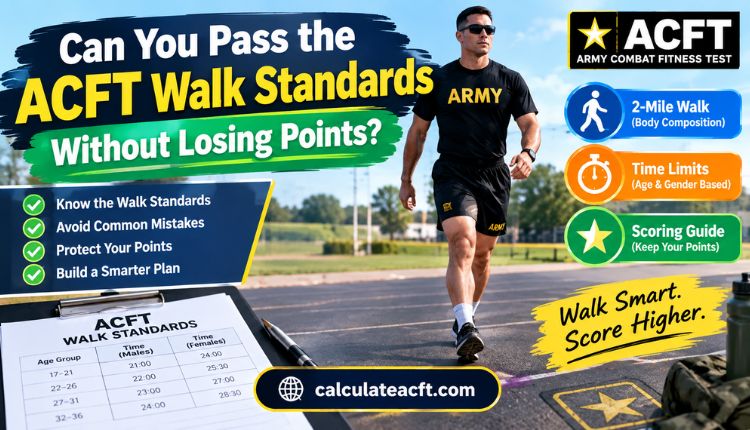
Can You Pass the ACFT Walk Standards Without Losing Points?
The ACFT walk standards are important for soldiers who are authorized to use the 2.5-mile walk as an alternate aerobic event instead of the standard two-mile run. Understanding who qualifies, how the event is administered, and the time standards can help prevent unnecessary test failures and ensure compliance with Army regulations.
Unlike the traditional run, the walk is not available to every soldier. It is designed for individuals who have an approved medical profile that permits participation in an alternate aerobic event. Because of this, many soldiers have questions about eligibility, pacing, scoring, and preparation.
This guide explains the current ACFT standards, how the event works, the official requirements, common mistakes to avoid, and practical strategies to improve your performance. Whether you are preparing for your first alternate aerobic event or reviewing Army fitness requirements, you’ll find clear, reliable information to help you approach the assessment with confidence.
Understanding the ACFT Walk Standards
The ACFT walk standards refer to the requirements for completing the Army Combat Fitness Test’s alternate aerobic event. Instead of running two miles, eligible soldiers complete a 2.5-mile power walk while following strict rules established by the Army.
The event measures cardiovascular endurance in a way that accommodates soldiers with approved medical limitations. Although it serves as an alternative, it is still a timed fitness event that requires preparation and consistent effort.
A successful performance depends on maintaining a brisk walking pace throughout the course without transitioning into a run or jog. Officials closely monitor participants to ensure they follow the required technique.
Who Can Take the ACFT Walk?
Not every soldier may choose the walk event. Participation requires authorization based on an approved medical profile.
Typically, a soldier must:
- Have an approved permanent or temporary medical profile.
- Be authorized for an alternate aerobic event.
- Meet all profile limitations established by medical personnel.
- Complete the remaining ACFT events unless otherwise directed by the profile.
Without official authorization, soldiers are generally expected to complete the standard two-mile run.
Because medical guidance can change over time, soldiers should always verify their eligibility before scheduling an ACFT walk standards.
Official Walk Requirements
The alternate walk event follows specific procedures designed to ensure fairness and consistency.
Distance
Participants complete a 2.5-mile course.
Walking Technique
The Army requires continuous walking throughout the event. Participants should maintain contact with the ground at all times. Running or jogging is not permitted.
Timing
The walk is a timed event. Soldiers must finish within the maximum authorized time established for their approved alternate event.
Course Conditions
The course should be accurately measured and safe for participants. Flat surfaces are generally preferred because they allow consistent pacing and fair testing conditions.
Event Rules and Procedures
Before the event begins, graders explain the instructions and verify each participant’s eligibility.
During the assessment:
- The timer starts when instructed.
- Soldiers maintain a fast walking pace.
- Running is not allowed.
- Officials observe technique throughout the course.
- Finish times are recorded immediately after completion.
Any violation of event procedures may affect the result.
ACFT Walk Standards at a Glance
| Requirement | Standard |
| Event Type | Alternate aerobic event |
| Distance | 2.5 miles |
| Eligible Participants | Soldiers with approved medical profiles |
| Running Allowed | No |
| Primary Goal | Complete the course within the required time using proper walking technique |
The exact time requirement depends on the soldier’s approved profile and the current Army guidance governing alternate aerobic events.
ACFT Walk vs. Two-Mile Run
Many soldiers wonder how the alternate walk compares with the standard run.
| Feature | ACFT Walk | Two-Mile Run |
| Distance | 2.5 miles | 2 miles |
| Eligibility | Medical profile required | Standard event |
| Movement | Fast walking only | Running |
| Purpose | Alternate aerobic assessment | Primary aerobic assessment |
| Technique Monitoring | High | Standard running rules |
Although some assume the walk is easier, maintaining a competitive pace for 2.5 miles without jogging can be physically demanding.
Preparing for the Walk Event
Proper preparation can make a significant difference on test day.
Build Walking Endurance
Gradually increase your walking distance over several weeks. Long walks help improve cardiovascular fitness while reducing fatigue.
Practice Race Pace
Walking comfortably is different from walking quickly. Practice maintaining a brisk pace similar to what you’ll need during the ACFT walk standards.
Improve Leg Strength
Exercises such as step-ups, lunges, squats, and calf raises support stronger walking mechanics and better endurance.
Focus on Posture
Good posture improves efficiency. Keep your head up, shoulders relaxed, and arms moving naturally to maintain momentum.
Wear Approved Footwear
Comfortable, properly fitted athletic shoes can reduce fatigue and help prevent blisters during the event.
Stay Hydrated
Hydration affects endurance and recovery; to learn more click here. Drink enough fluids before training sessions and follow Army guidance on hydration before the test.
Common Mistakes That Affect Performance
Several avoidable errors can make the walk more difficult.
One common mistake is starting too fast. Many participants begin at an unsustainable pace and slow dramatically during the final mile.
Another issue is inconsistent pacing. Frequent speed changes waste energy and make it harder to maintain momentum.
Poor walking mechanics also reduce efficiency. Short, hesitant strides and minimal arm movement often lead to slower times.
Finally, some soldiers underestimate the event because it is an alternate assessment. Regular practice remains essential for a successful performance.
Building an Effective Training Plan
Preparing for the alternate walk event requires more than simply walking a few times each week. A structured training plan helps improve endurance, speed, and consistency while reducing the risk of injury.
Four Weeks Before the Test
Focus on building a solid aerobic base. Walk three to five days each week, gradually increasing your distance until you can comfortably cover at least three miles.
Strength training should complement your walking ACFT walk standards. Exercises that target the legs, hips, and core improve stability and help maintain proper form throughout the event.
Two Weeks Before the Test
Shift your attention to pace. Instead of only covering longer distances, practice walking at the speed you expect to maintain during the assessment.
You can also include interval sessions. For example, alternate between five minutes of fast walking and two minutes of a moderate recovery pace. This improves cardiovascular endurance without requiring excessive training volume.
Final Week
Reduce training intensity to allow your body to recover. Continue walking, but keep sessions shorter and avoid exhausting workouts. Prioritize sleep, hydration, and balanced nutrition so you arrive at the test feeling refreshed.
Pacing Strategies That Help You Finish Strong
One of the biggest challenges during the ACFT walk is maintaining a consistent pace from start to finish.
Start Under Control
Many participants become overly excited at the beginning and walk faster than they can sustain. A controlled opening pace allows you to conserve energy for the second half of the course.
Monitor Your Rhythm
Instead of focusing only on speed, pay attention to your breathing and stride. A steady rhythm is easier to maintain than frequent bursts of ACFT walk standards.
Increase Your Pace Near the Finish
If you still have energy during the final half mile, gradually increase your pace. Finishing strong is often more effective than beginning too aggressively.
Techniques That Improve Walking Efficiency
Proper technique can make the walk feel easier while helping you maintain ACFT walk standards.
Maintain Good Posture
Keep your head up, shoulders relaxed, and eyes looking ahead. Avoid leaning excessively forward or backward, as this wastes energy.
Use Your Arms
Swing your arms naturally with your elbows bent. Effective arm movement helps generate momentum and supports a quicker walking cadence.
Take Efficient Strides
Avoid overstriding. Extremely long steps can reduce efficiency and place unnecessary stress on your hips and knees. Shorter, quicker strides often help maintain a faster pace.
Control Your Breathing
Develop a breathing pattern that feels comfortable throughout the event. Deep, controlled breaths improve oxygen delivery and help delay fatigue.
Nutrition and Hydration Before Test Day
Training is only part of successful preparation. Nutrition and hydration also affect performance.
The day before the assessment, eat balanced meals that include carbohydrates for energy, lean protein for recovery, and plenty of fluids to stay hydrated.
On test morning, choose a light meal that you know agrees with your stomach. Avoid trying unfamiliar foods immediately before the assessment.
Hydration should begin well before arriving at the testing location. Drinking water consistently throughout the previous day is generally more effective than consuming large amounts immediately before the event.
Common Misunderstandings About ACFT Walk Standards
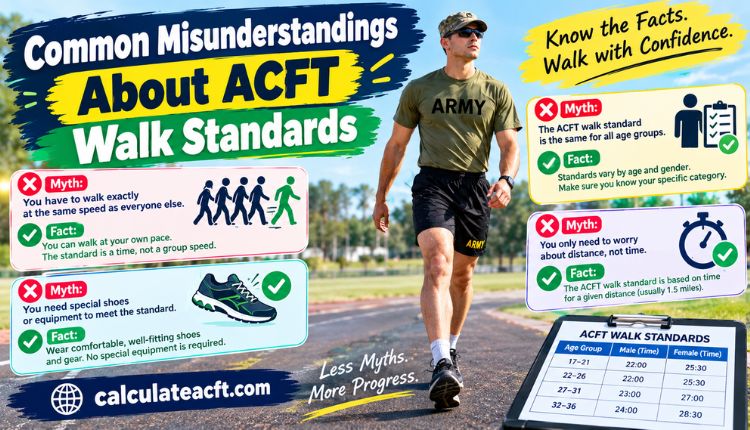
Several misconceptions can create confusion among soldiers preparing for the alternate aerobic event.
“Anyone Can Choose the Walk”
This is incorrect. The alternate walk is only available to soldiers with an approved medical profile authorizing an alternate aerobic event.
“The Walk Is Easy”
Although walking may seem less demanding than running, maintaining a brisk pace for 2.5 miles requires endurance, discipline, and preparation.
“Training Isn’t Necessary”
Some participants assume everyday walking is enough. However, practicing at a faster pace and building endurance significantly improves performance on test day.
“Only Cardio Matters”
Strong leg muscles, core stability, and good mobility all contribute to efficient walking mechanics and can make completing the event more comfortable.
Tips for Test Day
A few simple habits can improve your confidence and performance.
- Arrive early so you have time to check in and prepare.
- Complete a light warm-up before the event begins.
- Wear comfortable, approved physical training gear.
- Avoid starting faster than your planned pace.
- Stay focused on maintaining consistent effort instead of comparing yourself with other participants.
- Continue walking with proper technique all the way through the finish line.
Frequently Asked Questions
Is the ACFT walk available to every soldier?
No. It is an alternate aerobic event intended only for soldiers with an approved medical profile authorizing its ACFT walk standards.
How far is the ACFT walk?
The event covers a distance of 2.5 miles, which is longer than the standard two-mile run.
Can I jog during the walk event?
No. Participants are expected to complete the course using proper walking technique. Running or jogging is not permitted.
Should I practice only long walks?
No. Your training should include endurance walks, faster-paced sessions, strength exercises, and recovery days to build overall fitness.
Is pacing important?
Yes. Consistent pacing helps prevent early fatigue and often leads to better overall performance than starting too fast.
Where can I find the most current standards?
Always refer to the latest Army ACFT policies and your unit’s guidance, as eligibility requirements and administrative procedures may be updated over time.
Conclusion
Understanding the ACFT walk standards is essential for soldiers who are authorized to complete the alternate aerobic event. Success depends on more than simply covering the required distance—it requires proper eligibility, efficient walking technique, steady pacing, and regular preparation.
While the walk serves as an alternative to the two-mile run, it remains a structured fitness assessment with clearly defined rules and expectations. Building endurance, practicing at your target pace, and avoiding common mistakes can improve both confidence and performance on test day.
Before taking the assessment, verify your medical profile, review your unit’s current guidance, and prepare with a consistent training plan. With the right approach, you’ll be better equipped to meet the ACFT walk standards and complete the event successfully.