Is the ACFT Test Still the Army Standard?
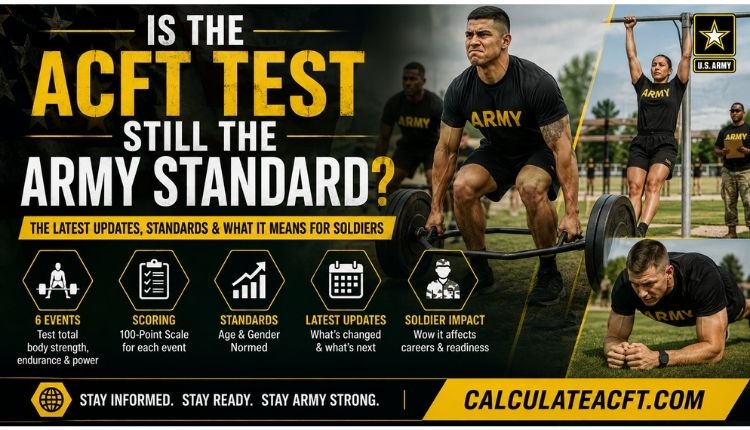
If you are searching for the ACFT test, you are usually trying to understand one of three things: what the Army fitness test includes, how it is scored, or how to prepare without training the wrong way. The important update is that the Army changed the official test of record in 2025. The Army Fitness Test (AFT) became the official physical fitness test of record on June 1, 2025, replacing the Army Combat Fitness Test (ACFT). The current test is built around battlefield readiness, with separate standards for combat and combat-enabling specialties.
That matters because a lot of older ACFT articles, score charts, and prep plans are still floating around online. Some of them are useful for background, but they are no longer current for official testing. If you are studying the ACFT test today, the smartest approach is to understand both the legacy term people still search for and the current rules the Army actually uses.
ACFT Test vs. the Current Army Standard
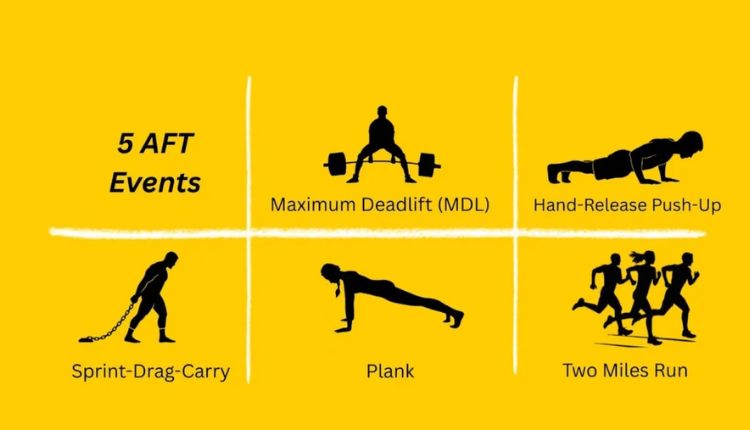
The ACFT test is now best understood as the older name people still use for the Army’s modern fitness assessment. The official current test is the AFT, and it is a five-event assessment: the three-repetition maximum deadlift, hand-release push-up arm extension, sprint-drag-carry, plank, and two-mile run. The Army says the change reflects a normal evolution in fitness standards and removes the standing power throw from the current test.
A simple way to think about it is this:
- ACFT test: the legacy search term and older six-event version many people still reference.
- AFT: the current official test of record, in place since June 1, 2025.
That distinction is useful because many searchers are not really asking about the history of the acronym. They want to know what they need to pass now, what events matter, and how much training time to spend on each event. That is the practical question this article answers.
What the Test Measures
The current Army test is designed to reflect the physical demands of military work rather than reward one narrow athletic skill. The event list covers lower-body strength, upper-body endurance, short-burst movement, trunk stability, and distance running. In other words, it is a blended assessment, not a single-lift or single-run test. That is why a balanced training plan matters more than obsessing over one event.
1) Three-Repetition Maximum Deadlift
This event measures raw strength and the ability to lift safely under load. It tends to reward disciplined technique, strong posterior-chain development, and consistent practice with loaded hinges. If a Soldier trains only cardio and ignores lifting mechanics, this event becomes a predictable weakness.
2) Hand-Release Push-Up Arm Extension
This event is about upper-body endurance and clean movement under fatigue. It is not enough to be able to do a few strong push-ups; the test rewards repeatable, standards-based execution. That is one reason many Soldiers benefit from both strength work and high-repetition endurance work.
3) Sprint-Drag-Carry
This is the most obviously military-specific event. It combines speed, changes of direction, dragging, carrying, and repeated effort under fatigue. It is also the event that quickly exposes weaknesses in grip, conditioning, and movement efficiency.
4) Plank
The plank is the current core event. It replaced older ACFT core-testing formats and is meant to assess trunk endurance in a more standardized way. Soldiers who treat core training as an afterthought usually lose time here, even if they are strong elsewhere.
5) Two-Mile Run
The two-mile run remains the endurance anchor of the test. It is the clearest sign that the Army still expects aerobic fitness, not just strength and sprint ability. Even strong Soldiers can underperform if they ignore pacing and aerobic base work.
How Scoring Works
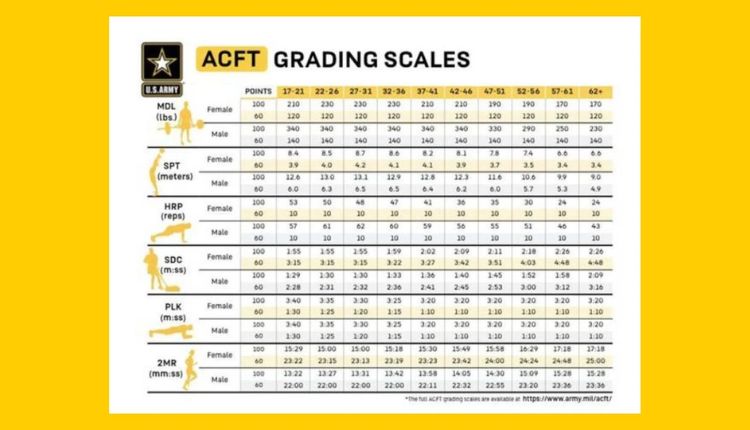
The current AFT uses two different standards depending on the Soldier’s specialty. For combat specialties, the Army uses a sex-neutral, age-normed standard with a minimum total score of 350 and at least 60 points per event. For combat-enabling specialties, the Army uses sex- and age-normed scoring with a minimum total score of 300.
That scoring structure creates an important training takeaway: passing is not just about being decent overall. You need to avoid one weak event dragging down the entire test. A Soldier with excellent strength but poor run conditioning can still fail. A fast runner with weak upper-body endurance can fail too. The test is built to punish imbalance.
The Army also says implementation of the new standards was phased, and that the combat-standard rules apply to designated combat military occupations. The Army’s guidance identifies 21 combat specialties, and it states that those standards are sex-neutral and age-normed.
How to Prepare Smarter

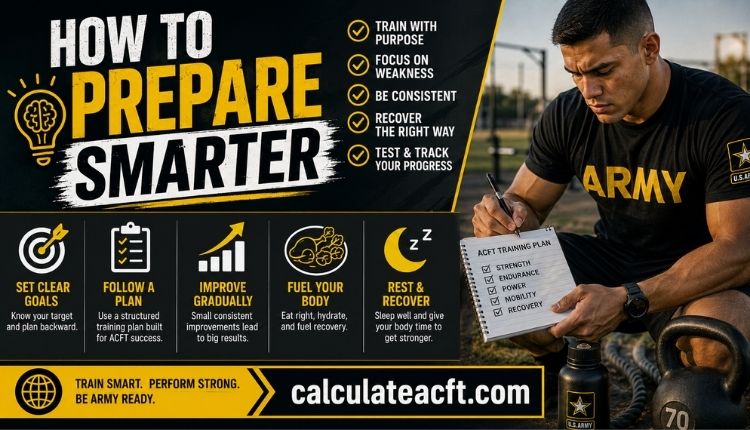
The best ACFT test prep is really general performance prep. Because the assessment combines strength, power, speed, core endurance, and running, the training plan should match that mix. A good program usually does four things well: it builds lower-body strength, improves upper-body endurance, practices sprint-and-carry work, and keeps the run from becoming an afterthought. That recommendation follows directly from the event structure.
Build the deadlift first
If the deadlift is weak, the whole test feels harder than it should. Work on safe hinge mechanics, posterior-chain strength, and progressively heavier loads. Technique matters because missed reps and sloppy setup waste energy before the test even gets difficult.
Train push-up endurance with standards in mind
The hand-release push-up is not the place to guess. Train full range of motion, strict form, and repeatable rhythm. A few perfect sets in practice are more useful than random burnout sets done with bad habits.
Add loaded movement and intervals
The sprint-drag-carry rewards people who can move fast while tired. Short intervals, sled work, carries, and change-of-direction drills are more relevant than endless steady-state cardio alone.
Keep the plank and run in rotation
Core endurance and pacing are easy to neglect until they become the weakest part of the scorecard. Planks should be trained regularly, and the two-mile run should be practiced with some combination of easy mileage, threshold work, and controlled test-pace efforts.
Common Mistakes
The biggest mistake is training only the events a Soldier likes; to know more information. That leads to a lopsided score and usually exposes the weakest area on test day. Another common mistake is relying on old ACFT prep guides that still center the standing power throw or other outdated details. The current test no longer includes that event.
A second mistake is treating the run like a separate problem that can be fixed in one week. It cannot. The two-mile run responds best to steady buildup and pacing practice, not panic training. A third mistake is skipping recovery, which often turns “hard training” into stalled progress. The ACFT test rewards readiness, not exhaustion.
Finally, many people train too little under test-like conditions. Practice matters because the Army test is a sequence, not isolated exercises. Transitions, fatigue, pacing, and movement efficiency all affect the final result.
FAQs
Is the ACFT test still used?
People still search for the ACFT test, but the Army Fitness Test is now the official test of record. The AFT replaced the ACFT on June 1, 2025.
What events are on the current Army fitness test?
The current test has five events: deadlift, hand-release push-up arm extension, sprint-drag-carry, plank, and two-mile run.
Is the standing power throw still part of the test?
No. The Army removed the standing power throw from the current test.
How many points do I need to pass?
Combat specialties require a total of 350 points, with at least 60 points per event. Combat-enabling specialties need 300 total.
Are the standards the same for everyone?
Not exactly. The Army uses sex-neutral, age-normed standards for combat specialties and sex- and age-normed scoring for combat-enabling specialties.
Can Soldiers with permanent profiles still test?
Yes, but the Army says profile rules still apply and alternate aerobic testing may be required in some cases. Soldiers with permanent profiles should follow the official Army policy for their situation.
What is the best way to train for the ACFT test?
Train across all five demands: strength, upper-body endurance, speed under load, core stability, and running pace. The most effective plan is balanced, not event-obsessed.
Conclusion
The ACFT test remains a popular search term, but the official Army standard is now the AFT. The key takeaway is simple: stop training for an outdated version of the test and start training for the current one. Focus on full-body strength, repeated-effort conditioning, core endurance, and a realistic two-mile run pace. That approach aligns with the Army’s current standards and gives a much better chance of passing with a strong score.