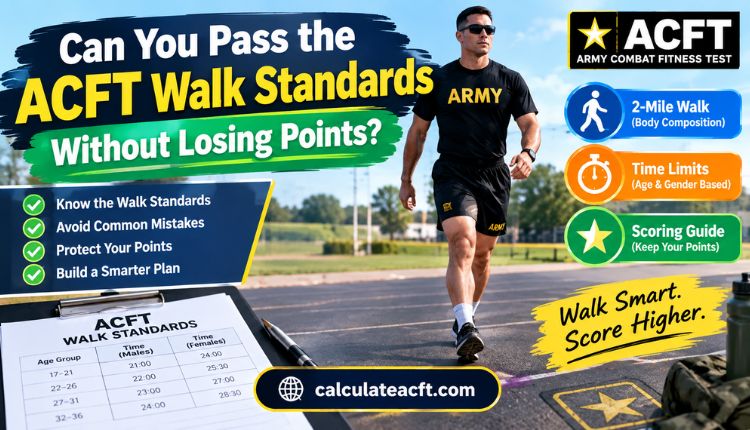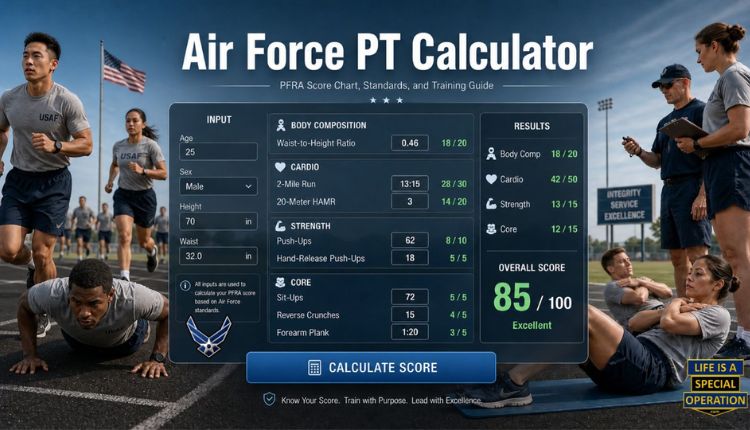
Army Physical Fitness Test Chart
It provides standardised benchmarks for push-ups, sit-ups, and running performance across different age groups and genders. Understanding the table helps candidates prepare effectively and improve their scores. This guide explains how the Army Aptitude Test works, scoring systems, updated standards, and practical tips for achieving high performance.
Whether you’re preparing to enlist or trying to improve your current score, mastering the Army Physical Fitness Test Chart can greatly increase your readiness. Learn about training strategies, common mistakes, and ways to track your progress. This comprehensive article is designed to help you understand all aspects of the test and maximize your physical potential for success.
Test Overview
The Army Physical Fitness Test Chart is a structured way to assess a soldier’s physical abilities. It is designed to ensure that each individual meets the required standards for strength, stamina, and endurance. The test typically includes three main components: push-ups, sit-ups, and timed runs.
Each of these exercises measures a specific aspect of fitness. Push-ups assess upper-body strength, sit-ups assess core strength, and running tests cardiovascular endurance. The table provides a clear scoring system to help candidates understand how well they are doing.
The importance of this test cannot be overstated. It ensures that soldiers are physically capable of handling demanding tasks in real-world situations. Without proper fitness, performance in the field can suffer significantly.
Additionally, the chart allows candidates to track progress over time. By comparing scores, individuals can identify areas of weakness and work to improve them. This makes the graph not only an evaluation tool but also a guide for continuous improvement.
Scoring System
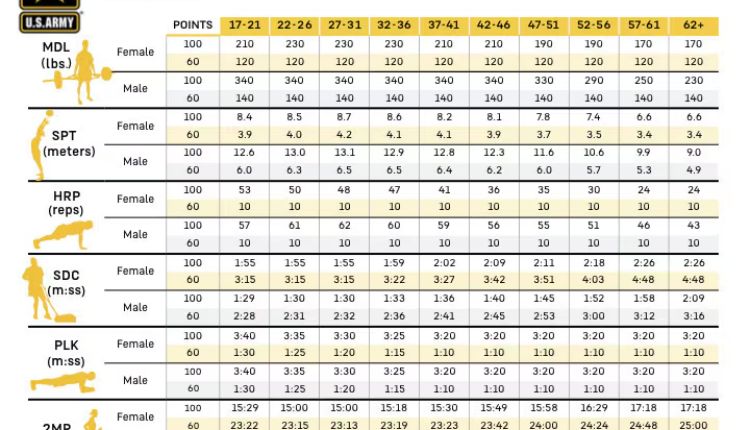
The scoring system in the Army Physical Fitness Test Chart is simple but detailed. Each exercise is assigned a score based on performance. Higher repetitions or faster running lead to better results.
Typically, scores range from 0 to 100 for each event. Candidates must achieve a minimum number of points in each category to pass the test. Failure of one event can result in an overall failure, even if other scores are high.
The scoring system is designed to be fair and balanced. It takes into account factors such as age and gender and ensures equal standards of assessment. Younger candidates may have higher requirements, while older groups have modified scales.
Key scoring points include:
- Push-ups counted within a fixed time
- Sit-ups measured in a set duration
- Running time calculated for a standard distance
Understanding the scoreboard helps candidates set realistic goals. It also motivates them to push their limits and achieve higher performance levels.
Age and Gender Standards
The Army Physical Fitness Test Chart varies by age and gender. This ensures fairness and realistic expectations for all participants. Younger individuals are generally expected to perform more repetitions and achieve faster runs.
For example, a candidate in their twenties may need to complete more push-ups than someone in their forties. Similarly, run times are adjusted to match age-related physical abilities.
Gender differences are also considered. Male and female candidates have separate scoring charts to reflect physiological differences. However, both maintain high standards to ensure overall fitness.
These variations make the test more inclusive while maintaining strict performance requirements. It allows individuals from different backgrounds to compete fairly.
Understanding these standards is key to preparation. Candidates should focus on their particular category to maximize their chances of success.
Push-Up Requirements
Push-ups are a critical part of the Army Physical Fitness Test Chart. It measures upper body strength, particularly in the chest, shoulders, and arms. Proper form is essential to ensure reps count.
Candidates must maintain a straight body line and lower themselves until the elbows form a 90-degree angle. Any deviation from proper form may result in the rep’s disqualification.
Pull-up training requires consistency and gradual improvement. Beginners can start with modified versions before progressing to full push-ups.
Effective push-up training tips include:
- Practicing daily with proper form
- Increasing repetitions gradually
- Incorporating strengthening exercises
- Maintaining proper breathing techniques
Push-ups not only improve test results but also increase overall physical strength. Mastering this exercise can significantly increase your performance on an aptitude test.
Sit-Up Standards: Army Physical Fitness Test Chart
Sit-ups are used to measure core strength and endurance. They play a vital role in the Army Physical Fitness Test Chart because a strong core is essential for overall physical stability.
Candidates must perform sit-ups within a certain time frame, usually two minutes. Proper technique involves keeping the feet locked and lifting the upper body to the desired position.
Consistency is key when training for sit-ups. Regular exercise helps build endurance and improve performance over time.
Important seating tips include:
- Proper engagement of the core muscles
- Avoid straining your neck
- Maintaining a steady rhythm
- Timed exercise
A strong core not only helps in the test but also supports other physical activities. Sit-ups contribute to better posture, balance, and injury prevention.
Running Performance
Running is the final component of the Army Physical Fitness Test Chart. It assesses cardiovascular endurance and stamina. Candidates are required to complete the specified distance within the specified time.
Running is often considered the most challenging part of the test. It requires physical and mental strength to perform well.
Training for running involves gradually building endurance. Candidates should focus on improving speed and maintaining a consistent pace.
Effective running strategies include:
- Interval training to improve speed
- Long-distance runs for endurance
- Proper hydration and nutrition
- Wearing suitable running shoes
Improving your running performance takes time and commitment. However, consistent effort can lead to significant improvements in test scores.
Training Strategies
Preparing for the Army Physical Fitness Test Chart requires a well-structured training plan. Candidates should focus on all three components of the test to achieve balanced fitness.
A good training routine includes strength training, cardio, and flexibility training. Consistency is the most important factor in achieving success.
Key training strategies include:
- Setting realistic fitness goals
- After a structured training plan
- Tracking progress regularly
Mental preparation is equally important. Staying motivated and focused can significantly improve performance.
By following a disciplined approach, candidates can improve their scores and achieve their fitness goals.
Common Mistakes: Army Physical Fitness Test Chart
Many candidates struggle with Army Physical Fitness Test Chart due to common mistakes. Identifying and avoiding these errors can significantly improve performance.
One common mistake is neglecting proper form. Incorrect push-ups or sit-ups may not count, reducing the overall score. Another problem is poor stimulation during running, which can lead to fatigue.
Other common mistakes include:
- Skipping warm-up exercises
- Overtraining without rest
- Ignoring nutrition and hydration
- Lack of consistency in training
Avoiding these mistakes requires awareness and proper planning. Candidates should focus on maintaining a balanced approach to training.
By addressing these issues, individuals can maximize their performance and achieve better results.
Conclusion
The Army Physical Fitness Test Chart is more than just a scoring system—it’s a comprehensive guide to physical readiness. Understanding its structure, scoring and requirements helps candidates prepare effectively and perform at their best.
With consistent training, proper techniques, and a disciplined approach, anyone can improve their fitness and achieve high scores. Success in the test reflects dedication, strength, and endurance, all essential qualities of a soldier.
FAQs
What is the Army Physical Fitness Test chart?
This is a scoring system used to evaluate a soldier’s fitness based on push-ups, sit-ups, and running performance.
What is the running score?
Candidates must achieve a minimum score in each competition, usually around 60 points per category.
How can I improve my score?
Regular training, proper technique, and a balanced training plan can significantly improve performance.
How often should I exercise?
For optimal results, it is recommended to exercise at least 4-5 times a week.
Is the test the same for everyone?
No, the table varies by age and gender to ensure a fair assessment.