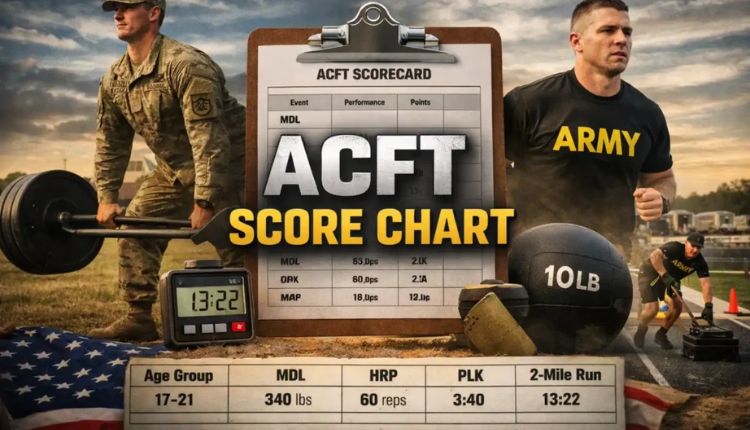
Army Combat Fitness Test Scoring
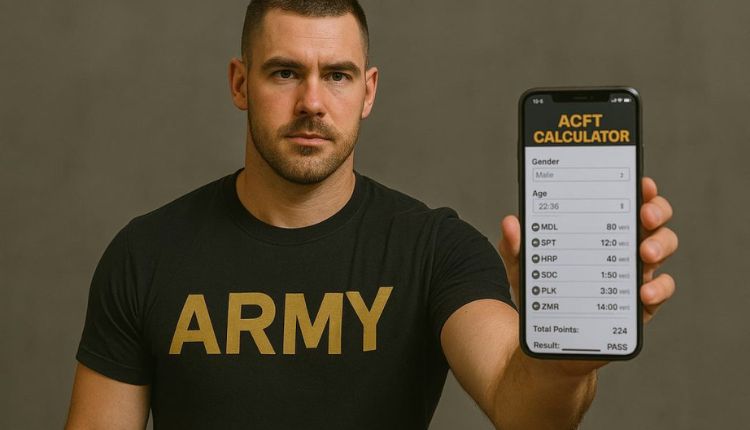
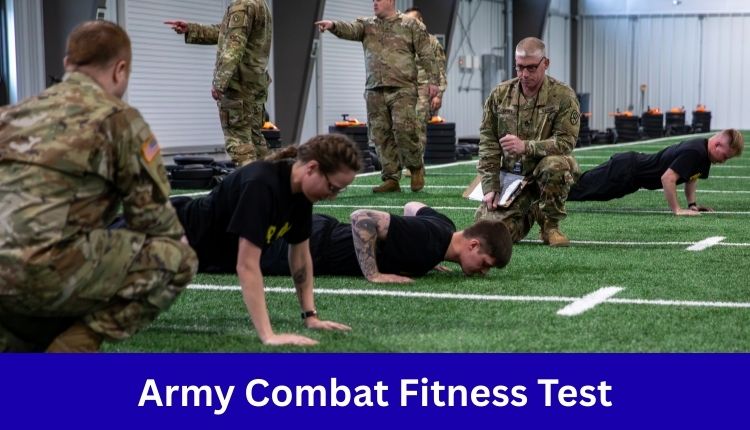
This test assesses strength, endurance, speed, agility and power through six challenging events designed to simulate actual battlefield tasks. Understanding how scoring works is essential for soldiers, trainees, and anyone preparing for military service. Each event in the test contributes to an overall score that determines whether the soldier meets the required physical standards.
This guide explains the complete structure of the Army Combat Fitness Test scoring system, including event schedules, minimum and maximum scores, age standards, and performance measures. You’ll also learn training strategies, scoreboards and tips on how to improve your results. Whether you are preparing to enlist or trying to improve your current performance, this comprehensive article provides everything you need to understand and succeed in the Army Combat Fitness Test scoring system effectively.
Overview of Army Combat Fitness Test Scoring
The Army Combat Fitness Test scoring is designed to evaluate a soldier’s physical readiness for actual combat situations. Unlike older fitness tests that focused mainly on running and push-ups, this modern system measures functional strength, explosive power and endurance. The scoring system is based on six disciplines, each of which tests a different aspect of physical fitness. Each soldier receives a performance-based score, and the total determines their fitness level.
The test is gender- and age-normed, meaning scores are adjusted depending on the soldier’s category. The goal is not just to pass, but to reach a level of combat readiness. Each discipline has a maximum score of 100 points and the total possible score is 600. Soldiers must meet the minimum requirements in each discipline to pass overall.
The scoring system ensures fairness while maintaining strict military standards. It promotes consistent training and physical readiness in the real world rather than isolated strength in the gym.
Deadlift Event Scoring System
The deadlift is the first and one of the most important events in the Army Combat Fitness Test scoring. Measures lower body and core stability. Soldiers lift a hexagonal bar loaded with weight plates, and scoring is based on how much weight they can lift with proper form.
Scoring starts at a minimum threshold and gradually increases. Higher weights lead to higher scores, up to a maximum of 100 points. Correct technique is essential, as breaking form can lower your score or result in a failed attempt.
Training for this event focuses on leg strength, back stability and grip endurance. Exercises such as squats, Romanian deadlifts and core training help improve performance. Consistent progressive overload is the key to increasing lifting capacity over time.
The deadlift event reflects actual combat needs where soldiers may need to lift heavy equipment or injured personnel. Therefore, it plays a critical role in the overall results of the Army’s combat fitness tests.
Standing Power Throw Scoring
The standing throw measures explosive power using a 10-pound medicine ball. Soldiers throw the ball backwards over their heads as far as possible. This event simulates the ability to project power in combat situations.
Scoring depends on the distance achieved. The further the throw, the higher the score, up to 100 Army Combat Fitness Test scoring. Proper technique involves using hip drive, leg strength, and full body coordination.
This action is often difficult for individuals who lack explosive strength training. Improving performance requires exercises such as kettlebell swings, box jumps, and plyometric push-ups.
Consistency in form is just as important as strength. Small adjustments in technique can greatly improve distance and results. Since this is the first explosive event in the test, it sets the tone for the overall scoring of the Army Combat Fitness Test.
Hand-Release Push-Up Scoring: Army Combat Fitness Test scoring
The hand-release push-up is designed to measure upper-body endurance and muscle strength. Unlike traditional push-ups, soldiers must lower their bodies completely to the ground and raise their arms before pushing up again.
Scoring is based on the number of correctly performed repetitions in a set time. A higher number of repetitions means a higher score, up to a maximum of 100 points.
This action requires strong chest, shoulder and triceps endurance. The workout includes standard push-ups, incline variations, and core stability exercises.
Maintaining proper form is essential visit more as incorrect movement does not count towards the score. Many soldiers lose points through fatigue and loss of equipment.
This event plays a major role in the overall fitness rating because it reflects the soldier’s ability to perform repetitive upper-body tasks during combat. Improving your repetition capacity significantly increases your overall Army Combat Fitness Test score.
Sprint-Drag-Carry Scoring Breakdown
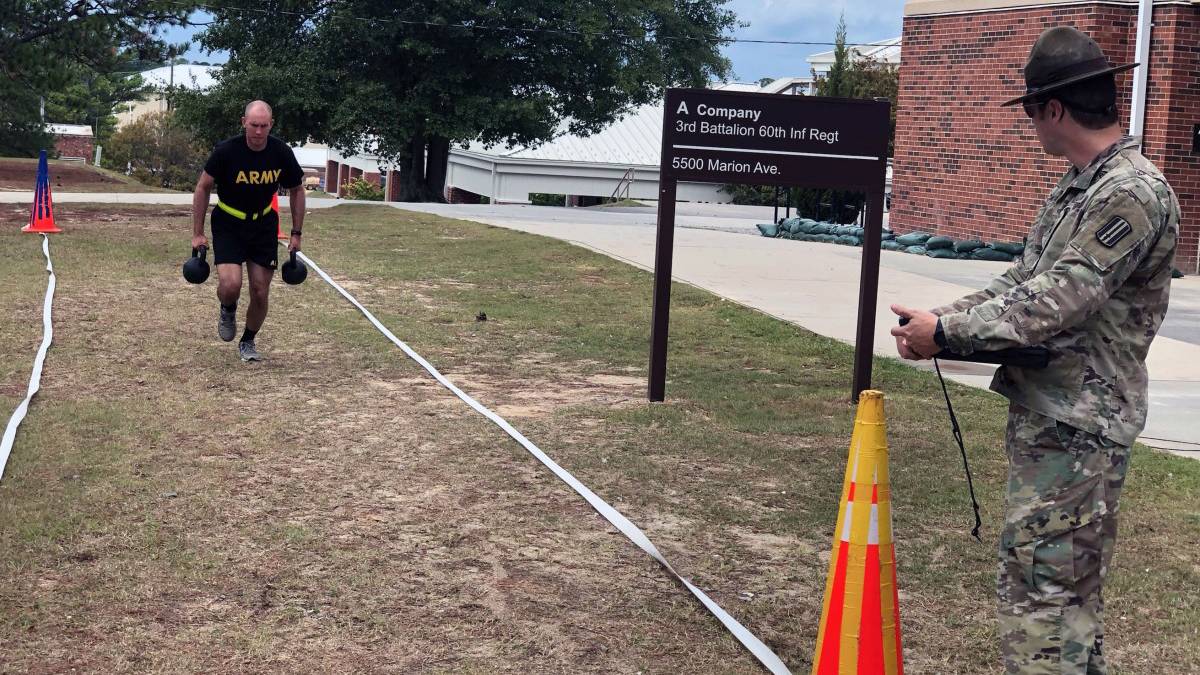
Sprint-drag-carry is one of the most physically demanding events. It tests speed, agility, strength and cardiovascular endurance. Soldiers must complete five tasks: sprint, sled pull, side shuffle, kettlebell carry, and sprint again.
Scoring is based on completing Army Combat Fitness Test scoring. Faster times result in higher scores, up to 100 points. Efficiency in transitions between movements is critical.
Training for this event requires a combination of sprint drills, resistance training and functional conditioning. Interval training and circuit training are highly effective.
Fatigue management plays a major role, as this event is usually performed after earlier tests. Proper stimulation and breathing techniques help maintain performance.
This event faithfully simulates movement on the battlefield under load, making it a key factor in the Army’s combat fitness test results.
Plank Scoring and Core Stability
The plank event measures basic endurance and stability. Soldiers must maintain the correct plank position for as long as possible.
Scoring is based on time, with longer holds resulting in higher scores of up to 100 points. The minimum time required ensures the basic strength of the Army Combat Fitness Test scoring.
Basic training is essential for this event. Exercises such as side planks, leg raises, and stability ball exercises help improve performance.
Correct posture is crucial. A straight back, active core and controlled breathing maximise stamina.
This event reflects the importance of core strength in maintaining posture, balance, and injury prevention during combat operations. A strong performance significantly improves the overall Army Combat Fitness Test score.
Two-Mile Run Army Combat Fitness Test scoring
The two-mile run is the last and most endurance-focused event. It measures cardiovascular fitness and endurance.
Scoring is based on completion time. Faster runners receive higher scores, while slower times decrease overall performance. Maximum points are awarded to elite runners.
Training includes long-distance running, interval training, and tempo runs. Consistency is key to improving speed and endurance.
Hydration, pacing, and breathing control are essential during the run. Many soldiers use structured pacing strategies to avoid early fatigue.
This event often determines final results because it comes at the end of a physically exhausting test. Strong performance in this section significantly boosts total Army Combat Fitness Test scoring.
Total Score Calculation and Standards
A total Army Combat Fitness Test scoring is calculated by summing all six event scores. The maximum possible score is 600 points. Soldiers must meet minimum requirements in each race to succeed.
Scores are categorised into performance levels such as low, medium, and high readiness. A higher score indicates better combat readiness and physical fitness.
Age and gender categories are used to ensure fairness in grading. However, all soldiers have high physical standards regardless of category.
Improving your overall score requires a balance of strength, power and endurance training. Weakness in any single event can significantly reduce overall results.
Understanding how each event contributes to overall performance is critical to maximising success on the Army Combat Fitness Test.
Conclusion
The Army Combat Fitness Test scoring system is a comprehensive assessment of a soldier’s physical readiness. It goes beyond traditional fitness testing by measuring real-world fighting abilities such as strength, endurance and explosive power. Each of the six events contributes equally to the final score, so balanced training is essential for success.
Soldiers who understand the scoring structure can better prepare and improve their performance. Consistent practice, proper technique, and disciplined training routines are the keys to achieving high scores. Ultimately, this system ensures that all soldiers are physically prepared for the demands of modern military operations.
FAQs
- What is the maximum score on the Army Combat Fitness Test?
The maximum total score is 600 points, with each of the six events worth up to 100 points.
- How many events are there in the test?
There are six events: deadlift, standing power throw, hand-release push-ups, sprint-pull-up, plank and two-mile run.
- Is there a minimum score to pass?
Yes, Soldiers must meet minimum performance standards in each event to pass the overall test.
- Which event is the hardest?
Difficulty varies, but many consider the sprint-drag-carry and two-mile runs to be the most challenging.
- How can I improve my score quickly?
Focus on balanced training, including strength, endurance, interval training and proper recovery.