Air Force Fitness Calculator
It helps individuals estimate their score based on performance in key areas such as push-ups, sit-ups, and running. This comprehensive guide explains how the calculator works, grading criteria, preparation strategies, and tips for improving results. Whether you’re about to join the Air Force Fitness Calculator or maintain required standards, understanding this calculator can greatly increase your performance and readiness.
What Is an Air Force Fitness Calculator
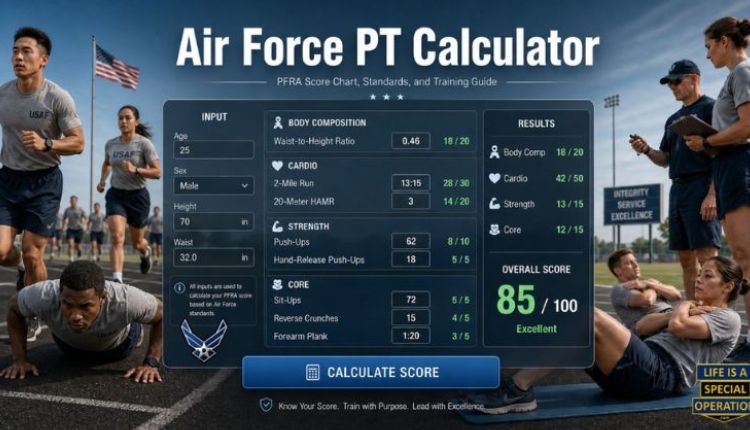
The Air Force Fitness Calculator is a digital or manual tool used to estimate a candidate’s fitness test score based on specific physical performance metrics. It is widely used by applicants, active duty personnel and fitness trainers to monitor readiness and ensure compliance with military standards.
This calculator usually takes into account multiple components such as aerobic capacity, muscle strength and endurance. By inputting values such as run time, number of push-ups and sit-ups completed within a set time, users receive an estimated score that reflects their fitness level.
The importance of this tool lies in its ability to provide immediate feedback. Instead of waiting for official test results, individuals can adjust their training strategies in real time. It also promotes accountability and helps users set measurable fitness goals.
Additionally, the calculator aligns with official Air Force scoring systems, making it a reliable reference for preparation. Whether used daily or weekly, it offers valuable insight into progress and areas for improvement.
How the Air Force Fitness Test Works
The Air Force Aptitude Test is designed to evaluate overall physical fitness through a structured assessment. It usually includes three main components: cardiovascular endurance, muscular strength, and body composition.
The most common aerobic test is a timed run, usually 1.5 miles. It measures cardiovascular efficiency and endurance. Faster completion times result in higher scores, highlighting the importance of endurance training.
Muscular strength is assessed using push-ups and sit-ups performed within a one-minute time frame. These exercises test the strength of the upper body and core, which are crucial for operational tasks.
Body composition is often measured using waist circumference or body fat percentage. Maintaining a healthy range is essential because excess fat can affect performance and overall health.

Each component is assigned a certain score and the total determines whether the candidate passes or fails. The Air Force Fitness Calculator simplifies this process by combining all inputs into a single score, helping users instantly understand where they stand.
Key Components Measured by the Calculator
The Air Force Fitness Calculator focuses on several critical performance indicators that reflect an individual’s physical readiness. Understanding these components is essential for accurate score prediction.
The first major component is runtime. Measures aerobic capacity and endurance. Running faster increases your overall score significantly, making it one of the most influential factors.
The second component is the handles. It assesses the strength of the upper body, especially in the chest, shoulders and triceps. Completing a higher number within the time limit increases the score.
Sit-ups assess basic strength and endurance. A strong core promotes better posture, stability and overall physical performance, which positively contributes to the final score.
Some calculators also include age and gender as variables. These factors adjust the assessment standards to ensure fairness and accuracy across different groups.
By combining these elements, the calculator provides a comprehensive evaluation. This helps users identify strengths and weaknesses and enables targeted improvements to their fitness routine.
Benefits of Using an Air Force Fitness Calculator
Using the Air Force Fitness Calculator offers a number of benefits for both beginners and experienced individuals. It serves as a powerful tool for tracking progress and optimising performance.
One of the main advantages is convenience. Users can quickly enter their data and get instant results without complex calculations. This saves time and effort during training.
Another advantage is accuracy. The calculator follows official scoring guidelines and ensures reliable results. This allows users to confidently assess their readiness.
It also increases motivation. Seeing measurable improvements in scores encourages consistency and dedication. Individuals are more likely to stay committed to their fitness goals.
In addition, the calculator helps in setting goals. Users can determine the score they need to achieve and plan their workouts accordingly. This structured approach leads to better results.
Overall, it acts as a monitoring and planning tool, making it an essential resource for anyone preparing for an Air Force capability assessment.
How to Improve Your Fitness Score
Improving your score on the Air Force Fitness Calculator requires a strategic approach to training. Consistency, proper technique and balanced exercise are key factors.
Start by focusing on cardiovascular endurance. Incorporate jogging several times a week, gradually increasing the distance and speed. Interval training can also increase performance.
Equally important is strength training. Regular push-ups and sit-ups help build muscle endurance. Maintaining proper form ensures maximum efficiency and reduces the risk of injury.
Flexibility and recovery should not be overlooked. Stretching exercises and rest days allow muscles to recover and improve performance during tests.
Here are some effective strategies:
- Follow a structured exercise plan
- Monitor progress regularly
- Maintain a balanced diet
- Stay hydrated
- Get enough sleep
By combining these habits, individuals can continually improve their performance and achieve higher scores on the calculator.
Common Mistakes to Avoid
When preparing for a fitness test, many individuals make mistakes that can negatively affect their scores. Being aware of these pitfalls is critical to success.
One of the common mistakes is neglecting to warm up properly. Jumping into intense workouts without preparation can lead to injury and reduced performance.
Another problem is inconsistent training. Skipping exercise or lack of routine hinders steady progress and affects overall fitness levels.
Poor technique in push-ups and sit-ups is also a common problem. Improper form reduces efficiency and can lead to lower scores despite effort.
Another problem is overtraining. Excessive exercise without adequate rest can cause fatigue over time and reduce performance.
Eating habits also play an important role. Eating unhealthy foods or lacking nutrients can limit energy levels and recovery.
Tips for Accurate Calculator Results
To get the most reliable results from the Air Force Fitness Calculator, it’s important to use accurate and consistent data. Small input errors can lead to misleading scores.
Always measure your running time accurately with a stopwatch or fitness tracker. Estimates can distort the final result.
Carefully count push-ups and sit-ups. Help from a partner or coach can improve accuracy and ensure proper form.
Use the same test conditions each time. Performing exercises on different surfaces or environments can affect performance and results.
Update your inputs regularly. Frequent testing allows you to monitor progress and make necessary adjustments to your training plan.
In addition, make sure you use the calculator in accordance with official standards. This ensures that your estimated score reflects the actual test criteria.
By following these tips, users can rely on the calculator as a reliable tool for tracking fitness progress.
Why the Calculator Matters for Air Force Preparation
The Air Force Fitness Calculator visit more plays a vital role in preparing individuals for military service. It bridges the gap between training and actual test performance.
One of the main reasons this is important is that it provides clarity. Candidates know exactly where they are and what improvements are needed to meet the requirements.
It also reduces uncertainty. Instead of guessing performance levels, users have a specific score to help them prepare.
The calculator promotes discipline. Regular testing and monitoring support the structured approach to fitness that is essential to military readiness.
In addition, it helps prevent last-minute surprises. By consistently tracking progress, individuals can ensure that they are meeting or exceeding the required standards before the official test.
Ultimately, the calculator is more than just a tool—it’s a strategic resource that improves preparation and increases the likelihood of success on the Air Force Aptitude Test.
Conclusion
The Air Force Fitness Calculator is an invaluable tool for anyone striving to meet or exceed Air Force physical standards. It simplifies complex scoring systems, provides instant feedback and helps users effectively track their progress. By understanding how the calculator works and focusing on key fitness components, individuals can improve their performance and achieve their goals.
Consistent training, proper technique, and accurate data entry are essential to maximize results. Avoiding common mistakes and following proven strategies further increases success. Whether you’re preparing to enlist or staying fit, the Air Force Fitness Calculator offers the guidance and motivation you need to excel.
FAQs
What is the air force fitness calculator for?
It is used to estimate fitness test scores based on performance in running, push-ups, sit-ups and other criteria.
Is the calculator accurate?
Yes, as long as official Air Force scoring guidelines are followed and accurate data is entered.
How often should I use the calculator?
You can use it weekly or post-workout to track progress and adjust training plans.
Can beginners use the calculator
It’s definitely helpful for all fitness levels to understand current performance and set goals.
Does age affect the score
Yes, most calculators adjust the score based on age and gender to make it fair.
What is a good score
A passing score usually meets the minimum requirements, while a higher score indicates an excellent level of fitness.