APFT Chart
It helps determine a soldier’s performance based on three core exercises: push-ups, sit-ups, and a two-mile run. Understanding the APFT chart is crucial for anyone preparing for military fitness tests, as it outlines age-based and gender-specific scoring standards.
This comprehensive guide explains how the APFT works, how scores are calculated, and what it takes to achieve a high rating. Whether you are a recruit, active soldier, or fitness enthusiast, mastering the APFT can significantly improve your performance and readiness. In this article, you will find detailed explanations, training strategies, scoring breakdowns, and frequently asked questions to help you succeed in the APFT exam and maintain peak physical condition.
Introduction to the APFT Chart
The APFT chart is a structured scoring system designed to measure the physical readiness of soldiers. It evaluates strength, endurance, and cardiovascular fitness through three standardised exercises. These include push-ups, sit-ups, and a timed two-mile run. Each of these components contributes to an overall score that determines whether a soldier meets the required fitness standards.
The importance of the APFT goes beyond simple evaluation. It ensures that all personnel maintain a consistent level of fitness necessary for military operations. By categorising scores based on age and gender, the chart provides a fair and balanced assessment for individuals across different groups. This allows for accurate measurement of performance without bias.
Another key aspect of the APFT is its role in career progression. Soldiers who achieve higher scores often gain better opportunities for promotions and leadership roles. Therefore, understanding how the chart works is not just about passing the test but also about excelling in a military career.
Additionally, the APFT helps individuals track their progress over time. By comparing scores from previous tests, soldiers can identify areas that need improvement and adjust their training routines accordingly. This makes the chart an effective tool for continuous development and goal setting.
Structure of the APFT
The APFT chart is divided into three main sections, each representing a specific exercise. These sections include push-ups, sit-ups, and the two-mile run. Each exercise is scored separately, and the scores are then combined to produce a total score.
Push-ups are designed to measure upper-body strength and endurance. The number of correct repetitions performed within two minutes determines the score. Sit-ups, on the other hand, focus on core strength and stamina. Like push-ups, they are also timed for two minutes.
The two-mile run is the final component of the APFT. It measures cardiovascular endurance and overall stamina. The time taken to complete the run is converted into a score based on predefined standards. Faster times result in higher scores.
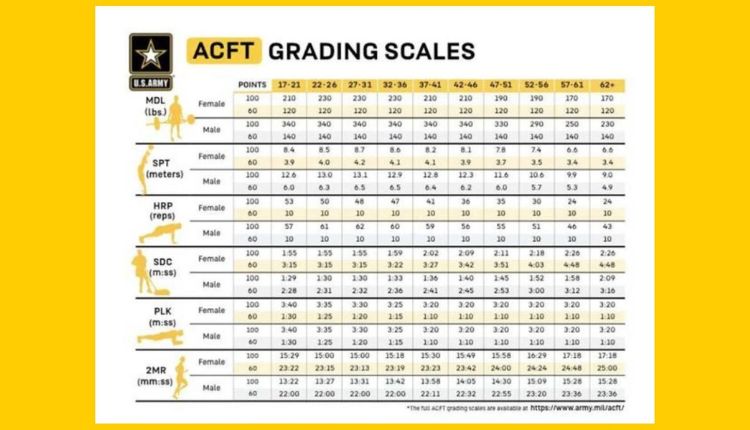
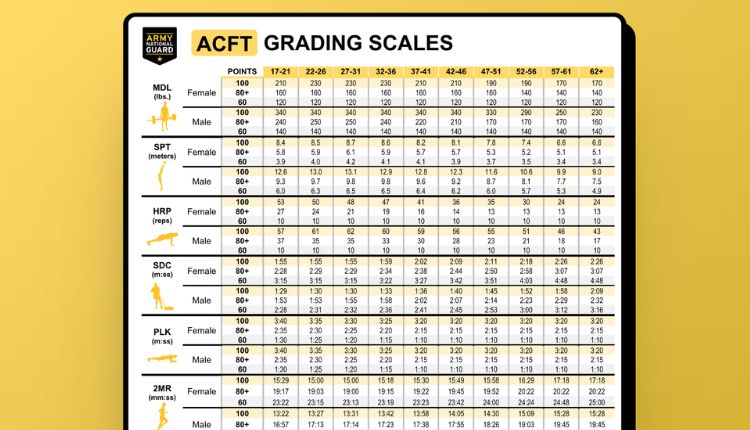
Each section of the APFT has a maximum score of 100 points, making the total possible score 300. To pass the test, a minimum score is required in each event, as well as an overall passing score. This ensures that individuals are well-rounded in all aspects of fitness.
The chart also includes different scoring scales based on age groups. Younger individuals are expected to perform at a higher level, while older age groups have adjusted standards. This ensures fairness and realism in the evaluation process.
How APFT Scoring Works
Understanding how scoring works in the APFT chart is crucial for achieving a good result. Each exercise has its own scoring criteria, which are clearly defined in the chart. These criteria specify the number of repetitions or time required to achieve a particular score.
For push-ups and sit-ups, the scoring is based on the number of correct repetitions completed within two minutes. The more repetitions performed, the higher the score. However, there is a minimum requirement that must be met to pass each event.
The two-mile run is scored differently. Instead of counting repetitions, it measures the time taken to complete the distance. The faster the run, the higher the score. There are also minimum time standards that must be met to pass.
One important aspect of the APFT is that failing one event can result in failing the entire test. This means that individuals must perform well in all three exercises, not just one or two. Consistency across all events is key to success.
Another factor to consider is the total score. While passing requires meeting minimum standards, achieving a high total score can open up opportunities for advancement. Therefore, aiming for excellence rather than just passing is highly recommended.
Age and Gender Standards in the APFT
The APFT chart is designed to be fair and inclusive by incorporating age and gender-specific standards. These standards ensure that individuals are evaluated based on realistic expectations for their demographic group.
Age plays a significant role in determining scoring requirements. Younger individuals typically have higher performance expectations, while older individuals have slightly relaxed standards. This accounts for natural changes in physical ability over time.
Gender differences are also considered in the APFT. Men and women have separate scoring tables that reflect physiological differences. This ensures that the test remains fair and achievable for everyone.
These variations in standards do not mean that the test is easier for certain groups. Instead, they ensure that all participants are evaluated on a level playing field. The goal is to measure fitness accurately rather than impose unrealistic expectations.
Understanding these standards is essential for effective preparation. By knowing the specific requirements for their age and gender group, individuals can tailor their training programmes to meet those standards.
Benefits of Using the APFT Chart
The APFT chart offers several benefits beyond simply measuring fitness levels. One of the main advantages is its ability to provide a clear and standardised assessment. This ensures consistency across all evaluations.
Another benefit is its role in motivation. By setting clear benchmarks, the APFT encourages individuals to push themselves and achieve higher scores. This can lead to improved overall fitness and better performance in daily activities.
The chart also promotes accountability. Regular testing ensures that individuals maintain their fitness levels over time. This is particularly important in environments where physical readiness is critical.
Additionally, the APFT helps identify strengths and weaknesses. By analysing scores in each event, individuals can focus on areas that need improvement. This targeted approach leads to more effective training.
Training Tips for Improving APFT Scores
Improving performance on the APFT chart requires a versatile training approach. Focusing on all three components of the test is critical to achieving a high score.
Strength training exercises such as bench presses and triceps dips can be beneficial for pull-ups. Practising proper form is also important to ensure the reps count.
Sit-ups require strong core muscles. Incorporating exercises such as planks and leg raises into your training routine can help improve performance. Consistency is key in building core strength.
Running performance can be improved by combining endurance and speed training. Long runs help build endurance, while interval training improves speed and efficiency.
Rest and regeneration are equally important. Overtraining can lead to injury and reduced performance. Getting enough rest allows the body to recover and perform at its best.
Nutrition also plays a vital role. A balanced diet provides the energy needed for training and helps maintain overall health.
Common Mistakes to Avoid in the APFT
Many individuals make mistakes when preparing for the APFT chart, which can negatively affect their performance. One common mistake is neglecting one of the three events. Focusing too much on one exercise can lead to poor results on others.
Another mistake is inappropriate form. Incorrect push-ups or sit-ups may not be counted, reducing the total score. Practising proper technique is essential for maximum performance.
Another problem is the lack of consistency in training. Irregular exercise can hinder progress and make it difficult to meet the required standards. A structured training plan is essential for success.
Some individuals also underestimate the importance of running two miles. Cardiovascular endurance is a significant component of the test and neglecting it can lead to failure.
Finally, poor time management during a test can affect performance. Effective pacing is important to the successful completion of each action.
How to Use the APFT Chart Effectively
Effective use of the APFT chart involves more than just checking scores. It requires a strategic approach to training and assessment.
One way to use a chart is as a comparison tool. By comparing current scores with previous results, individuals can track their progress and identify trends.
The chart can also be used to set realistic goals. Understanding the scoring system allows individuals to determine what is needed to achieve the desired score.
Another effective use is when planning training. By analysing weak areas, individuals can focus their efforts on improving specific aspects of their fitness.
Regular practice tests are also beneficial. Simulating real test conditions helps build confidence and familiarity with the process.
Finally, being informed of APFT updates ensures that individuals are always prepared for the latest standards.
Wrapping It Up
The APFT chart is an essential tool for measuring and improving physical fitness. It provides a structured and fair system for evaluating strength, endurance and cardiovascular performance. By understanding how the chart works and implementing effective training strategies, individuals can achieve their fitness goals and excel in their performance.
Consistency, proper technique and a balanced approach to training are the keys to success. Whether you’re preparing for a test or trying to improve your overall fitness, the APFT serves as a valuable guide.
FAQs
What is the APFT for?
The APFT is used to measure physical fitness levels based on push-ups, sit-ups, and two-mile runs.
What is a passing score on the APFT?
A passing score usually requires meeting minimum standards in each event and achieving an overall score.
How can I improve my APFT score?
Consistent training, proper technique, and a balanced fitness routine can help improve scores.
Does age affect APFT scores?
Yes, the APFT contains age-based standards to ensure fair grading.
Is the two-mile run mandatory?
Yes, it is one of the three required components of the APFT test.