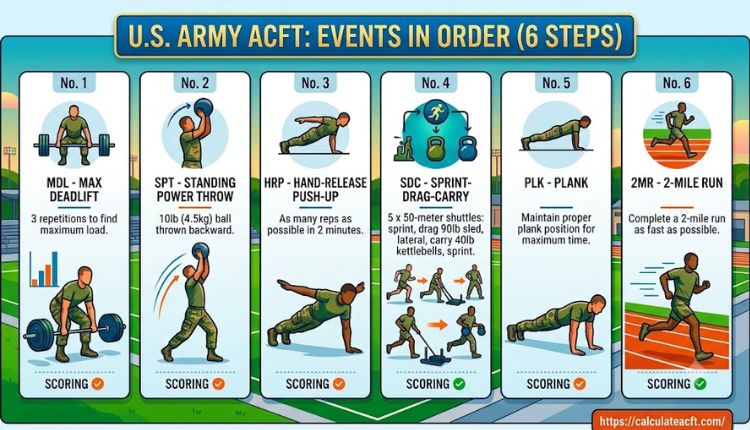
ACFT Events in Order
This test includes six challenging actions designed to evaluate overall physical readiness for combat situations. In this comprehensive guide, you’ll learn every ACFT events in order action in sequence, including the deadlift, standing lunge, hand-release push-up, sprint-pull-up, plank hold, and 2-mile run.
Each section explains how the action works, what muscles it targets, the basics of scoring, and training tips to improve performance. Whether you’re preparing for enlistment, active duty, or simply improving your fitness, this article breaks it down step-by-step. You’ll also find helpful training strategies, common mistakes to avoid, scoring statistics, and FAQs to help you master the ACFT effectively and confidently.
Overview of ACFT Events in Order and Test Structure
The sequenced ACFT events in order are designed to evaluate a soldier’s full-body physical capabilities under realistic combat conditions. The Army Combat Fitness Test replaced the older APFT to better reflect the demands of the modern battlefield. Instead of focusing only on push-ups and running, the ACFT includes six different events that test strength, power, muscular endurance, agility, and cardiovascular fitness.
The correct ACFT events in order are:
- Three-Rep Maximum Deadlift (MDL).
- Standing Throw (SPT)
- Hand Release Push-Up (HRP)
- Sprint-Drag-Carry (SDC)
- Holding a plank
- Two-mile run
Each event is scored individually and the total score determines overall fitness. Soldiers must train in multiple areas of fitness because each event focuses on different physical abilities. For example, strength is tested in a throw, while endurance is measured in a run. Understanding this order is important because fatigue management plays a major role during performance. The sequence is also structured to move from strength-based tasks to endurance-based challenges.
Three-Repetition Maximum Deadlift (MDL)
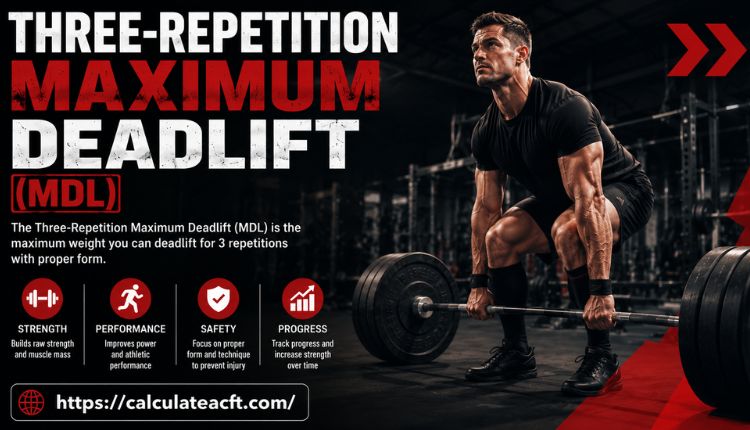
The first event in the ACFT events in order is the three-rep max deadlift. This exercise measures lower body strength and the strength of the posterior chain, including the hamstrings, glutes, and back muscles. Soldiers lift a hex bar loaded with weight plates and perform three controlled repetitions.
Proper form is critical to avoid injury and maximize your score. The back must remain straight, and the power should come mainly from the legs. Breath control also plays a big role in lifting stability. The weight increases depending on the soldier’s abilities, making it a progressive test of strength.
Training for this event includes traditional strength exercises such as squats, Romanian deadlifts, and hip thrusts. Grip strength also becomes important as heavier loads require firm control over the bar.
Common mistakes include rounding the back, rushing repetitions, or not engaging the core. Mastering the technique often leads to a significant improvement in scores.
Key focus of training:
- Lower body strength development
- Core stability
- Grip strength
Standing Power Throw (SPT)
The second event in the ACFT events in order is the standing throw, which measures explosive power. In this case, soldiers throw a 10-pound medicine ball backwards over their heads for maximum distance.
This movement assesses full-body coordination, especially hip drive, core explosiveness, and upper-body strength. It is one of the most technical events, as timing and body mechanics greatly affect the results.
Proper execution involves bending the knees, engaging the core, and using powerful hip extension to hit the ball, know more click here. Athletes often train using kettlebell swings, box jumps and overhead medicine ball throws to improve performance.
This event rewards explosive movement rather than endurance. Many soldiers underestimate the technique, which leads to a decrease in throw distance.
Main areas of interest include:
- Explosive hip movement
- Core energy production
- Upper body coordination
Improving the technique in this case can significantly increase the overall performance of ACFT.
Hand-Release Push-Up (HRP)
The third event in ACFT events in order is the Hand-Release Push-Up. This test measures the muscular endurance of the upper body, especially the chest, shoulders and triceps.
Unlike traditional push-ups, soldiers must lower their body completely to the ground, momentarily raise their arms, and then push back up. This ensures full range of motion and eliminates partial repetitions.
Stimulation is extremely important because fatigue builds up quickly. Soldiers must maintain a consistent rhythm while keeping the core tight to avoid sagging hips.
Training methods include standard push-ups, incline push-ups, and triceps strengthening exercises. Endurance training also plays a key role in increasing repetition capacity.
Common mistakes include:
- It doesn’t quite touch the ground
- Loss of core alignment
- Too fast a start and premature burnout
- Bullet Focus Points:
- Full upper body endurance
- Controlled breathing
- The right consistency of the mold
Sprint-Drag-Carry (SDC): ACFT events in order
The fourth event in ACFT events in order is the Sprint-Drag-Carry. It is one of the most physically demanding events as it combines speed, strength and endurance in one continuous sequence.
The test includes five components: a sprint, a weighted sled pull, a side shuffle, a kettlebell carry, and another sprint. Each segment challenges different muscle groups and energy systems.
This event simulates movement on the battlefield under load, making it highly functional for combat readiness. Soldiers must maintain speed while managing fatigue, especially when pulling and carrying.
Training includes agility drills, sled presses, interval running, and farm carry. Fitness plays a vital role as cardiovascular fatigue often limits performance.
Key challenges:
- Grip fatigue when carrying
- Leg exhaustion during sprints
- Coordination during changes of direction
Success depends on pace, technique and mental toughness.
Plank Hold (Core Strength Event)
The fifth event in the ACFT events in order is the Plank Hold, which replaced the older leg pull test. This event assesses basic endurance and spinal stability, both essential for combat readiness.
Soldiers must hold the correct plank position for as long as possible while maintaining proper form. The body must remain straight and the elbows must be placed directly under the shoulders.
Unlike dynamic exercises, these are isometric holds, which means endurance is measured in time, not repetitions. Core fatigue is the main limiting factor.
Training strategies include front planks, side planks, and stability exercises like dead bugs and hollow holds. Consistency is more important than intensity in building endurance.
Important points:
- Maintain neutral spinal alignment
- Avoid hip flexion
- Focus on steady breathing
This event plays a key role in the overall performance of the ACFT.
Two-Mile Run (Endurance Test)
The last event in the ACFT events in order, which measures cardiovascular endurance and stamina. After completing strength and power tasks, soldiers must still perform at a high aerobic level.
This event is often the most challenging as fatigue from earlier events affects performance. Getting the pace right is essential to avoid burning out in the first mile.
Training includes long-distance running, interval sprints, and tempo runs. Building aerobic capacity improves overall recovery even between events.
The run is scored based on time of completion, with faster times earning higher scores. Mental toughness is equally important, as maintaining pace under fatigue is difficult.
Key focus of training:
- Cardiovascular endurance
- Tempo control
- Mental toughness
ACFT Scoring System, Training Strategy, and Performance Tips
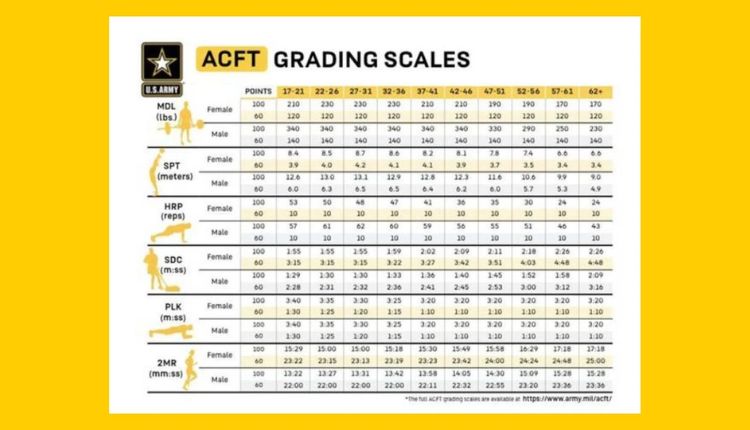
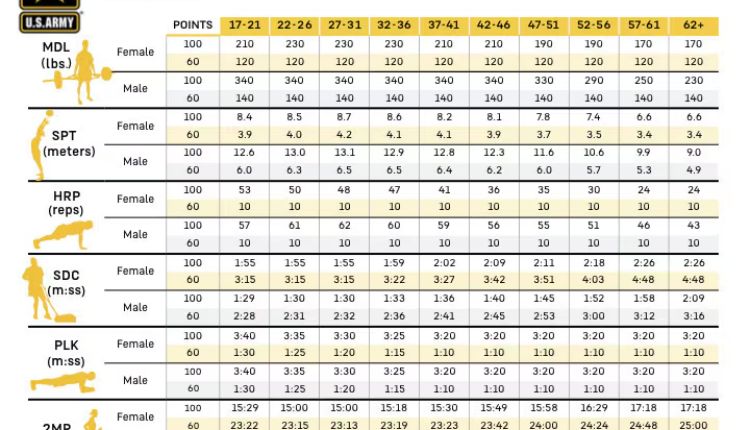
Understanding howACFT events in order are scored in sequence is essential to achieving a high overall score. Each event contributes to a total score of 600 points. Soldiers must balance strength, power, and endurance to perform well in all categories.
A well-rounded training program should include resistance training, conditioning sprints, core stability, and endurance work. Focusing on just one area can reduce overall performance.
Effective strategies include:
- Training each ACFT event separately
- Improving recovery between workouts
- Practicing full test simulations
- Maintaining proper nutrition and hydration
Avoid overtraining as fatigue can negatively affect performance. Consistency over time leads to the best improvements.
More Words
ACFT events to provide a complete assessment of a soldier’s physical readiness by testing multiple areas of fitness. From the strength-based deadlift to endurance running, each event plays a critical role in overall performance.
Understanding the structure, technique, and training strategies behind each event helps improve both scores and real-world combat readiness. With disciplined preparation and balanced training, achieving a strong ACFT score is highly achievable.
FAQs
1. In what order are the ACFT events?
The events are the Deadlift, Standing Throw, Hand Push-Up, Sprint-Drag-Carry, Plank Hold, and the Two-Mile Run.
2. How many events are there in ACFT?
There are six events in total.
3. What is the hardest ACFT event?
Many soldiers find the Sprint-Drag-Carry and Two-Mile Run the most challenging due to fatigue.
4. How is the ACFT evaluated?
Each event is scored individually, and the total score is out of 600 points.
5. Can I train for ACFT at home?
Yes, many components such as push-ups, planks, and running can be trained at home with minimal equipment.