ACFT Standards by MOS
Soldiers’ performance in the ACFT can vary depending on their Military Occupational Specialty (MOS). Understanding the ACFT standards by MOS is crucial for preparation, career progression, and maintaining overall health. This guide breaks down the standards, improvement tips, and what each MOS can expect.
Understanding ACFT Basics
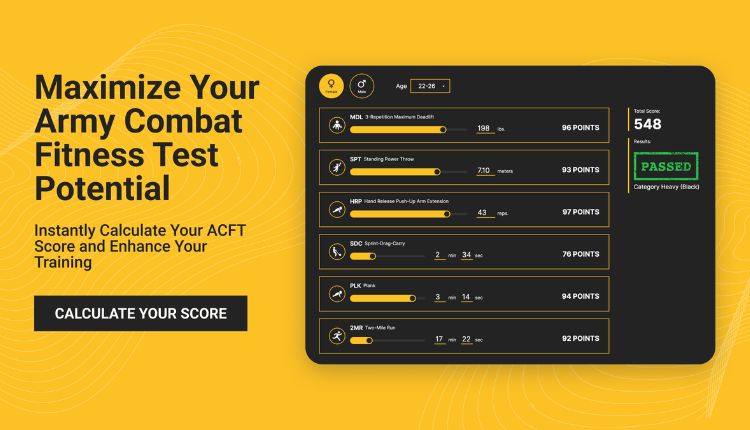
The ACFT standards by MOS replaced the Army Physical Fitness Test (APFT) to provide a more comprehensive evaluation of a soldier’s strength, endurance, and combat readiness. The ACFT consists of six events:
- 3 Repetition Maximum Deadlift (MDL)
- Standing Power Throw (SPT)
- Hand-Release Push-Up (HRP)
- Sprint-Drag-Carry (SDC)
- Leg Tuck (LTK)
- 2-Mile Run (2MR)
Each event is scored individually, and soldiers must meet a minimum standard to pass. Importantly, the standards vary by MOS to reflect the physical demands of specific roles. Combat arms MOSs, like infantry, typically require higher performance in strength and endurance events. Support roles, like administration or logistics, may have slightly lower minimum thresholds, but all soldiers must meet basic readiness requirements.
Preparation for the ACFT ACFT Standards by MOS involves both strength training and cardiovascular conditioning. Understanding the breakdown of your MOS’s requirements is the first step toward targeted training. For example, soldiers in physically demanding MOSs should prioritize deadlift and sprint-drag-carry, while support MOS soldiers might focus more on push-ups and running.
Knowing the basics ensures soldiers avoid surprises on test day and helps commanders identify areas for improvement. Adhering to the ACFT standards by MOS not only affects promotion eligibility but also reflects the Army’s commitment to operational readiness.
ACFT Scoring by MOS
Scoring on the ACFT standards by MOS. The Army groups MOSs into three categories based on physical demands:
- Heavy: Combat arms, infantry, and special operations
- Moderate: Technical roles, maintenance, and engineering
- Light: Administrative, logistics, medical support
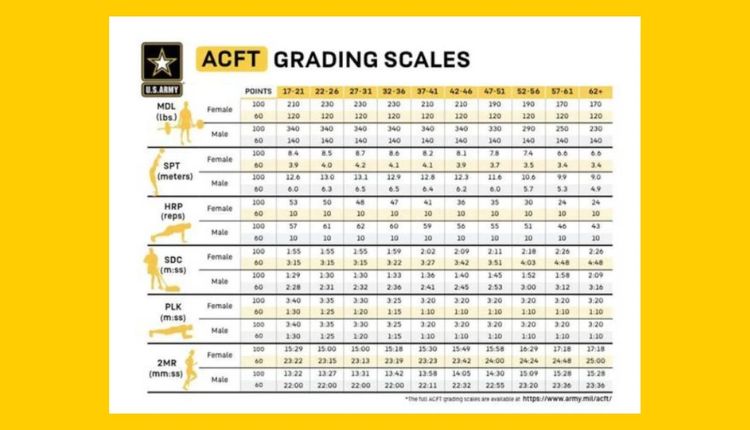
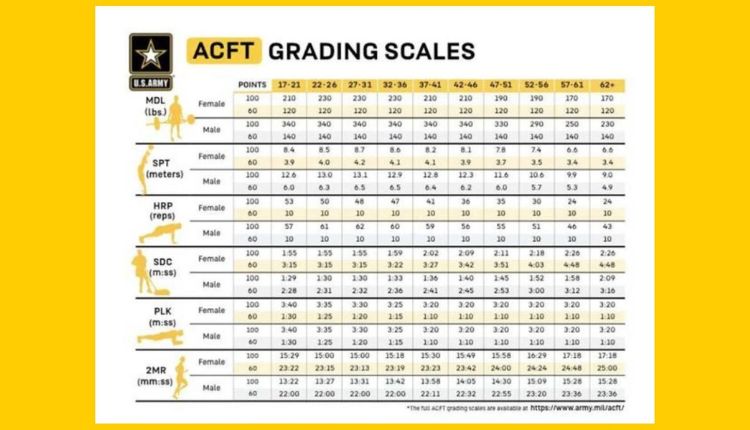
Each category has a tailored minimum requirement for each ACFT event. For instance, infantry soldiers may need to deadlift 140–340 pounds, while a logistics soldier may require 120–340 pounds. Similarly, the 2-mile run requirement may be 13:30 minutes for heavy MOS soldiers and 15:00 minutes for light MOS soldiers.
ACFT scoring is calculated on a point system, with each event worth 100 points. Passing scores vary depending on the soldier’s MOS, and failing an event may impact promotion, retention, or deployment eligibility. It’s important for soldiers to train strategically, knowing which events carry higher weight for their MOS.
Understanding your MOS’s scoring criteria allows for targeted improvement. Soldiers should track progress over time, focus on weaker areas, and align workouts with ACFT event standards. Commanders often provide MOS-specific guidance to ensure soldiers meet or exceed the requirements.
Strength Standards
Strength is a critical component ACFT Standards by MOS of the ACFT standards by MOS. Two events primarily measure strength:
- 3 Repetition Maximum Deadlift (MDL)
- Sprint-Drag-Carry (SDC)
MOSs that involve combat operations require higher minimum strength levels. For example:
- Infantry soldiers need stronger deadlift scores to carry heavy equipment in combat situations.
- Support MOS soldiers need enough strength for routine lifting and logistical tasks.
Training strategies for strength include progressive weightlifting, functional exercises, and incorporating core stability routines. Soldiers should also practise sprint-drags with weighted sleds to simulate test conditions.
Strength standards ensure soldiers are physically capable of handling battlefield tasks, lifting casualties, and transporting equipment. Meeting these standards reduces the risk of injury and enhances performance during field operations. Soldiers in heavy MOSs should emphasise deadlift and SDC improvement in their training schedules.
Endurance Standards
Endurance in the ACFT is tested primarily through:
- 2-Mile Run (2MR)
- Sprint-Drag-Carry (SDC)
Soldiers in combat MOSs must meet high endurance standards due to the physical demands of patrols, long marches, and combat scenarios. Light MOS soldiers have slightly lower requirements but still need good cardiovascular conditioning.
Training for endurance involves interval running, hill sprints, and circuit training. Combining strength and endurance workouts enhances performance across all ACFT standards by MOS. A strong endurance base also reduces fatigue during other events like push-ups and leg tucks.
Commanders use endurance scores to determine deployment readiness. Soldiers failing endurance events may need additional physical training before participating in field operations. Regularly practising the 2-mile run and SDC can significantly improve overall ACFT performance.
Push-Up and Core Requirements
The Hand-Release Push-Up (HRP) and Leg Tuck (LTK) events assess upper body and core strength. MOS-specific standards vary:
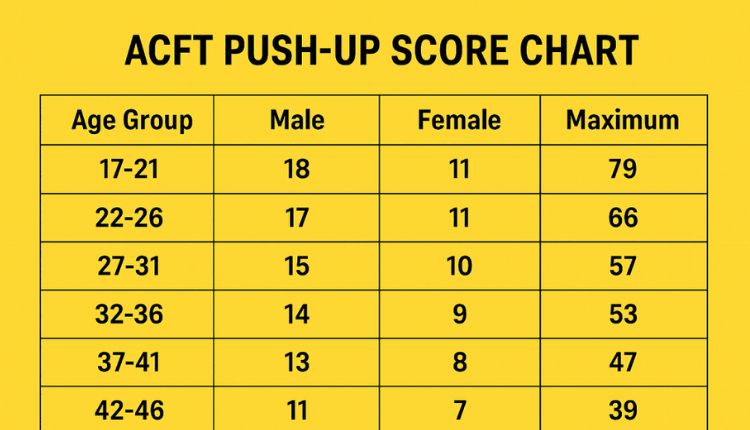
- Heavy MOSs often require 10–20 more repetitions than light MOSs.
- Core strength is crucial for combat MOSs to maintain stability under load.
Training for push-ups includes increasing volume gradually and practising proper form. Core exercises like planks, hanging leg raises, and medicine ball twists enhance leg tuck performance.
A strong upper body and core improve performance in all six ACFT standards by MOS events. Soldiers with weak push-up or leg tuck scores should incorporate functional strength exercises into daily routines. MOS-specific training ensures soldiers meet the standards necessary for career advancement.
Power and Explosiveness
Power is measured by the Standing ACFT Standards by MOS Power Throw (SPT), reflecting the ability to generate explosive force. Combat MOSs typically require longer throws due to heavy equipment handling, while support MOSs have slightly lower minimum distances.
Power training involves:
- Medicine ball throws
- Plyometric exercises
- Sprinting drills
Explosiveness is critical for battlefield performance, such as quickly lifting equipment, breaching obstacles, or moving under fire. Soldiers should integrate these exercises into weekly routines to maximize ACFT standards by MOS scores and operational effectiveness. MOS-focused power training ensures soldiers are ready for any physical challenge.
Preparing by MOS
Preparation strategies differ depending on the soldier’s MOS:
- Infantry/Combat Arms: Focus on strength, endurance, and explosive power. Prioritise deadlifts, sprint-drags, and 2-mile runs.
- Technical/Support Roles: Emphasise endurance, push-ups, and core stability while maintaining moderate strength.
- Administrative/Medical: Focus on core exercises, push-ups, and cardiovascular fitness.
Effective preparation includes a combination of weightlifting, running, circuit training, and event-specific practice. Tracking progress against ACFT standards by MOS standards ensures consistent improvement and avoids last-minute surprises.
Commanders often provide training resources tailored to each MOS, helping soldiers meet or exceed requirements. Regular assessments and practice tests simulate real ACFT conditions, boosting confidence and readiness.
Tips for success: ACFT standards by MOS
To excel in ACFT regardless of MOS:
- Understand your specific MOS standards.
- Create a balanced training regimen combining strength, endurance and core exercises.
- Practise each ACFT event individually and sequentially.
- Maintain proper nutrition and hydration.
- Get adequate rest to allow muscle recovery.
- Monitor improvements with simulated ACFT tests.
- Seek advice from coaches or fellow soldiers who excel in ACFT events.
Consistency, discipline, and ACFT standards by MOS focus are the keys to achieving high scores and passing all six ACFT events. Soldiers who follow these tips increase their chances of success, improve physical readiness, and support Army mission objectives.
Conclusion
ACFT standards by MOS standards ensure that each soldier is prepared for the physical demands of their role. Combat MOSs require higher strength, endurance, and performance, while support and administration roles have adjusted thresholds.
By understanding MOS-specific requirements and following customised training plans, Soldiers can increase performance, reduce injury risk, and maintain career readiness. ACFT success is a combination of knowledge, preparation, and sustained effort, which ultimately contributes to the Army’s overall mission effectiveness.
Frequently asked questions
Q1: Which MOS has the highest ACFT standards?
A1: Combat arms ACFT standards by MOS, such as infantry and special operations, have the highest physical demands due to the demands of field operations.
Q2: Can I get ACFT again if I fail the event?
Answer 2: Yes, Soldiers may retest failed events as directed by the Army to meet MOS-specific standards.
Q3: Do supporting MOSs have lower ACFT requirements?
A3: Yes, support MOSs like administration or logistics have a slightly lower minimum score, but all Soldiers must meet basic readiness levels.
Q4: How often should I train for ACFT?
Answer 4: Soldiers are recommended to train 4-5 times per week using a combination of strength, endurance, and specific exercises.
Q5: Does ACFT affect promotions?
A5: Yes, completion of the ACFT to MOS standards is often a requirement for promotions and certain assignments.