ACFT Scorecard
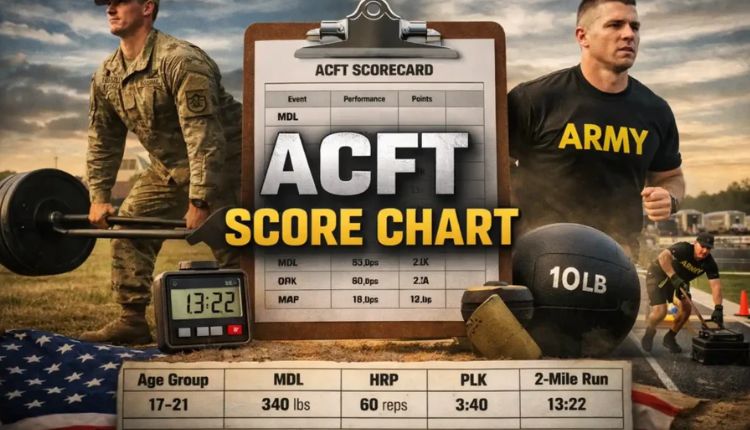
This scorecard provides a clear record of individual results in six challenging events, including the deadlift, standing power throw, hand-release push-ups, sprints and pull-ups, leg pulls, and the 2-mile run. Understanding your ACFT scorecard will help you identify strengths and areas for improvement and ensure readiness for military duty.
This article dives deep into how the Scorecard works, how scores are calculated, and practical tips to improve performance. Whether you’re preparing for your first test or trying to improve your current results, this guide offers essential information to optimise your training. Explore step-by-step instructions, effectively interpret your scores, and learn strategies to excel in each event. Stay ahead of your fitness journey by mastering your scorecard.
What is the ACFT Scorecard?
The ACFT Scorecard is the official record used by the US Army to track a soldier’s performance on the Army Combat Fitness Test. Introduced as a replacement for the older Army Physical Fitness Test, the ACFT focuses on functional fitness that reflects real-world combat readiness.
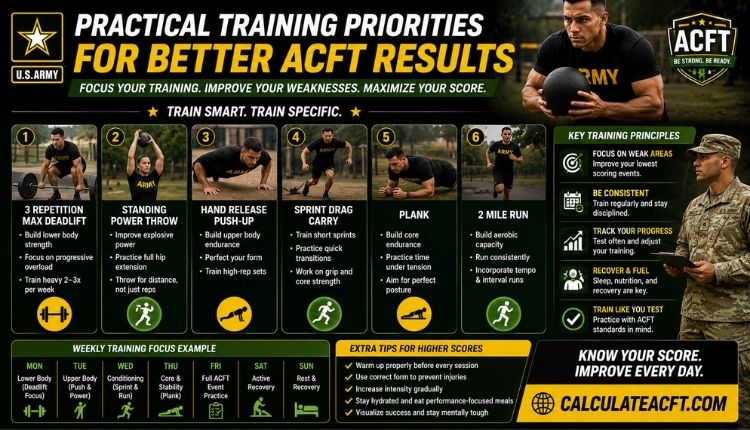
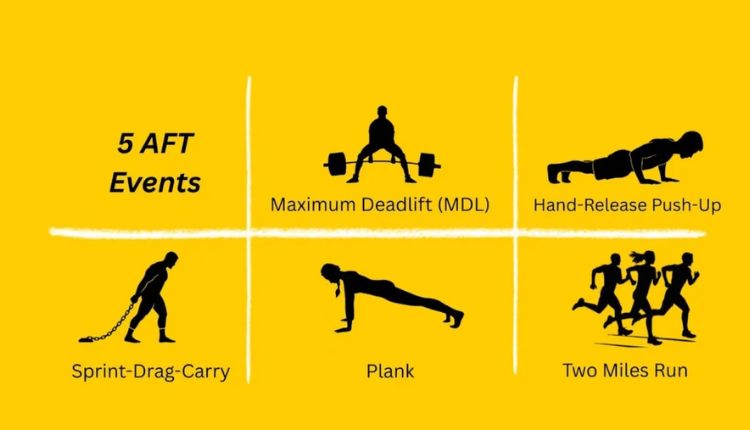
The scorecard records six events designed to measure strength, endurance, power, and agility: 3-rep max deadlift, standing power throw, hand-release push-ups, sprint-drag-carry, leg pull-up (or plank), and 2-mile run. Each event has a scoring range based on gender and age standards, ensuring fairness while maintaining strict expectations.
Soldiers receive an overall score along with individual event scores, allowing them to understand where they excel and where they need improvement. By regularly reviewing ACFT scores, Soldiers can track progress, adjust training programmes, and ensure they are meeting the Army’s high standards of physical readiness.
- Follows six ACFT events
- Records individual and total scores
- Tailored training programs for improvement
- Provides standardised results across units
How to Read Your ACFT Scorecard
Reading the ACFT Scorecard correctly is essential to understanding performance. Each event is scored individually and the total number of points contributes to your total ACFT score. The Scorecard uses colour-coded ranges or numerical values to indicate performance levels, making it easy to identify strong and weak areas.
The scoreboard will usually show your raw performance (such as reps or time) along with the corresponding points earned. Soldiers can use this data to compare it against Army minimum scores or their personal fitness goals. In addition, the Scorecard may include notes or notes from the test administrator highlighting technical issues or areas requiring attention. Understanding this data allows Soldiers to adjust the focus of training and ensure that weaknesses do not affect overall readiness.
- Results of individual events
- ACFT Total Score
- Minimum points to pass
- Notes from evaluators
How to Read Your Scorecard
The ACFT Scorecard calculates scores based on performance metrics specific to each event. Each of the six events has its own score table, where higher performance equals higher points. The 3-rep deadlift max is scored by weight lifted, standing power throw distance, push-ups per rep, time to complete a sprint and pull-up, leg pull/plank per rep or duration, and a 2-mile run for target time.
The overall score is the sum of all six events, with the passing threshold generally set at 360 points, although individual events require a minimum score. Soldiers must understand that excelling in one action cannot fully compensate for poor performance in another. The Scorecard helps visualise where further training is needed, making it a practical tool for both preparation and assessment.
- Uses event-specific scoring tables
- The sum of the scores of the six events
- Minimum score requirements for passing
- It highlights areas for improvement
Importance of the Scorecard
The ACFT Scorecard is more than just numbers; it is a reflection of a soldier’s combat readiness. The military uses these results to assess overall physical fitness and ensure that soldiers are able to handle the physical demands of combat situations. Scorecards support accountability, motivation, and strategic planning in training.
It offers leaders a clear picture of unit readiness, assists in personnel decisions and training plans, and identifies soldiers who may require additional support. For soldiers, it serves as a benchmark to track progress over time and promotes a balanced approach to strength, endurance, and agility. Ultimately, the scorecard plays a critical role in maintaining a strong and ready military force.
- Assesses combat readiness
- Motivates for personal improvement
- It helps managers plan training programmes.
- Tracks long-term fitness progress
Tips to Improve ACFT Scores
Improving your ACFT Scorecard starts with understanding your weakest events and creating a targeted training plan. Strength events like deadlifts and leg curls require progressive resistance training, while endurance events like a 2-mile run require consistent cardiovascular work. Explosive movements like the standing power throw benefit from plyometric and agility drills.
Core strength and stability are vital in a variety of events, including sprint-drag and leg-pulling. Recovery, proper nutrition and hydration also play a vital role in performance. Regularly practising ACFT-style actions in testing conditions can help Soldiers become familiar with pace, technique and mental focus, which will ultimately improve their results on the score sheet.
- Focus on the weakest events first
- Combine strength and endurance training
- Practice the conditions of the ACFT test
- Maintain nutrition and regeneration
Common Mistakes on the Scorecard
Many soldiers struggle to achieve high scores due to common mistakes noted in the ACFT Scorecard. Poor form, inconsistent stimulation, and lack of preparation often lead to lower scores. For example, incorrect deadlift technique can reduce the weight lifted, while missing out on basic exercises affects leg tuck, sprint, and pull performance.
Some soldiers underestimate recovery needs, leading to fatigue and slower running. Another mistake is not understanding the scoring charts; misjudging target reps or times may prevent maximum points. Recognising these errors through score analysis allows soldiers to refine their training, correct errors, and effectively improve overall performance.
- Bad form in strength disciplines
- Inconsistent pace in runs
- Ignoring kernel and recovery
- Misunderstanding the scoring system
Digital Scorecards and Tracking
The ACFT Scorecard now often provides digital ACFT scores, making it easier to track and analyse performance over time. Digital systems allow soldiers to store multiple test results, generate performance graphs, and compare progress against peers or benchmarks.
Soldiers can use digital scorecards to review ACFT Scorecard historical data, identify recurring weaknesses, and optimise preparation for future tests. The move to digital surveillance is consistent with modern military strategies of data-driven fitness assessment and continuous improvement.
- Stores multiple test results
- Generates performance graphs
- Offers customised recommendations
- Reduces manual recording errors
Using the Scorecard for Career Advancement
In addition to fitness, the ACFT Scorecard can influence career progression in the military. High scores may open opportunities for leadership roles, specialised training, or deployment readiness. Soldiers with consistent ACFT performance demonstrate discipline, physical fitness, and resilience, qualities valued for promotion and evaluation.
Regularly tracking leaderboards can help individuals set goals, achieve personal milestones, and ensure they remain competitive among peers. By using the scorecard as a career tool, Soldiers not only improve their fitness but also improve their career path in the military.
- Supports leadership and promotion opportunities
- Demonstrates discipline and preparedness
- It helps to track personal and professional goals
- It supports continuous performance improvement
Conclusion
The ACFT Scorecard is more than just a fitness record; it’s a blueprint for military readiness, personal growth, and career advancement. Understanding, analysing, and improving your scorecard will ensure success on the Army Combat Fitness Test while promoting long-term physical fitness.
Using a scorecard to track strengths, address weaknesses and plan targeted training, Soldiers can maintain peak performance and meet the Army’s rigorous standards. Whether you’re preparing for your first test or trying to improve your performance, the scorecard provides essential guidance for optimising your physical fitness and overall military potential.
Frequently Asked Questions
Q1: What does ACFT mean?
A1: ACFT stands for Army Combat Fitness Test, a comprehensive assessment of soldiers’ physical fitness.
Q2: How many events are there at ACFT?
Answer 2: The ACFT consists of six events: 3 reps, max deadlift, standing power throw, hand-release push-ups, sprint-drag-carry, leg pull/plank, and 2-mile run.
Q3: What is an ACFT passing score?
A3: Soldiers must score at least 60 points per competition, with a total minimum of 360 points to pass.
Q4: Can I improve my ACFT score by training?
A4: Yes, focused strength, endurance and technique training can significantly improve your ACFT score.
Q5: Is the ACFT scorecard digital or paper?
Answer 5: Both formats exist, but digital scorecards are increasingly used for tracking and analysis.