ACFT Standards 2024
The ACFT standards 2024 are created to represent real combat activities, functional strength, and endurance, as well as the general readiness of the soldier, unlike older fitness tests, which relied on limited movements. Since the Army is still modernising, the knowledge of the new ACFT standards is now crucial not only to the active-duty soldiers but also to the reservists, the National Guard, and even the future recruits.
The ACFT is constantly being developed in 2024 using data, soldier feedback, and the needs of the operations. These standards should be equitable, position-based, and closer to the requirements on the ground in the military. The paper presents a full, user-friendly, and search engine-optimised list of the ACFT standards for 2024, such as events, scoring, gender and age concerns, and preparation information.
ACFT: What Is It and Why Does It Matter in 2024?
The Army Physical Fitness Test was also scrapped in favour of the Army Combat Fitness Test, which is a more comprehensive system. The ACFT assesses various domains of fitness, including muscular strength, explosive power, agility, endurance and aerobic capacity, instead of just doing push-ups and sit-ups as well as running. ACFT standards 2024 carry on this mission through prioritising combat-relevant physical skills.
The 2024 ACFT has a direct connection to the professional development, readiness tests, and unit effectiveness. The soldiers are not only supposed to pass but also to be fit in the way that their military occupational speciality is supported. The test is also representative of the fact that modern-day fights involve lifting, carrying, sprinting, and endurance under stress.
Overview of ACFT standards 2024
The ACFT standards 2024 have six foundational events that together assess total-body fitness. Each of the events is focused on a particular physical feature needed to perform in the battlefield. These exercises are done in a predetermined sequence to enhance exhaustion and stress, à la combat.
The event station comprises the three-repetition maximum deadlift, standing power throw, hand-release push-ups, sprint-drag-carry, plank, and the two-mile run. Every event has a minimum and maximum score, and the sum total of the resultant scores determines whether it’s a pass or a fail.
Three Repetition Maximum Deadlift Standards
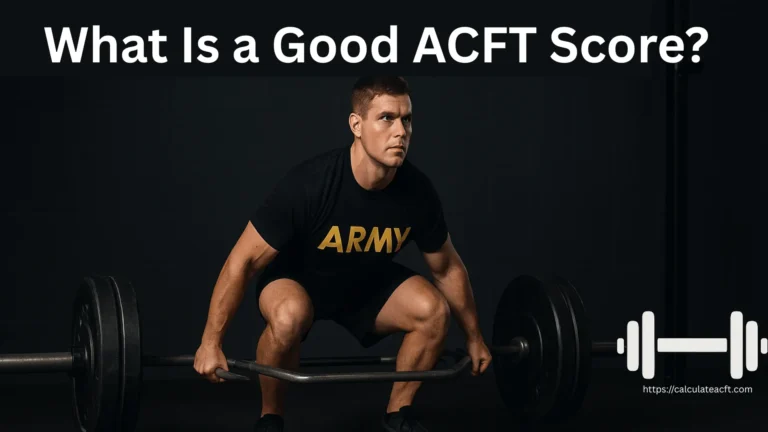
The three-repetition maximum deadlift test will test lower body strength, grip and core stability. The soldiers are required to move a weighted bar up three times on the ground to a standing position in the right form. This incident corresponds in line with ACFT standards 2024 to the ability to lift equipment, transport obstacles, and support other soldiers.
The scoring is done on the highest weight lifted successfully. Although heavy lifts provide better points, the lowest-level criterion is to make sure that the soldiers are strong enough to take part in the operational tasks. Technique and controlled movement are essential, both in performance and injury prevention.
Standing Power Throw Requirements
The standing power throw is an assessment of explosive power, balance, and coordination. The weighted ball is thrown backward over the head of the soldiers as far as they can. This activity builds a simulation of actions like throwing equipment or producing explosive movement in battle situations.
ACFT standards 2024 requires the score to be determined by distance. Powerful hip swing, intense core work and the right timing have a great effect on performance. This episode shows that power is more important than sheer strength.
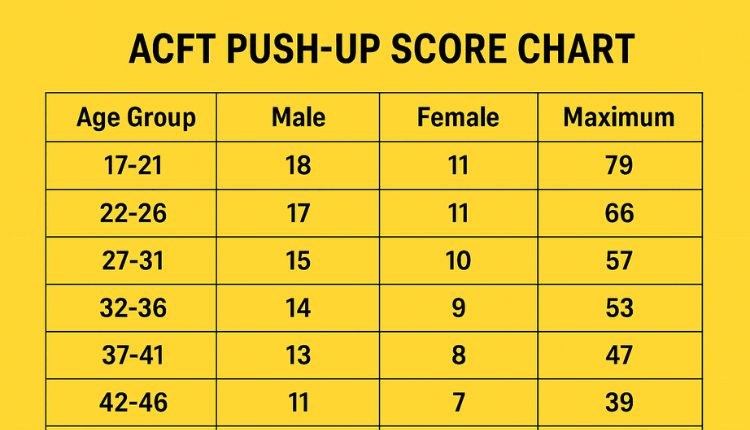
Hand-Release Standards of Push-Ups
The hand-release push-up concentrates on the endurance of the upper body, the strength of the chest and the stability of the shoulders. Contrary to the traditional push-ups, soldiers will have to take off the ground, with their hands on the bottom of every repetition, which will guarantee the complete range of motion.
The ACFT standards 2024 presuppose uniformity of form and controlled repetitions. This incident ensures the reduction of injuries and does not reduce repetitions. Excellent results in push-ups mean battle strength and injury toughness.
Drag-Carry-Sprint Event Explanation
One of the most challenging elements of the ACFT is the sprint-drag-carry. It tests speed, agility, anaerobic endurance and mental toughness. The soldiers will be required to jog, pull a heavy sled, push kettlebells and make lateral shuffles during a certain period.
By the ACFT standards 2024, the scoring factor is time. This activity is highly similar to military operations like fighting in the open, transporting injured soldiers, and refuelling gear. The key to success is conditioning, pacing, and effective transitions.
Plank ACFT standards 2024
Core strength and endurance is tested by the plank event. Soldiers are required to hold the straight-body plank posture as long as possible without loss of form. The plank also substituted previous core training to minimise the risk of injuries and improve the measurement of functional core strength.
According to the ACFT standards 2024, the more time one holds, the higher the score. The importance of core stability is in load-bearing activities, injury prevention, and efficiency in overall movement on the battlefield.
Two-Mile Run Requirements
The main endurance test of aerobic nature in the ACFT is the two-mile run. It measures the endurance, heart fitness and the ability to recover following the first 5 events.
ACFT standards 2024 are based on the time taken to complete. Endurance training and pacing strategies are of particular importance because the run is conducted last to replicate fatigue. High aerobic background promotes sustained operations and extended missions.
ACFT Scoring System in 2024
The ACFT events are marked on a scale that leads to an overall score. In all of the events, soldiers will have to meet the minimum standard to pass. The ACFT standards 2024 are based on the idea of balanced fitness as opposed to mastering a single aspect.
The system of scoring enables the commanders to evaluate the preparedness at the individual and unit levels. A high degree of performance in six events denotes a comprehensive physical preparedness.
Neutral Standards of Gender and Age
The transition to age- and gender-neutral scoring of the majority of soldiers is one of the high-profile characteristics of the ACFT standards 2024. Special attention is paid to the physical requirements of the job in comparison with the demographic categories.
This strategy will encourage fairness and efficiency of operation through the assurance of a similar minimum requirement for all soldiers. It solidifies the fact that battle preparedness is based on ability, but not type.
ACFT Standards for Different Military Roles
While baseline standards apply broadly, certain roles may have higher expectations due to mission demands. Combat arms soldiers, for example, often aim for higher ACFT scores to reflect the physical intensity of their duties.
The ACFT standards for 2024 allow leadership to identify strengths, address weaknesses, and tailor training programmes to specific operational requirements. This flexibility makes the test a valuable tool rather than just a pass-fail requirement.
How to Prepare for ACFT Standards
Preparing for the ACFT requires a balanced training approach that includes strength training, power development, endurance conditioning, and mobility work. Soldiers should focus on compound movements such as deadlifts, squats, presses, and carries.
Consistent conditioning, proper recovery, and injury prevention strategies play a major role in meeting ACFT 2024 standards. Training should mirror test movements while gradually increasing intensity and volume.
Common Mistakes Soldiers Make
Many soldiers struggle with the ACFT due to poor technique, lack of preparation, or neglecting weaker events. Overtraining one area while ignoring others often leads to imbalanced performance.
Understanding the ACFT standards for 2024 in detail helps soldiers avoid these mistakes and adopt smarter training strategies. Proper form, pacing, and recovery can significantly improve scores.
The Impact of ACFT on Army Readiness
The ACFT is more than a fitness test; it is a readiness indicator. The ACFT standards for 2024 support the Army’s goal of building physically resilient soldiers capable of meeting modern operational challenges.
By focusing on functional fitness, the ACFT enhances injury prevention, performance consistency, and long-term soldier health. This approach benefits both individuals and the organisation as a whole.
What’s Next?
The ACFT standards 2024 reflect the Army’s commitment to realistic, fair, and combat-focused fitness assessment. With six challenging events and a balanced scoring system, the ACFT measures the physical qualities that truly matter on the battlefield. Soldiers who understand the standards, train intelligently, and focus on total-body fitness are best positioned for success. As the Army continues to evolve, the ACFT remains a cornerstone of readiness, resilience, and operational effectiveness.
FAQs
What are the ACFT standards for 2024?
The ACFT standards for 2024 define the minimum and maximum performance requirements across six fitness events designed to measure total-body combat readiness.
Is the ACFT the same for everyone in 2024?
The ACFT standards for 2024 are largely age and gender neutral, focusing on job-related physical capability rather than demographic differences.
Which ACFT event is the hardest?
Difficulty varies by individual, but many soldiers find the sprint-drag-carry and two-mile run the most demanding due to fatigue and endurance requirements.
Can soldiers fail the ACFT by failing one event?
Yes, under ACFT 2024, soldiers must meet the minimum standard in every event to pass the test.
How often is the ACFT conducted?
The ACFT is typically conducted at least twice per year, though frequency may vary based on unit requirements and training schedules.