ACFT Score Card
Understanding your ACFT score card is key to evaluating performance, tracking progress, and achieving higher scores. This article dives deep into all aspects of the ACFT Scorecard and provides guidance, tips, and insights to help Soldiers excel.
What is the ACFT Scorecard
The ACFT score card is the official record of a soldier’s performance on the Army Combat Fitness Test. It records scores for six events: 3-rep max deadlift, standing lunge, hand-release push-up, sprint-pull-up, leg pull-up or plank, and 2-mile run. Each event has a maximum point value, usually 100 points, and the total maximum is 600 points.
The scorecard serves several purposes:
- Tracks individual performance over time
- It helps identify strengths and weaknesses in fitness
- It provides accountability and transparency for promotion or evaluation
- Assists commanders in standby monitoring units
The scorecard contains key ACFT Score Card details such as the soldier’s name, rank, unit, test date, and event scores. Accurate record-keeping is essential, as errors can affect eligibility and promotion points.
Bullets on importance:
- It supports the continuous improvement of fitness
- Provides objective data for physical fitness
- It helps soldiers plan targeted training
- Essential to meet Army standards
Overall, the ACFT score is more than a record; it is a tool for growth, motivation, and accountability.
Understanding the ACFT assessment
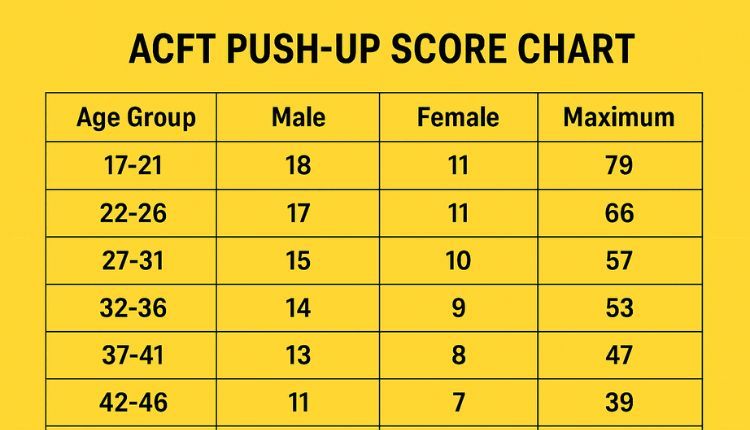
The ACFT score card system is based on a 0-100 point scale per action, giving a total of 600 possible points. Performance requirements vary by age and gender of the soldier. For example, younger soldiers may need higher reps in push-ups or faster times in the 2-mile run.
Each event is evaluated separately:
- 3-Rep Maximum Deadlift: Maximum weight lifted
- Standing Throw: Distance thrown in meters
- Push-ups: Total number of repetitions in two minutes
- Sprint-Drag-Carry: Time to complete the course
- Leg Tuck / Plank: Number of tucks or hold times in seconds
- 2-Mile Run: Finish time in minutes and seconds
Bullets for scoring tips:
- Know the minimum points required for your age group
- Aim for a score above the minimum to ensure a margin of safety
- Track progress with previous scorecards
- Focus on weaker events to maximize your overall score
Understanding the mechanics of the assessment helps Soldiers effectively strategise their training. Recognising which events contribute more to the total score allows for targeted improvement.
Reading your ACFT score card
Reading your ACFT score card is simple but requires attention to detail. The card shows the score of each event, the total points and whether the soldier passed or failed.
Reading tips:
- Check each event separately before checking the overall score
- Verify personal information such as name and unit
- Make sure the times or reps recorded are consistent with your performance
- Identify trends: which events are showing improvement and which need work
Bullets to check carefully:
- Find data entry errors immediately
- Use the scorecard to track month-to-month progress
- Compare scores to Army standards for your rank
- Plan targeted workouts based on identified weak events
Effectively reading your ACFT scorecard ensures accuracy, transparency and strategic fitness planning.
Common mistakes on ACFT scorecards
Errors on ACFT score card can be costly and affect eligibility for promotion or deployment. Common mistakes include:
- Incorrectly scoring an event due to timing errors
- Missing personal information like rank or date
- Incorrect calculation of total points
- Using incorrect event standards for age and gender
Bullets to avoid mistakes:
- Recheck event results immediately after testing
- Confirm that the correct scoring table is used
- Please check the totals before submitting
- Keep a personal backup record of performance
Being aware of common mistakes allows soldiers to avoid pitfalls that could affect career advancement. The accuracy of the recording is as important as the performance itself.
Tips to improve your score
Improving your ACFT score card requires a combination of strength, endurance and targeted training. Each action requires a unique set of skills.
- Deadlift: Focus on leg and back strength with progressive deadlifts
- Power Throw: Improve explosive power and core stability
- Push-ups: Practice proper form and gradually increase the number of repetitions
- Sprint-Drag-Carry: Train speed, agility and endurance
- Leg Tuck / Plank: Strengthens the core and grip
- 2 Mile Run: Interval training improves speed and endurance
Points for effective improvement:
- Train regularly 3-5 times a week
- Track results and adjust workouts based on weaknesses
- Include recovery and stretching routines
- Use personal scorecards to track progress
Consistent effort and data-driven training based on your ACFT score card can lead to significant improvement.
Digital vs paper scorecards
The Army uses both digital and paper ACFT score card. Digital cards are stored in systems such as DTMS (Digital Training Management System) and can be easily updated and shared with a command. Paper cards are physical copies provided during testing.
Advantages of digital cards:
- Accessible from multiple devices
- Easy tracking of historical performance
- Automatic scoring reduces errors
Advantages of paper cards:
- Useful for field training
- It provides an instant, tangible record
- Backup in case of system failure
Format Selection Points:
- Use digital for long-term tracking and trend analysis
- Keep paper copies for operational tests and verification
- Ensure consistency between the two formats
- Always check and correct discrepancies
Understanding the pros and cons helps soldiers effectively manage their records.
Interpretation of weaknesses
Your ACFT score card highlights strengths and weaknesses. Analysing low scores helps prioritise training. For example, a low push-up score indicates ACFT Score Card upper body weakness, while slow 2-mile runs indicate a need to improve endurance.
Strategies for interpreting:
- Compare scores on multiple tests and identify patterns
- Seek coaching or peer feedback for challenging events
- Adjust the training focus according to the weakest event
- Use incremental goals to achieve overall improvement
Points for Weakness Analysis:
- Don’t ignore small deficits – they add up to your total points
- Prioritize high-value events for a faster total increase in points
- Combine strength and endurance training for a balanced performance
- Use your scorecard as a roadmap
Detailed weakness analysis transforms the ACFT score card from a record into a personalised training guide.
Frequently asked questions about the ACFT score
Q1: How often should I take ACFT?
A1: The Army recommends testing at least once a year, but frequent practice helps improve scores.
Question 2: Can I use a plank instead of tucking my feet in?
A2: Yes, the plank is an alternative to leg tucks, and your scorecard will reflect whichever event you complete.
Q3: What is the minimum passing score?
A3: Minimum passing is typically The ACFT score card is a critical measure of a soldier’s physical readiness 360 points, with at least 60 points per event, but requirements vary by age and gender.
Q4: Can scorecards be corrected if there’s an error?
A4: Yes, soldiers should report errors immediately for correction in DTMS or through their chain of command.
Q5: Does the ACFT score affect promotions?
A5: Yes, total points can influence ACFT Score Card promotion eligibility, making accurate records and high scores essential.