ACFT Regulation
Unlike older fitness tests, the ACFT regulation focuses on actual combat skills, strength, endurance and agility. The aim is to ensure that soldiers are fully prepared for the physical demands of modern warfare.
The ACFT Regulation and its Purpose
The regulation outlines the structure, scoring system and requirements for the test. It replaces the older ACFT regulation and emphasizes functional movements instead of just traditional exercises like push-ups and sit-ups.
The ACFT is designed to be gender-neutral and role-focused, although grading standards may vary by age and category. It tests six different events that reflect actual combat tasks such as lifting, carrying, sprinting and endurance running.
The main purposes of regulation include:
- Improving the overall readiness of the soldier
- Reduced injury rates through balanced fitness
- Standardization of ratings across all Army units
- Stimulating strength and conditioning programs
The regulation also ensures fairness by providing clear guidelines for test administration, scoring criteria, and equipment requirements. Soldiers must strictly follow these rules to pass the exam.
In today’s military environment, physical performance is directly linked to mission success. This is why ACFT plays a key role in maintaining discipline, readiness and effectiveness throughout the military.
ACFT Structure: Six Major Events Explained
The ACFT regulations include six main events, each designed to test different aspects of physical fitness. These events must be completed in a certain order, with breaks in between.
The six ACFT events are:
- Deadlift (max 3 reps)
- Standing throw
- Push-Up with manual release
- Sprint-Drag-Carry
- Plank (or earlier leg tuck)
- Two miles run
Each event measures a unique ACFT Regulation component of fitness. For example, the deadlift focuses on muscular strength, while the sprint-drag-carry tests agility and endurance.
The sequence of events is important because it simulates physical fatigue similar to actual combat situations. Soldiers must maintain performance in all activities.
Here’s how the structure works:
- Soldiers begin strength training
- Move to explosive power moves
- Continue with Endurance and Dexterity tasks
- Finish with cardiovascular endurance
Breaks are usually 2-5 minutes between events, depending on regulation updates. The entire test takes approximately 50-70 minutes.
The ACFT ensures that all Soldiers take the same test under similar conditions while maintaining consistency and fairness.
ACFT Scoring System and Performance Standards
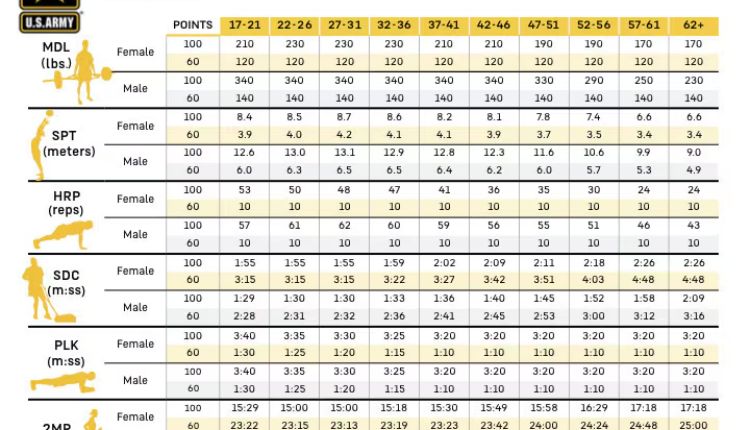
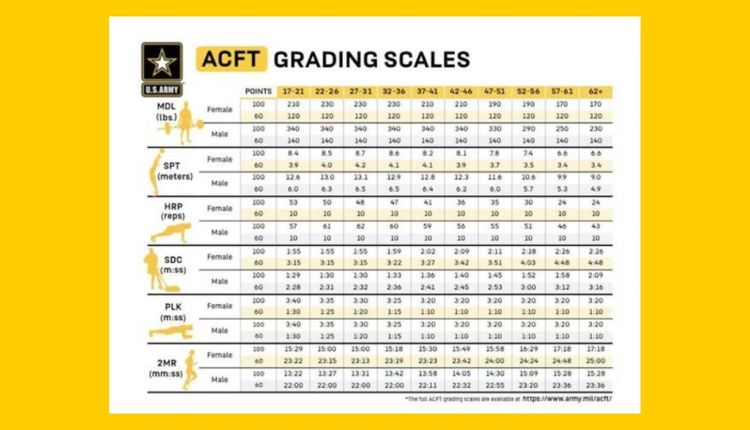
The ACFT regulation uses a point scoring system. Each of the six events is scored individually and the total score determines whether the soldier passes or fails.
Each event is scored from 0 to 100 points, so the maximum total score is 600 points. To pass the ACFT, Soldiers must achieve:
- At least 60 points in each discipline
- Total score meeting Army standards
Scoring varies by age and gender category. However, the goal remains consistent: to demonstrate adequate physical fitness.
Example of score distribution:
- 540–600: Excellent
- 480–539: Very good
- 360–479: Passing
- Under 360: Failure
The regulation provides detailed charts showing how performance translates into points. For example, lifting heavier weights or completing more repetitions results in a higher score.
Important scoring rules include:
- No partial credit for incomplete repetitions
- Strict form requirements must be met
- Judges watch each event carefully
Failure of one event results in failure of the entire test, regardless of the total score. This emphasizes balanced fitness in all areas.
The ACFT ensures transparency in scoring, allowing Soldiers to track progress and improve performance over time.
ACFT Equipment and Testing Requirements
The ACFT Code specifies the exact equipment required for each event. This ensures consistency across all test sites and prevents unfair advantages.
Required equipment includes:
- Hex (catch) rod and weight
- Medicine Bags (£10)
- Tension rods or plank surface
- Cones and sleds for sprint-pull-carry
- Stopwatch or timing device
- Running track or measured track
Every piece of equipment must meet Army standards. For example, the hex bar must be properly calibrated and the running track accurately measured.
Testing conditions are also regulated:
- A flat and safe surface is required
- Weather conditions must be taken into account
- Medical support should be available
The regulation also outlines how events should be For example, sprint-drag-carry requires a 25-metre lane with specific markings.
Other requirements include:
- Correct Uniform (Army Uniform for Physical Fitness)
- Instructions for hydration before testing
- Compulsory warm-up session
Failure to meet equipment standards may invalidate test results. Therefore, strict adherence to ACFT regulations is essential.
This structured approach ensures fairness and reliability in evaluating each soldier’s performance.
Updates to Regulations and Recent Changes
The ACFT Regulation has undergone several updates since its introduction. These changes aim to improve fairness, inclusiveness and practicality.
One major update was the replacement of leg tucks with plank exercises. This change made the test more accessible while still effectively measuring core strength.
Other updates include:
- Adjusted scoring scales
- Adjusted rest periods
- Updated gender and age categories
- Improved testing instructions
The Army continually reviews the data to refine the ACFT. Feedback from soldiers and trainers plays a significant role in shaping these changes.
The latest updates also focus on:
- Reducing the risk of injury
- Reinforcement of training programs
- Ensuring equal opportunities for all soldiers
The regulation now emphasizes holistic fitness rather than extreme performance in one area.
Being informed of changes to the ACFT is essential for Soldiers. It helps them prepare effectively and avoid surprises during testing.
The Army can continue to refine the test as new research and feedback become available to ensure it remains relevant and effective.
Training Strategies to meet ACFT Regulation
Preparing for ACFT requires a balanced training approach. The regulation encourages soldiers to simultaneously develop strength, endurance and agility.
Effective training strategies include:
- Strength training (deadlifts, squats, presses)
- Cardiovascular exercise (running, cycling)
- Agility training (sprints, shuttle runs)
- Basic exercises (planks, leg raises)
A well-rounded programme should focus on all six ACFT events. Ignoring one area can lead to failure even if overall fitness is high.
Example of a weekly training plan:
- 3 days of strength training
- 2 days of cardio exercise
- 1 day of agility and mobility
- 1 day of rest
Recovery is also essential. Overtraining can lead to injury and poor performance.
Key tips for success:
- Practice proper form for each action
- Simulate test conditions during training
- Monitor progress regularly
- Follow a healthy diet
The ACFT regulations emphasize preparation, not just passing the exam. Soldiers should strive for continuous improvement and long-term fitness.
Common Mistakes and How to Avoid Them
Many soldiers struggle with the ACFT due to avoidable mistakes. Understanding these errors can significantly improve performance.
Common mistakes include:
- Bad deadlift technique
- Incorrect push-up form
- Poor pace during a two-kilometre run
- Lack of sprint, drag, and carry preparation
Another major problem is focusing too much on one event and neglecting others. ACFT requires balanced fitness in all areas.
Testing Errors:
- Failure to follow instructions
- Starting before the signal
- Improper use of the device
- Failure to meet form standards
To avoid these mistakes:
- Train under supervision
- Read the official ACFT guidelines
- Practice each action regularly
- Stay mentally focused during the test
Nutrition and hydration also play a role. A poor diet can lower energy levels and affect performance.
By avoiding these common mistakes, Soldiers can greatly increase their chances of passing the ACFT and achieving a high score.
Importance of ACFT Regulation
The ACFT regulation is more than just a fitness test—it’s a critical component of military readiness. It ensures that soldiers are physically capable of handling real combat situations.
Physical fitness directly affects:
- Mission success
- Injury prevention
- Team performance
- Overall morale
ACFT promotes a culture of fitness within the military. Soldiers are encouraged to maintain high standards throughout their careers.
Advantages of regulation:
- Standardized grading system
- Improved combat effectiveness
- Increased physical resistance
- Better overall health
The test also prepares soldiers for physically demanding tasks such as carrying equipment, evacuating casualties and navigating difficult terrain.
In modern warfare, physical fitness is as important as technical skill. ACFT ensures Soldiers are prepared for both.
Conclusion
ACFT regulations play a vital role in shaping the physical fitness standards of the modern military. By focusing on strength, endurance, agility and functional movement, it ensures soldiers are ready for the real challenges of combat.
With its structured format, clear rating system and constant updates, the ACFT provides a reliable and effective way to measure readiness. Soldiers who understand the regulations and train accordingly can achieve high performance and maintain long-term fitness.
After all, ACFT isn’t just a test—it’s a foundation for building stronger, more capable soldiers.
Frequently Asked Questions
What is the minimum passing score for the ACFT?
The minimum passing score is 60 points per event, with the total requirement depending on Army standards.
How many events are there in the ACFT?
There are six events at ACFT.
Is ACFT gender neutral?
The test is designed to be gender neutral, but grading standards may vary.
How long does ACFT take?
It usually takes around 50-70 minutes to complete.
Can you fall into one event and still make it through?
No, failing one event means failing the entire test.
What replaced foot tuck in ACFT?
The plank exercise replaced leg tucks.