Army PFT Score Chart
It plays a vital role in determining whether an individual meets the physical requirements necessary for the Army PFT Score Chart. The chart is designed to measure performance in three basic exercises: push-ups, sit-ups, and the two-mile run. Each of these components is evaluated individually and the total score determines the overall fitness.
Understanding the Army PFT Score Chart
The scoring system is based on age Army PFT Score Chart and gender categories and ensures fairness across different groups. Each event is worth a maximum of 100 points, meaning the highest possible total score is 300. A minimum score of 60 in each event is required to pass. Failure of even one component results in a total failure regardless of the total score.
The Army PFT Score Chart is more than just a rating system; it reflects a soldier’s endurance, strength and cardiovascular health. It helps commanders assess readiness and identify areas that need improvement. For new recruits, understanding the chart is essential for preparation, while experienced soldiers use it to maintain or improve their performance levels.
In recent years, the military Army PFT Score Chart has begun transitioning to updated fitness standards, but the traditional PFT score chart remains widely referenced. It serves as a measure of physical discipline and preparedness. Knowing how the chart works allows individuals to set realistic goals and effectively track their progress over time.
Components of the PFT Army
The Army PFT Score Chart consists of three core exercises that test different aspects of physical fitness. These exercises are simple but challenging, requiring consistent training and proper technique for good performance.
The first component is push-ups, which measure upper body strength and endurance. Soldiers must do as many push-ups as possible in two minutes. Proper form is essential, as improper technique can result in reps not counting.
The second component is sit-ups that focus on core strength and muscular endurance. Like push-ups, soldiers have two minutes to complete as many sit-ups as possible. Strong abdominal muscles are essential for this action, which supports overall physical performance.
The final part is a two-mile run that tests cardiovascular endurance. Soldiers must complete the run in a certain time based on their age and gender category. This event often proves to be the most challenging, as it requires both endurance and pacing strategy.
Key components include:
- Push-ups (2 minutes)
- Sit-ups (2 minutes)
- Two-mile run
Each component contributes equally to the total score. Excelling in one area cannot fully compensate for poor performance in another, which is why balanced training is essential.
Understanding these components helps individuals effectively target their training efforts. By improving performance in all three areas, soldiers can achieve higher scores and maintain overall fitness.
How the Army’s PFT Scoring System Works
The Army PFT Score Chart system is designed to provide a fair and consistent assessment of physical fitness. Each event is scored separately and the results are then combined to give a total score of 300.
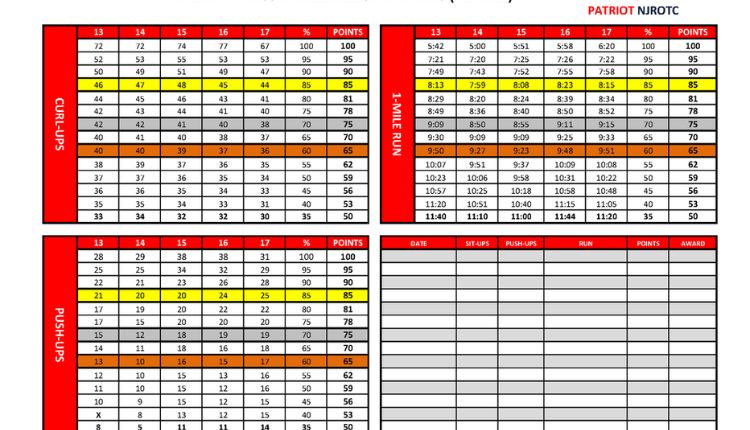
The scoring table awards points based on the number of repetitions completed in pull-ups and sit-ups, as well as the time required to complete the two-mile run. These scores vary by age and gender categories, ensuring that expectations are realistic for different groups.
For example, younger soldiers are usually required to do more reps or run faster to earn maximum points. Older soldiers may have slightly adjusted standards, reflecting natural changes in physical ability.
Important aspects of the scoring system:
- Maximum score per event: 100 points
- Minimum number of points to pass the competition: 60 points
- Total maximum points: 300 points
- Failure in one event = total failure
The system emphasizes consistency and balance. A soldier cannot rely on excelling in one event while neglecting others. Each component must meet a minimum standard to pass.
Understanding how scoring works allows individuals to plan their training more effectively. By analysing their current performance and comparing it to a score chart, they can identify areas for improvement and set achievable goals.
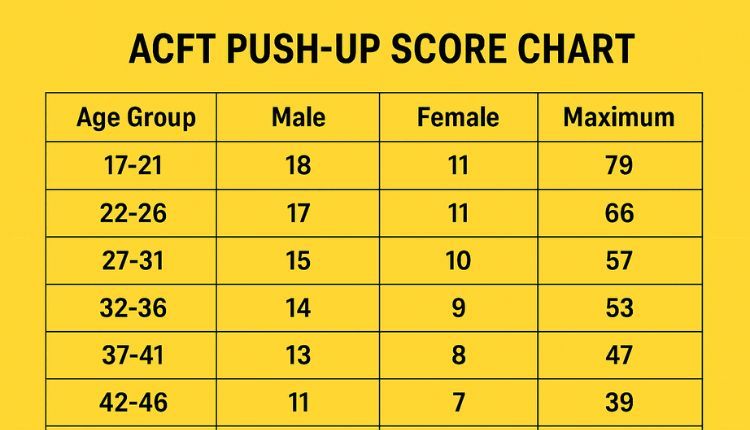
Army Table of PFT Scores by Age and Sex
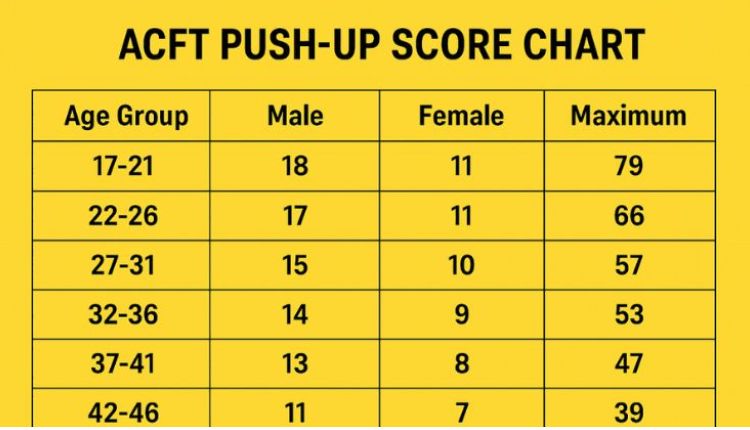
The Army PFT Score Chart is categorised by age and gender. This ensures a fair assessment of all soldiers, taking into account physiological differences and age-related factors.
Each category has its own set of standards for push-ups, sit-ups, and the two-mile run. For example, a soldier aged 17-21 may need to do more push-ups and complete a run faster than a soldier aged 40-45 to achieve the same score.
Similarly, female soldiers have their own scoring standards that are adjusted to reflect differences in average physical performance. These variations ensure that the test remains challenging yet achievable for everyone.
Typical age groups include the following:
- 17–21
- 22–26
- 27–31
- 32–36
- 37–41
- 42–46
- 47–51
- 52–56
- 57–61
Each group has a detailed table with the number of reps or runs required for each score level. These tables are essential tools for both preparation and assessment.
By understanding their specific category, Soldiers can tailor their training programs to meet the required standards. This targeted approach increases the likelihood of success and helps maintain long-term fitness.
Meaning of Army PFT Score Chart
The Army PFT Score Chart plays a vital role in maintaining the overall readiness of military personnel. It ensures that soldiers are physically able to perform their duties effectively, especially in challenging and high-stress environments.
A strong PFT score is often associated with career advancement opportunities. Soldiers with higher scores may be more competitive for promotions, specialised training programs, and leadership positions. This makes the scoreboard not only a fitness tool but also a career development metric.
The chart also promotes discipline and responsibility. Regular testing encourages soldiers to maintain a consistent fitness routine, which reduces the risk of injury and improves overall health. Promotes a culture of physical excellence in the military.
Why the PFT Score Chart is Important:
- Ensures combat readiness
- It supports career progression
- Supports consistent training
- Identifies strengths and weaknesses
Beyond the military, the principles of the PFT scorecard can be applied to general fitness. It provides a structured way to measure progress and set goals, making it a valuable tool for anyone interested in improving their physical health.
Understanding its importance motivates individuals to take their training seriously and strive for continuous improvement.
Tips to Improve Your Army PFT Score Chart
Improving your Army PFT Score Chart requires a combination of proper training, discipline, and consistency. By focusing on all three components of the test, you can significantly increase your performance.
One of the most effective strategies is to follow a structured exercise plan. This should include strength training, endurance exercises and flexibility routines. Consistency is key, as regular practice leads to gradual improvement.
Helpful tips to increase your score:
- Practice push-ups and sit-ups daily
- Include interval running for speed
- Focus on proper form and technique
- Maintain a balanced diet
- Stay hydrated and get plenty of rest
In addition to physical preparation, mental preparation is Army PFT Score Chart equally important. Staying focused and motivated can make a big difference during the test. Visualisation techniques and goal setting can help build confidence.
Tracking your progress is another Army PFT Score Chart crucial step. By recording your performance over time, you can identify patterns and make necessary adjustments to your training routine.
With dedication and the right attitude, anyone can improve their PFT score and reach their fitness goals.
Common Mistakes to Avoid in the Army PFT
Many individuals struggle with the Army PFT Score Chart due to common mistakes that can be easily avoided. Recognising these mistakes is the first step to improving your performance and achieving a higher score.
One of the most common mistakes is neglecting proper form. Improper technique for push-ups or sit-ups can result in reps not counting, greatly affecting your score. It is essential to exercise with proper form to ensure that every rep counts.
Another common problem is poor cadence during a two-kilometre run. Starting too fast can lead to premature fatigue, while starting too slowly can prevent you from achieving a competitive time. Nalezení správné rovnováhy je zásadní.
Mistakes to avoid:
- Ignoring proper form
- Skipping the warm-up and cool-down
- Overtraining without rest
- Poor time management while running
Lack of preparation is another important factor. Some individuals underestimate the test and fail to train enough. Consistent practice is necessary to build the required strength and endurance.
By avoiding these common mistakes, you can improve your performance and increase your chances of success. Awareness and preparation are the keys to achieving a strong PFT score.
Future Changes and Developments in Army Fitness Testing
The Army PFT Score Chart has undergone significant changes over the years to reflect advances in fitness science and the evolving demands of military service. While the traditional PFT remains relevant, newer testing methods are being introduced that provide a more comprehensive assessment of physical fitness.
One of the most notable advancements is the introduction of updated fitness tests that include additional exercises such as deadlifts, sprint-drag-carries and plank holds. These changes aim to assess a wider range of physical abilities, including strength, agility and endurance.
The evolution of fitness testing emphasizes the Army PFT Score Chart importance of adaptability. Soldiers must be prepared to meet the new standards and adjust their training practices accordingly. This ensures that they remain effective in modern combat scenarios.
Key Trends in Army Fitness Testing:
- Inclusion of functional conditioning exercises
- Greater emphasis on total body strength
- Updated scoring systems
- Focus on injury prevention
Despite these changes, the Army’s PFT Score Chart serves as a basic tool for understanding physical fitness requirements. It provides a baseline from which new standards are developed.
Being informed about these developments helps individuals stay prepared and competitive. As fitness testing evolves, so must the strategies used to succeed.
The Bottom Lines
The Army PFT score chart is an essential tool for assessing physical fitness and readiness. It provides a structured and standardised way of measuring performance across key exercises and ensures that Soldiers meet the requirements of military service. By understanding how the scoring system works and focusing on balanced training, individuals can improve their scores and reach their fitness goals.
Success in the Army PFT requires dedication, consistency, and proper preparation. Avoiding common mistakes and staying informed about changes in fitness standards can make a big difference. Whether you’re a rookie or a veteran, the PFT Score Chart serves as a valuable guide to maintaining peak physical condition.
Frequently Asked Questions
What is the maximum score on the Army PFT?
The maximum score is 300 points, with 100 points available for each event.
What is the minimum score to pass?
You must score at least 60 points in each competition to pass.
How often is the Army PFT performed?
It is usually done twice a year, but this can vary depending on the unit’s requirements.
Can I fail one event and still pass overall?
No, the failure of any single event results in an overall failure.
How can I improve the running time?
Include interval training, keep a steady pace, and exercise regularly.
Are the standards the same for everyone?
No, standards vary by age and gender.
Is the Army PFT still in use today?
While newer tests are Army PFT Score Chart being introduced, the PFT is still widely referenced and used in many contexts.
What should I eat before the test?
A balanced meal with carbohydrates and protein along with proper hydration is recommended.