Army ACFT: Everything You Need to Know
Introduced to modernise the physical fitness evaluation, the Army ACFT focuses on functional fitness rather than traditional exercises. Understanding this test is crucial for both active-duty soldiers and those preparing for enlistment. This guide provides an in-depth look into the ACFT, its events, scoring, and preparation strategies.
ACFT Overview
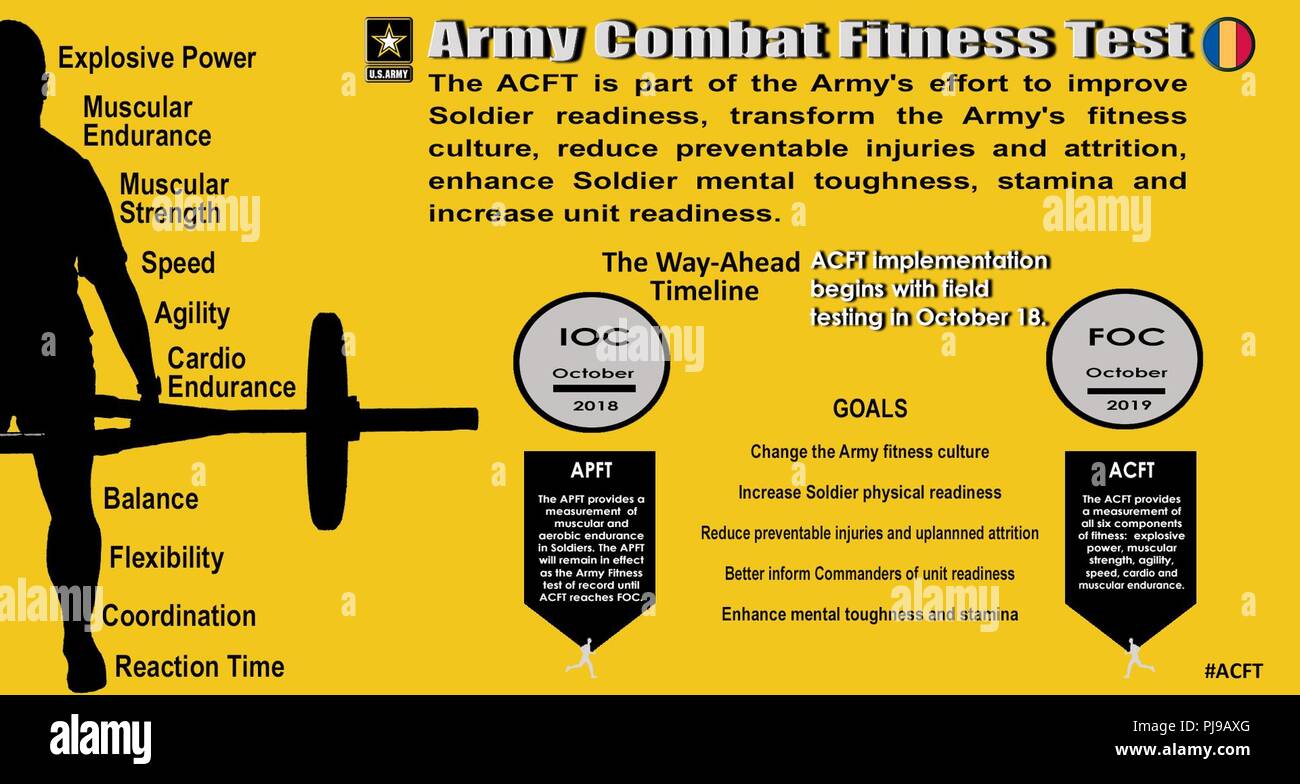
The Army ACFT Fitness Test (ACFT) replaced the older Army Physical Fitness Test (APFT) to better reflect combat readiness. Unlike the APFT, which emphasised running, sit-ups, and push-ups, the ACFT evaluates a soldier’s total-body fitness through six events that test strength, endurance, power, and mobility.
Key points of the ACFT:
- Purpose: Measures combat-relevant physical performance.
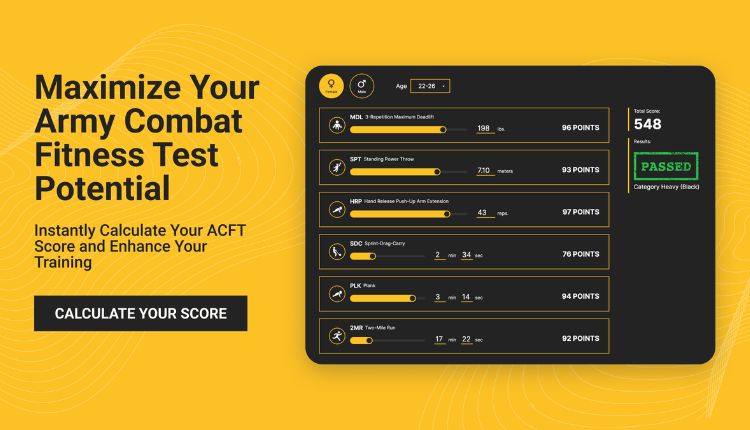
- Events: Deadlift, Standing Power Throw, Hand-Release Push-ups, Sprint-Drag-Carry, Leg Tuck or Plank, and 2-Mile Run.
- Scoring: Points are awarded for performance in each event; 360 points is the maximum score.
- Flexibility: Allows modifications for medical conditions or limitations.
The ACFT is designed to ensure soldiers are physically capable of handling combat tasks, reducing injuries and increasing operational effectiveness. The emphasis is on functional movements that mirror battlefield activities, making it more relevant for real-world scenarios compared to the APFT. Soldiers must train in all aspects of fitness: strength, power, agility, and endurance. The test also encourages lifelong fitness habits, as maintaining readiness is critical for military careers.
Test Events: Army ACFT
The Army ACFT consists of six core events, each designed to measure a distinct physical attribute. Soldiers must perform all events in a set order within two hours.
- 3-Repetition Maximum Deadlift: Evaluates lower body and grip strength.
- Standing Power Throw: Tests explosive power using a 10-pound medicine ball.
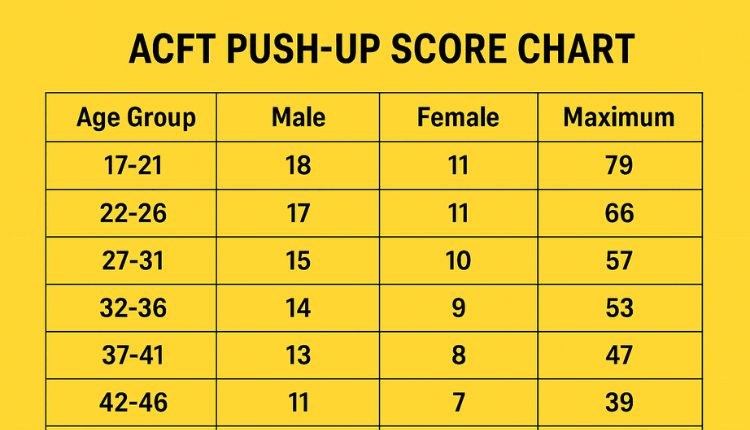
- Hand-Release Push-Ups: Measures upper body endurance.
- Sprint-Drag-Carry: Combines sprinting, dragging a sled, and carrying kettlebells to test speed and endurance.
- Leg Tuck or Plank: Measures core strength; soldiers can choose based on ability.
- 2-Mile Run: Evaluates cardiovascular endurance.
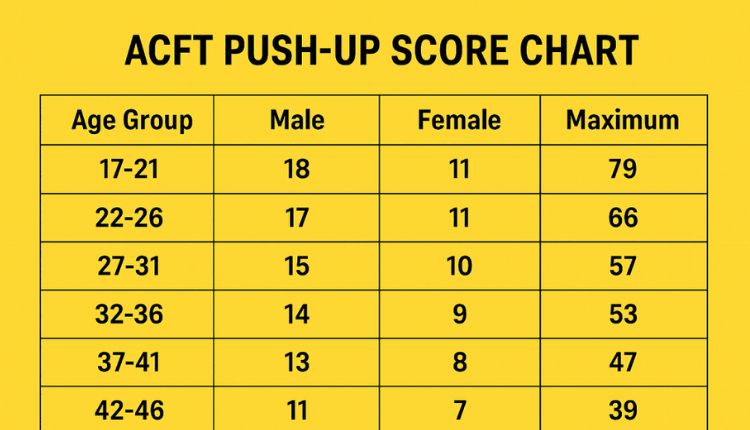
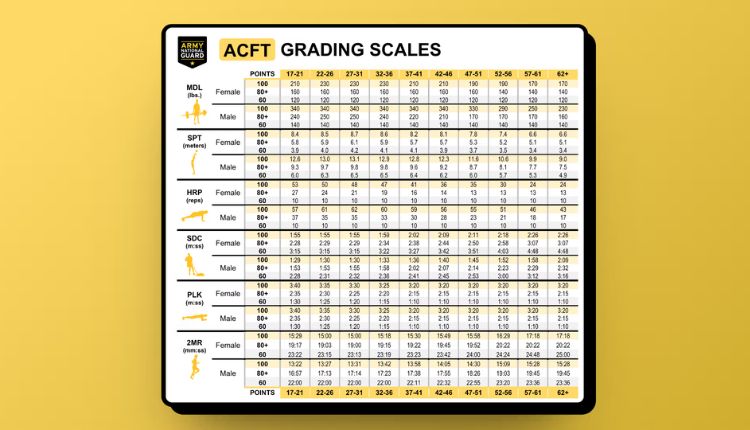
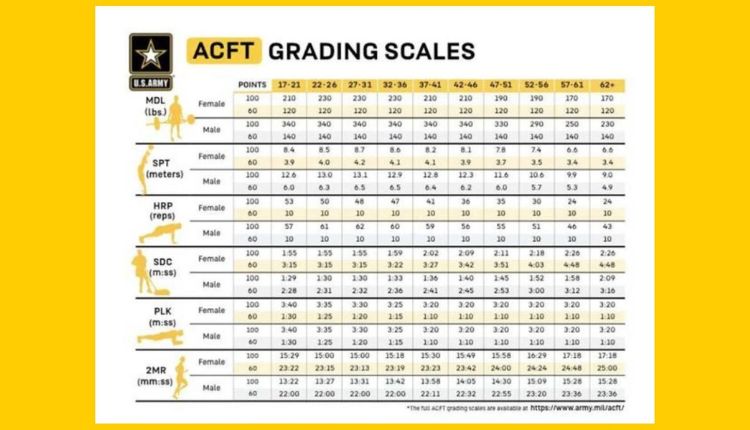
Each event has specific standards based on age and gender, although the Army is moving toward a gender-neutral scoring system. Soldiers need to practise each event regularly to maximize performance. Integrating strength and conditioning with aerobic training is essential for passing the ACFT with high scores. Proper technique and safety are also emphasised to prevent injuries during heavy lifts or sprint-drag-carry sequences.
Scoring System
The Army ACFT uses a points-based scoring system, unlike the pass/fail system of the APFT. Each event is scored out of 100 points, with Army ACFT a total maximum score of 600 points for the original 6-event ACFT.
- Minimum standards: Soldiers must meet a minimum score in each event to pass.
- Points allocation: Performance above the minimum earns more points; lower performance reduces points.
- Scoring tiers: Outstanding, Satisfactory, and Needs Improvement.

The scoring system is designed to encourage overall fitness rather than specialising in one event. Soldiers are rewarded for well-rounded performance, reflecting combat readiness. Additionally, the ACFT allows flexibility for those with temporary or permanent limitations, ensuring fairness while maintaining rigorous standards. Keeping a log of personal scores helps track improvement and identify weak areas for targeted training.
Training Tips
Effective Army ACFT training requires a combination of strength, endurance, and mobility exercises. Soldiers should adopt a structured Army ACFT training plan that targets all six events.
Key training strategies:
- Strength Training: Squats, deadlifts, kettlebell swings, and push-ups.
- Power Development: Medicine ball throws, plyometrics, and sprints.
- Endurance Conditioning: Interval runs, long-distance running, and ruck marches.
- Core Stability: Planks, leg raises, and rotational exercises.
Consistency is crucial. Training should include progressive overload to gradually increase weights and intensity. Recovery, nutrition, and flexibility exercises also play a role in reducing injuries. Integrating event-specific drills, such as sled drags and leg tucks, ensures practical preparation. Soldiers may also benefit from tracking performance improvements weekly, setting achievable goals for each event.
Common Mistakes
Many soldiers struggle with the Army ACFT due to common training errors or misunderstanding the test requirements. Avoiding these mistakes can improve performance and reduce injury risk.
- Ignoring event-specific training: Only running or lifting won’t suffice.
- Neglecting mobility and flexibility Can lead to poor performance or injury.
- Improper technique: Especially during deadlifts and sled drags.
- Skipping recovery: Overtraining reduces strength gains.
Understanding proper form, pacing during the 2-mile run, and using correct lifting techniques is essential. Soldiers should focus on weaknesses rather than overtraining strengths. Consulting with a fitness professional or following Army ACFT-specific programmes helps correct mistakes and maximize scores. Regular assessments allow soldiers to refine their training plans and track improvement across all six events.
Equipment Needed
Certain events in the Army ACFT require specific equipment, which soldiers must be familiar with to perform effectively.
- Hex bar or trap bar: For the deadlift event.
- 10-pound medicine ball: For standing power throw.
- Kettlebells or sled: For sprint-drag-carry.
- Pull-up bar or mat: For leg tucks or plank variations.
- Running shoes: For the 2-mile run.
Using proper gear ensures safety and a realistic simulation of test conditions. Soldiers training at home or gyms may need alternative equipment but should replicate weights and distances accurately. Correct footwear and protective gear reduce injury risk during high-intensity events, while practising with official ACFT equipment familiarises soldiers with event mechanics and standards.
Benefits of ACFT
The Army ACFT is more than a test—it promotes overall fitness and readiness. Beyond scoring points, it enhances a soldier’s combat effectiveness and personal health.
Benefits include:
- Functional strength: Prepares soldiers for lifting, carrying, and manoeuvring in combat scenarios.
- Improved endurance: Cardiovascular fitness reduces fatigue during long missions.
- Injury prevention: Balanced training strengthens muscles and joints.
- Motivation: Tracking performance encourages continual improvement.
The ACFT encourages soldiers to adopt a holistic approach to fitness. Emphasis on strength, power, mobility, and endurance ensures soldiers are not just capable of passing a test but also performing demanding physical tasks in the field.
Preparing for the test day
Successfully performing the Army ACFT requires more than just training—it’s strategic preparation for test day.
- Rest: Get enough sleep 48 hours before the test.
- Nutrition: Eat balanced meals; avoid heavy or fatty foods before the test.
- Warm-up: Dynamic stretching and light cardio reduce the risk of injury.
- Mental Preparedness: Visualise the effective execution of each event.
Early arrival allows familiarisation with the test area and equipment. Proper pacing, breathing techniques, and maintaining focus during transitions between events can significantly improve scores. Soldiers should also stay hydrated and wear comfortable, non-restrictive clothing to maximize mobility and performance. Mental and physical preparedness reduces stress and ensures consistent performance of all ACFT actions.
Conclusion
The Army ACFT Fitness Test (ACFT) is a comprehensive assessment of a soldier’s physical ability that emphasizes functional fitness over traditional metrics. Success requires understanding testing events, implementing effective training strategies, and mentally and physically preparing for test day.
By focusing on strength, endurance, power and mobility, Soldiers increase not only their test performance but also their operational readiness and long-term health. ACFT represents a modern approach to military fitness that ensures soldiers are ready for the physical demands of combat.
Frequently asked questions
Q1: How often is ACFT performed?
A: Soldiers typically take the Army ACFT once a year, although some units may require semiannual tests.
Q2: Can women and men have different standards?
A: The Army is moving toward a gender-neutral scoring system, but there may be temporary adjustments.
Q3: What is the minimum score to pass?
A: Soldiers must meet minimum standards in all six events; usually, 60 points are required per event.
Q4: Can ACFT be done in parts?
A: Normally, all events are completed in one session, but there are exceptions for medical or logistical reasons.
Q5: How can I quickly improve my ACFT score?
Answer: Focus on weak events, practise proper technique, incorporate strength and conditioning, and maintain proper nutrition and rest.