ACFT Events
These events are not just about passing the test; it’s about building a soldier’s ability to perform under pressure in challenging environments.
ACFT events (Army Combat Fitness Test events) are designed to measure a soldier’s overall physical fitness in a more realistic and combat-orientated manner compared to older fitness tests. The ACFT replaced the traditional APFT (Army Physical Fitness Test) to better reflect the physical demands soldiers face in real-world missions.
Introduction to ACFT events
Unlike previous fitness assessments, ACFT events focus on functional fitness. This means that the exercises mimic real combat tasks such as lifting heavy equipment, dragging wounded soldiers and sprinting under load. For this reason, the test is more complex and demanding.
Key features of ACFT include the following:
- Whole body strength assessment
- Cardiovascular Endurance Testing
- Explosive force measurement
- Assessment of agility and coordination
- Core stability and muscular endurance
Understanding ACFT is essential for anyone preparing for military service or trying to improve their overall fitness. Each event requires specific training techniques and success depends on consistent preparation.
In this guide, we’ll explore all ACFT in detail, including how they work, scoring systems, and the best ways to effectively prepare for each one.
Overview of Six ACFT events
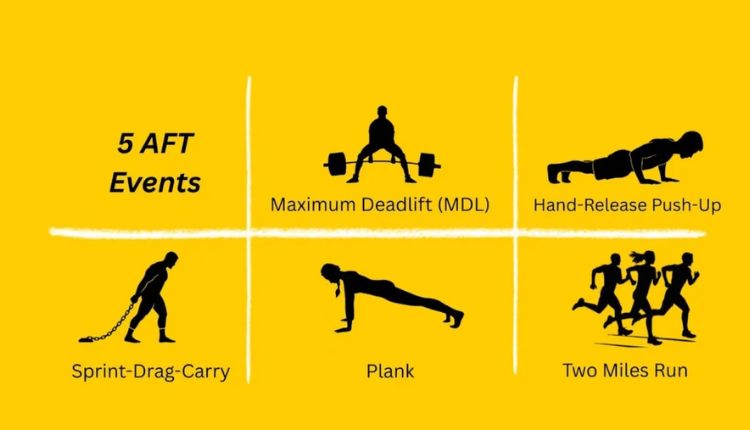
ACFT events consist of six separate actions, all performed in a specific order. Each event is designed to test a different aspect of physical fitness and provide a balanced assessment of a soldier’s abilities.
The six ACFTs are:
- Deadlift (MDL)
- Standing Throw (SPT)
- Hand Release Cranks (HRP)
- Sprint-Drag-Carry (SDC)
- Plank (PLK)
- Two Mile Run (2MR)
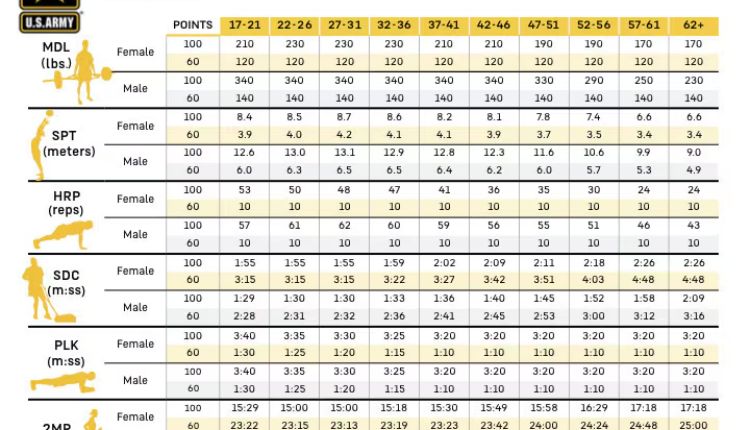
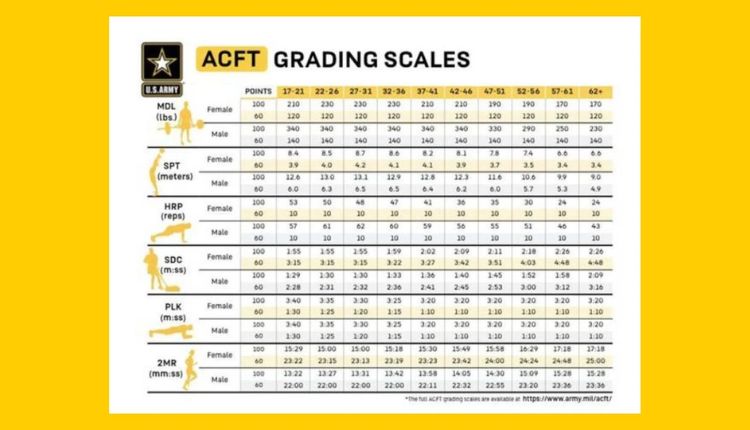
Each event has its own scoring system and soldiers must achieve a minimum score in each category to pass the test. The total score is calculated by combining the points from all six events.
The sequence of events is important because fatigue increases as the test progresses. For example, after completing the Sprint-Drag-Carry, which is extremely intense, participants must still perform core exercises and long-distance running.
An ACFT is usually performed outdoors and requires specific equipment, such as the following:
- Hexagonal bars and weights
- Medicine balls
- Towing sled
- Cones for sprint training
These events aim to simulate real combat situations. For example, a sledge pull mimics rescuing a wounded soldier, while a deadlift represents lifting heavy equipment.
Preparing for ACFT requires a structured training plan that includes strength training, cardio and range of motion exercises. Understanding the structure of the test helps candidates focus on each area effectively.
Deadlift (MDL): The Foundation of Strength and Power
The deadlift is the first and one of the most important actions of the ACFT. It measures lower body strength, grip strength and overall strength. Soldiers are required to lift a hexagonal bar loaded with weights from the ground to a standing position.
Competitors perform three repetitions of the deadlift and the maximum weight lifted determines their score. Proper form is critical because improper technique can lead to injury and reduced performance.
The deadlift primarily focuses on:
- Hamstrings
- Glutes
- Lower back
- Core muscles
To perform a deadlift correctly, soldiers must keep their back straight, engage their core, and drive their legs through. This ensures maximum efficiency and safety during lifting.
Training for this ACFT event should include:
- Progressive Weightlifting Programs
- Core strengthening exercises
- Grip strength training
- Movement exercises for hips and hamstrings
Common mistakes include rounding the back, lifting too quickly, and not engaging the core. By avoiding these mistakes, you can significantly improve performance.
The deadlift is essential because it reflects real tasks such as lifting heavy equipment, carrying ammunition or moving obstacles on the battlefield. A strong deadlift performance sets the tone for the rest of the ACFT events.
Standing Throw (SPT): A Measure of Explosive Power
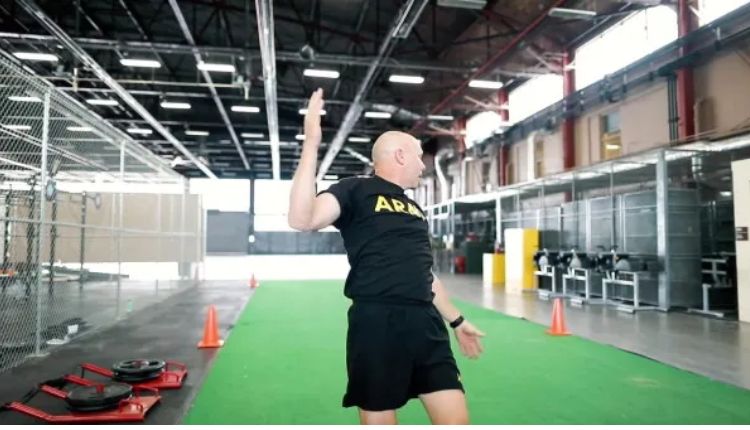
The Standing Power Throw tests explosive strength, especially in the upper body and core. In this case, soldiers throw a 10-pound medicine ball backwards over their heads as far as possible.
This movement requires coordination, timing and strength. The distance the ball travels determines the score, so technique is extremely important.
Key muscles involved include:
- Shoulders
- Core
- Hip flexors
- Legs
To maximise power, soldiers must generate power from the lower body and transfer it through their core into the throw. Correct posture and arm movement are important.
Training tips for this ACFT event include the following:
- Medicine ball throws
- Plyometric exercises
- Core strengthening exercises
- Explosive lifting techniques
One of the biggest challenges at this event is mastering the technique. Many beginners rely only on arm strength, but the key to success is using the whole body.
This event simulates real-world tasks such as quickly throwing equipment or lifting objects. It also helps improve coordination and reaction time.
Consistent practice and proper form can significantly increase throw distance, leading to higher scores in these ACFT events.
Push-ups (HRP): Upper Body Endurance
The Hand-Release Push-Up is a modified version of the traditional push-up. In this ACFT events action, Soldiers must lower their bodies to the ground, lift their hands off the floor, and then push back up.
This variation ensures a full range of motion and eliminates momentum, making the exercise more challenging. The total number of correct repetitions determines the score.
Targeted muscles include:
- Chest
- Shoulders
- Triceps
- Core
Proper form is essential. Soldiers must maintain a straight body line and avoid sagging hips or raised backs.
Effective training strategies include:
- Standard handles
- Crank incline and decline
- Tricep dips
- Core stabilisation exercise
The hand release component forces participants to reset after each repetition, increasing difficulty and ensuring proper technique.
This ACFT event reflects tasks such as pushing obstacles or getting off the ground under load. It emphasises muscular endurance, which is key in long-term combat situations.
Improving performance requires regular exercise, proper recovery, and a focus on form rather than speed.
Sprint-Drag-Carry (SDC): A Test of Agility and Endurance
Sprint-Drag-Carry is one of the most intense ACFT events. It measures agility, speed and muscular endurance through a series of movements performed on a 25-metre track.
The event includes:
- To sprint
- Pulling the sled
- Side mixing
- Carrying kettlebells
- Final sprint
This combination of exercises simulates real combat scenarios where soldiers must move quickly while carrying heavy loads.
Key physical attributes tested include:
- Anaerobic endurance
- Coordination
- Strength under fatigue
Training for this event should involve:
- Interval sprint training
- Sled pulls
- Agility drills
- Functional strength workouts
The SDC is physically demanding and requires mental toughness. Fatigue builds quickly, making pacing and technique critical.
This event is particularly important because it closely mirrors battlefield conditions, where soldiers must perform multiple tasks in quick succession.
Improving performance in the Sprint-Drag-Carry requires a combination of speed training and strength conditioning.
Plank (PLK): Core Stability and Endurance
The Plank action replaced leg tucks in ACFT events and focuses on core strength and endurance. Soldiers must hold the plank position as long as possible.
Proper plank form includes the following:
- Straight alignment of the body
- Core muscles involved
- Neutral neck position
The duration of possession determines the score, so persistence is a key factor.
Muscles involved include:
- Abdomen
- Lower back
- Shoulders
- Glutes
Training methods for this ACFT event include the following:
- Static boards
- Side planks
- Loaded planks
- Core strengthening exercises
The plank is essential because core strength supports all other movements in ACFT. A strong core improves balance, stability and overall performance.
This action also helps prevent injuries by strengthening the muscles that support the spine.
Consistent core training and proper technique can significantly increase plank duration and overall ACFT performance.
Two Mile Run (2MR): Cardiovascular Endurance
The final event of the ACFT is the Two Mile Run, which tests cardiovascular endurance and mental stamina. After completing the previous events, the soldiers must run two miles as fast as possible.
This event is challenging because it comes at the end of the test when fatigue is already high.
Key success factors include the following:
- Stimulation strategy
- Breath control
- Mental toughness
Training for a two-mile run should include the following:
- Long-distance running
- Interval training
- The pace is running
- Recovery strategy
Running is essential because endurance is a key part of military readiness. Soldiers often need to travel long distances under challenging conditions.
Improving performance requires consistent cardio training and proper nutrition.
A two-mile run completes the ACFT by ensuring Soldiers have both strength and endurance.
What’s Next?
ACFT events provide a comprehensive assessment of a soldier’s physical fitness. Each action plays a vital role in measuring different aspects of performance, from strength and power to endurance and agility.
Success in ACFT requires dedication, consistency and a well-rounded training approach. Focusing on all six events ensures balanced development and better overall results.
By understanding each event and training accordingly, candidates can improve their scores and build the physical abilities needed for real-world challenges.
Frequently Asked Questions
What are the six ACFT events?
The six events are the Deadlift, Standing Throw, Hand Release Push-ups, Sprint-Drag-Carry, Plank and the Two Mile Run.
How is the ACFT evaluated?
Each event is scored individually and the total score is the sum of all six events.
Is the ACFT harder than the APFT?
Yes, the ACFT is more challenging because it tests more aspects of fitness, not just endurance.
How can I prepare for ACFT?
A combination of strength training, cardio training and functional exercises is the best approach.
How often should I train for ACFT?
Training 4-5 days a week with a balanced programme is ideal for improvement.