Army ACFT Standards
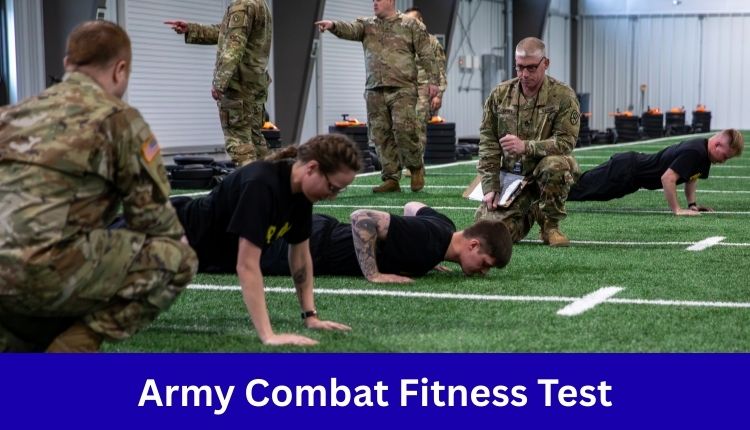
The ACFT, which replaces the older APFT (Army Physical Fitness Test), aims to better reflect combat readiness by testing functional fitness. Unlike traditional fitness tests focused mainly on endurance, the ACFT measures strength, power, speed, and agility.
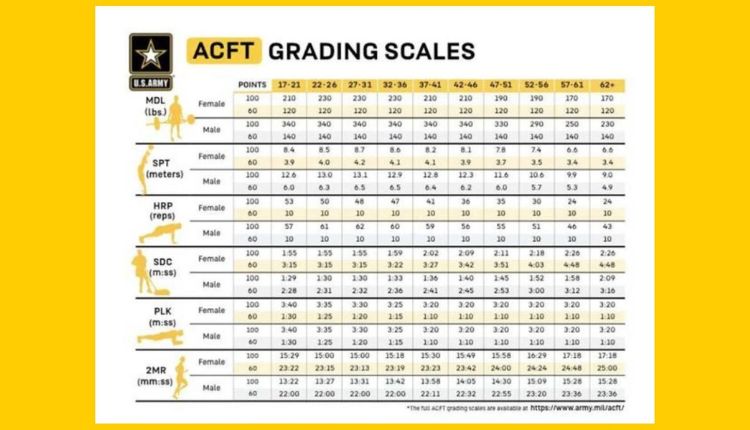
The Army ACFT standards consist of six events: 3-rep max deadlift, standing power throw, hand-release push-ups, sprint-drag-carry, leg pull or plank, and a two-mile run. Each event has a scoring standard based on gender and age to ensure fairness while maintaining combat effectiveness. Soldiers must pass all events to meet a minimum standard, although higher performance is rewarded with more points.
Introduction to Army ACFT standards
ACFT is also aligned with the Army’s Holistic Health and Fitness programme, which emphasizes the importance of nutrition, recovery and mental toughness in addition to physical performance. Soldiers are encouraged to train using functional exercises such as squats, lunges, push-ups, kettlebell swings and sprint drills.
Additionally, the Army ACFT standards are designed to reduce the risk of injury compared to the APFT by focusing on balanced, full-body workouts that mimic fighting movements. By emphasizing multi-muscle coordination and strength, soldiers improve not only their fitness scores but also their readiness for battlefield tasks.
The Army continually updates ACFT standards based on research and Soldier feedback, ensuring the test reflects realistic combat needs. Leaders are also trained to monitor performance and provide guidance, ensuring that every Soldier has the opportunity to meet or exceed the required standards.
Overview of ACFT events
The Army ACFT standards consist of six actions, each designed to measure different aspects of functional fitness:
- 3-Rep Maximum Deadlift (MDL): Tests lower body strength using a hex bar. Soldiers lift the maximum weight three times.
- Standing Power Throw (SPT): Measures explosive power by throwing a 10-pound medicine ball backward overhead.
- Hand-Release Push-Ups (HRP): Tests upper-body endurance, requiring soldiers to lower their chest to the ground, raise their arms briefly, and then push back up.
- Sprint-Drag-Carry (SDC): Assesses muscular endurance and speed, includes a combination of sprints, sled drags, side shuffles, and kettlebell carries.
- Leg Tuck or Plank (LT/KP): Assesses core strength by tucking the legs suspended from a bar or plank for a period of time.
- Two Mile Run (2MR): Measures aerobic endurance by running two miles as fast as possible.
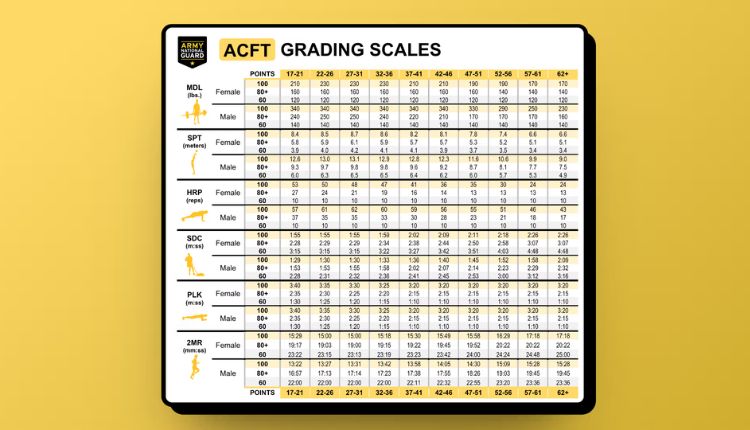
Each event has minimum and maximum scoring criteria with points ranging from 60 (minimum) to 100 (maximum) per event. Soldiers must score at least 60 points per competition to pass. Advanced scoring is designed to reward soldiers who exceed basic standards and provide incentives for elite performance.
Preparation for these events includes a combination of strength training, cardiovascular exercise and functional movement exercises. Soldiers are encouraged to focus on weaknesses while maintaining overall fitness to achieve a balanced performance.
The combination of events ensures that Army ACFT Standards soldiers are not only physically fit but also combat-ready, able to lift, run, carry and withstand pressure. Variety also reduces monotony in training and promotes holistic fitness rather than just endurance or strength alone.
Scoring standards
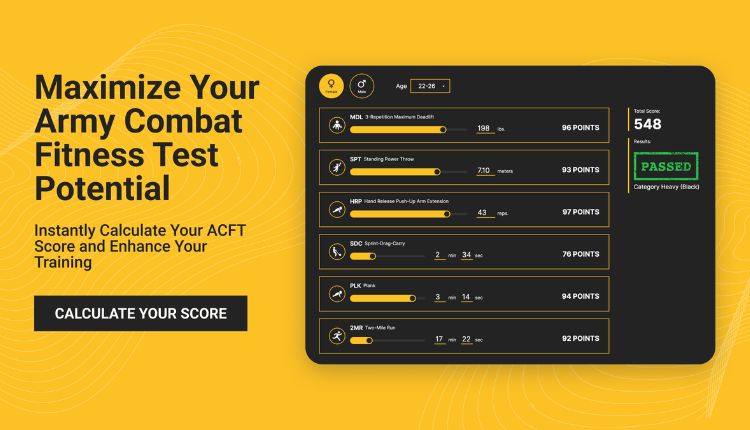
Scoring for the Army ACFT standards is based on a 600-point system, with 100 points allocated to each event. The minimum score for graduation is 360, but different professional specialisations may have higher standards.
- 60 points per event: Minimum standard for passing
- 70-79 points: Above average
- 80-89 points: Excellent
- 90-100 points: Excellent
Scoring varies depending on the soldier’s age and gender to maintain fairness. For example, a 25-year-old man may have a higher deadlift weight requirement than a 45-year-old woman, but both have the same scoring potential.
High scores in events like the deadlift and sprint-drag-carry reflect strength and functional fitness, while the two-mile run and leg pull test test endurance and core stability. Balanced performance across all events is critical because excelling in one event cannot compensate for poor performance in another.
Leaders closely monitor scores to identify trends in fitness performance and areas where Soldiers may require additional support. Army-wide analyses monitor ACFT trends to ensure readiness standards remain aligned with warfighting requirements.
Soldiers are encouraged to record their ACFT scores, train progressively, and seek guidance from Army fitness specialists to improve scores over time. Regular practice ensures consistent adherence to standards without the risk of injury.
Training tips: Army ACFT standards
Effective training for Army ACFT standards combines strength, endurance and agility training. Top tips include:
- Strength training: Focus on deadlifts, squats, push-ups and pull-ups to improve core and upper body strength.
- Cardio Exercise: Incorporate running, interval sprints, and rowing for cardiovascular endurance.
- Functional Movements: Kettlebell swings, medicine ball throws, and sled pulls mimic combat tasks.
- Core Stability: Planks, leg raises, and crunches strengthen the core for leg pulls and SDC.
- Flexibility and recovery: Stretching, yoga and foam rolling reduce the risk of injury and improve performance.
Consistency is critical; soldiers Army ACFT Standards should train 4-6 times a week, alternating strength and endurance training. Periodisation, where training intensity varies each week, helps prevent burnout and promotes progressive improvement.
Nutrition and hydration also play a vital role. A balanced diet with enough protein, carbohydrates and fats supports training and aids recovery. Sleep is equally important because tired soldiers perform poorly in high-intensity events.
Additionally, performance monitoring using logs or wearables can identify strengths and weaknesses. Soldiers should regularly simulate ACFT events to practise technique and pacing. Leaders can guide soldiers through personalised programmes to address weak areas without overtraining.
By combining functional strength, cardiovascular fitness, and recovery strategies, Soldiers can achieve consistent success in all six ACFT events while reducing the risk of injury.
Common mistakes
Even trained soldiers sometimes struggle with Army ACFT standards due to common mistakes:
- Neglecting Core Strength: Many people fail at the leg tuck or plank due to insufficient core training.
- Overtraining: Excessive intensity without recovery leads to fatigue and injury.
- Bad technique: An incorrect deadlift or pull-up lowers your score and increases the risk of injury.
- Ignoring Weak Events: Soldiers may excel at running but neglect SDC or Strength rolls.
- Inconsistent training: Sporadic training does not prepare soldiers for the cumulative demands.
To avoid these pitfalls, soldiers should perform balanced training, focusing on form and gradually increasing intensity. Using the right equipment and consulting with fitness specialists increases safety and performance.
Recovery strategies such as Army ACFT Standards stretching, hydration, and sleep are essential to prevent overtraining. Additionally, tracking progress through ACFT practice tests helps identify weak points before official testing.
Leaders play a critical role in preventing errors by offering guidance, monitoring Soldier training, and providing resources for operational fitness. Peer support and group exercises also promote consistency and accountability.
By proactively addressing these common mistakes, Soldiers can achieve higher scores while maintaining long-term readiness and overall health.
Advantages of ACFT
Army ACFT standards offer several benefits beyond passing a fitness test:
- Enhanced Combat Readiness: Soldiers develop strength, speed, and endurance appropriate for battlefield tasks.
- Reduced risk of injury: Functional training builds balanced muscles and prevents repetitive strain injuries.
- Holistic Fitness: Promotes strength, endurance, agility and mental toughness.
- Motivation and Goal Setting: Soldiers strive for higher scores, promoting discipline and commitment.
- Army-wide performance tracking: Data-driven insights help leaders effectively support Soldier fitness.
ACFT’s holistic approach promotes long-term health, reduces injuries and improves soldiers’ quality of life. By incorporating strength and functional fitness, Soldiers maintain operational readiness while increasing overall well-being.
Additionally, soldiers who excel at Army ACFT standards often report increased self-confidence, better posture, and improved energy levels. These benefits extend into everyday life and professional duties, making ACFT a valuable part of career development in the military.
The Bottom Lines
Army ACFT standards set the modern benchmark for Soldier fitness, reflecting the requirements of combat and operational readiness. By testing strength, endurance, agility and functional fitness, the ACFT ensures that Soldiers are prepared for the physical challenges of military service.
Success in the ACFT requires consistent training, attention to technique, and a focus on recovery and nutrition. Soldiers who understand the scoring system, prepare for every eventuality, and address weaknesses are more likely to achieve higher performance and maintain long-term health.
Finally, the ACFT is not just a test; it is a tool for developing stronger, more resilient and combat-ready Soldiers that aligns with the Army’s holistic approach to health and fitness.
Frequently asked questions
Q1: How often is ACFT performed?
The Army ACFT standards is usually conducted annually, although Soldiers may take practice tests more frequently to track progress.
Q2: Can women and men have the same ACFT standards?
Norms vary slightly by gender to account for physiological differences, but the scoring options are the same.
Q3: What happens if a soldier fails an event?
Soldiers can replay failed events for a set amount of time. Failure to meet the minimum score may affect deployment and promotion eligibility.
Q4: Is the ACFT harder than the APFT?
Yes, ACFT is more comprehensive, testing more aspects of fitness than just push-ups, sit-ups and running.
Q5: How can I quickly improve my ACFT score?
Focus on weak events, maintain proper form, use interval and functional training, and ensure proper nutrition and recovery.