ACFT Scoring
The ACFT replaced the older Army Physical Fitness Test and introduced a more comprehensive rating system designed to reflect actual battlefield tasks.
Understanding ACFT scoring is essential for soldiers, recruits, and anyone preparing to enter the military. The scoring system measures performance across six events and awards points based on defined performance standards. Each event has its own scoring scale and the total determines whether the soldier passes or fails.
In this guide, you’ll learn how ACFT works, how each event is measured, and what scores are required to pass.
What is the ACFT score?
ACFT scoring is the method used to evaluate a soldier’s performance during the Army Combat Fitness Test. The test consists of six separate actions, each designed to measure different physical abilities required for combat readiness.
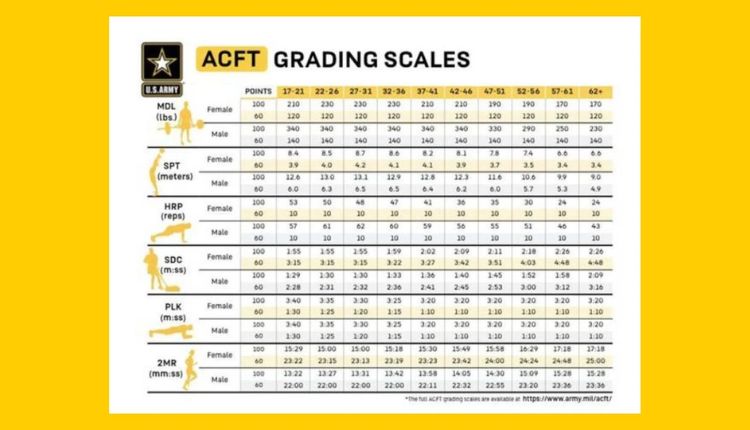
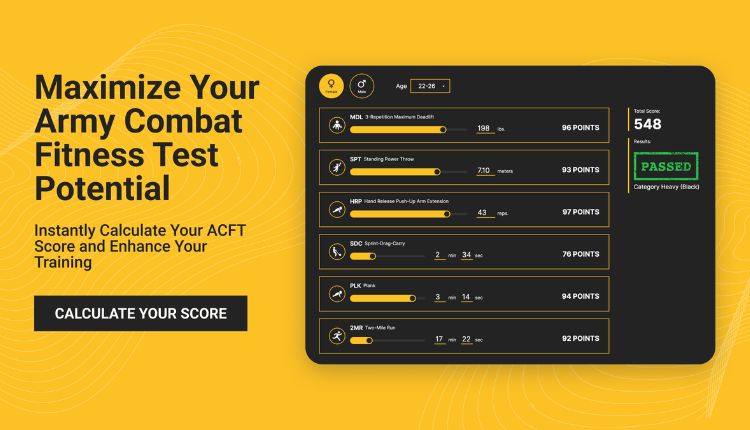
Each event is rated on a scale from 0 to 100 points. A soldier must score at least 60 points in each discipline to pass the test. Since there are six events, the maximum possible score is 600 points.
The six events in ACFT include:
- Three-rep max deadlift
- Standing throw
- Push-Up Manual Release
- Sprint-Drag-Carry
- Plank
- Two-mile run
The purpose of the ACFT system ACFT Scoring is to provide a balanced measure of overall physical fitness. Unlike the older test, which focused mainly on endurance exercises such as push-ups, sit-ups, and running, the ACFT measures strength, power, speed, and muscular endurance.
ACFT’s grading standards also take into account factors such as age and gender categories in newer scoring charts. This helps ensure a fair assessment while maintaining the Army’s operational readiness standards.
Understanding how scoring works helps Soldiers train more effectively and focus on areas for improvement to achieve higher overall scores.
Overview of ACFT assessment events
The ACFT scoring system includes six different events, each representing a specific aspect of the physical performance required in combat situations.
These events simulate actual battlefield movements such as lifting equipment, dragging wounded soldiers, climbing obstacles and sprinting under pressure.
ACFT’s six events include:
- Three Repetition Maximum Deadlift (MDL) – Measures lower body strength and lifting ability.
- Standing Power Throw (SPT) – Tests explosive power with a medicine ball throw.
- Hand-Release Push-Up (HRP) – Měří svalovou vytrvalost horní části těla.
- Sprint-Drag-Carry (SDC) – Tests speed, agility, and anaerobic endurance.
- Plank (PLK) – Measures core strength and stability.
- Two Mile Run (2MR) – Assesses cardiovascular endurance.
Each event is scored independently and the points awarded determine performance standards.
The ACFT scoring system emphasizes functional fitness, meaning exercises that replicate actual combat tasks. For example, the deadlift simulates lifting heavy equipment, while the sprint-drag-carry simulates fast movement in combat conditions.
Another important feature of ACFT is the balanced fitness approach. Soldiers cannot rely on just one area of proficiency to get through. Even if a soldier scores 100 in one discipline, failure in another means failure of the entire test.
Training for ACFT requires a comprehensive programme including strength training, endurance exercise and movement work.
Understanding each event helps Soldiers develop effective training strategies that improve performance and increase overall ACFT scores.
Deadlift Scoring
The 3-Rep Maximum Deadlift (MDL) is the first action in ACFT and focuses on lower-body strength and total-body strength.
In this case, soldiers must lift a hex bar loaded with weights for three repetitions with proper form. The weight lifted determines the score.
Typical scoring ranges include:
- Maximum score (100 points): approximately 340 pounds
- Passing score (60 points): approximately £140
The deadlift event measures the strength required to lift heavy equipment, move boxes of ammunition, or carry wounded soldiers.
Proper technique is essential when performing this exercise. Soldiers must maintain a straight back, engage the core, and use the legs to lift weights safely.
Training for a better deadlift score includes exercises like:
- Dumbbell deadlifts
- Squats
- Romanian deadlifts
- Kettlebell swings
Strength training programmes often emphasise progressive overload, gradually increasing weight over time to improve performance.
Improving lower-body strength can significantly increase a soldier’s ACFT scoring, as the deadlift is one of the highest-rated strength-based actions.
Consistent training, proper nutrition, and recovery are the keys to increasing your lifting capacity and achieving higher scores in this event.
Power Throw Rating
The Standing Power Throw (SPT) measures explosive power and coordination. In this case, soldiers throw a 10-pound medicine ball backwards over their heads for maximum distance.
The distance the ball travels determines the score.
Typical scoring standards include:
- Maximum score: around 12.5 meters
- Pass: around 4.5 meters
A standing power throw mirrors movements such as throwing equipment, jumping over obstacles, or generating explosive ACFT scoring in combat situations.
Technique is very important in this case. Soldiers must use their legs, hips and arms together to generate maximum force.
Key techniques include:
- Squat before throwing
- Exploding up with the hips
- Launching the ball at the correct angle
Training methods that improve the standing power throw include:
- Medicine ball throws
- Squat jump
- Olympic lifts
- Box jumps
These exercises develop the explosive power necessary for many athletic and military tasks.
Many soldiers struggle with this event because the explosive power requires specific training. However, with proper technique and regular practice, performance can be significantly improved.
Push-Up Scoring
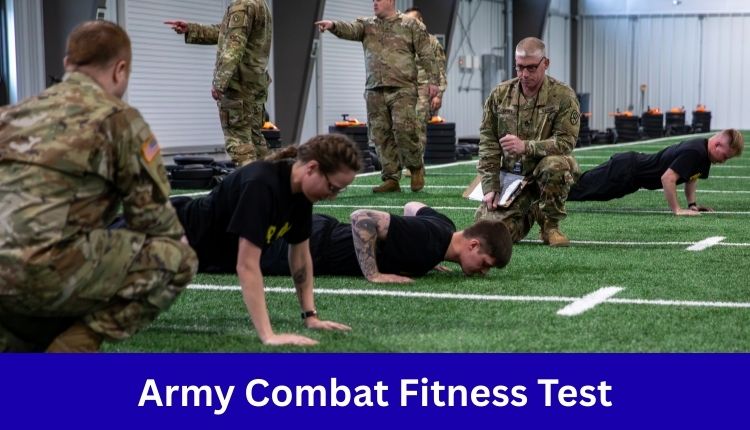
The Hand-Release Push-Up (HRP) is designed to measure upper-body muscular endurance.
Unlike traditional push-ups, this event requires soldiers to lower their chest to the ground, briefly release their arms, and then push back up.
The number of correct repetitions completed in two minutes determines the score.
Typical scoring ranges include:
- Maximum score: about 60 push-ups
- Pass score: about 10 clicks
This action targets muscles such as:
- Chest
- Shoulders
- Triceps
- Core
Correct form is required for each repetition. Soldiers must hold their body straight from head to toe and fully extend their arms overhead.
Training exercises that improve push-up performance include:
- Standard handles
- Bench press
- Tricep dips
- Shoulder presses
Consistency is the key to improving click endurance. Many ACFT scoring incorporate push-up variations into their daily training routines.
Improving upper-body endurance not only increases ACFT scores but also increases overall combat readiness.
Sprint Drag Carry Scoring
The Sprint-Drag-Carry (SDC) event measures speed, agility, and anaerobic endurance.
This event involves completing a 250-metre shuttle consisting of several tasks.
Tasks include:
- To sprint
- Pulling the sled
- Side mixing
- Carrying kettlebells
- Sprint again
The total time required to complete the course determines the score.
Typical scoring standards include:
- Maximum score: about 1 minute 30 seconds
- Pass score: about 3 minutes
Sprint-drag-carry simulates real combat ACFT scoring, such as moving quickly under fire or dragging wounded soldiers to safety.
Training for this event often includes:
- Sprint intervals
- Agility training
- Farmer’s carry
- He pulls the sled
This event is considered one of the ACFT Scoring most physically demanding parts of the ACFT as it combines strength, speed, and endurance.
Improving sprint performance and grip strength can significantly improve scores in this race.
Plank and Run ACFT scoring
The final events in the ACFT scoring assessment measure basic endurance and cardiovascular fitness.
The Plank (PLK) event tests core strength by requiring soldiers to hold a plank position for as long as possible.
Typical scoring standards include:
- Maximum score: about 3 minutes 40 seconds
- Successful composition: about 1 minute 30 seconds
The plank measures the strength of major muscles, such as:
- Abdomen
- Lower back
- Obliques
Core strength is essential for maintaining stability during lifting, running, and fighting movements.
The final event is a two-mile run (2MR), which assesses cardiovascular endurance.
Typical scoring standards include:
- Maximum score: about 13 minutes
- Pass score: about 22 minutes
Running performance is largely ACFT Scoring dependent on endurance training, stimulation strategies and aerobic fitness.
Training techniques include:
- Long-distance running
- Interval training
- The pace is running
- Training on the hill
Combining strong core endurance with excellent cardiovascular fitness allows Soldiers to maximize their overall ACFT score.
ACFT scoring improvement
Improving ACFT scoring requires a balanced fitness programme that focuses on strength, endurance and mobility.
Effective training strategies include:
- After a structured strength training program
- Incorporating sprint and agility training
- Practise ACFT-specific exercises
- Maintaining proper nutrition and hydration
- It allows for sufficient regeneration between training sessions
Soldiers preparing for ACFT often use periodic training programs that gradually increase in intensity over time.
Mobility and flexibility are also important. Stretching and foam rolling can help prevent injury and improve movement efficiency during the test.
Mental preparation also plays a role in ACFT performance. Confidence, focus and discipline help soldiers overcome physically demanding events.
By training consistently and targeting weak points, soldiers can significantly improve their scores and overall fitness.
Conclusion
Understanding acft scoring is essential for anyone preparing for the Army Combat Fitness Test. The system evaluates various aspects of physical fitness, including strength, power, endurance, speed and core stability.
With six different disciplines and a maximum score of 600 points, soldiers must perform well in each category to pass the test.
By focusing on balanced training, proper technique, and consistent practice, individuals can improve their ACFT scores and improve their overall combat readiness.
The ACFT is not just a fitness test—it’s a measure of a soldier’s ability to perform physically demanding tasks in real-world military operations.
Frequently asked questions
What is the minimum score to pass the ACFT?
A soldier must score at least 60 points in each event, resulting in a minimum total score of 360 points.
How many events are there in the ACFT?
The ACFT includes six events that measure different aspects of physical fitness.
What is the highest possible ACFT score?
The maximum total score a soldier can achieve is 600 points.
How often do soldiers take the ACFT?
Most active-duty soldiers take the test twice a year.
Which ACFT event is considered the most difficult?
Many soldiers find the Sprint-Drag-Carry the most challenging because it combines speed, strength and endurance.