ACFT Score Chart
In recent years, the ACFT Score Chart replaced the traditional Army Physical Fitness Test (APFT), which emphasised a more comprehensive assessment of strength, endurance, and overall combat readiness. Understanding the scoreboard is key for anyone who wants to achieve success on the test and maintain optimal fitness levels.
What is ACFT?
The ACFT Score Chart, commonly known as the ACFT, is designed to assess a soldier’s physical abilities in tasks that reflect actual combat situations. Unlike the APFT, which focused primarily on sit-ups, push-ups, and the two-mile run, the ACFT assesses a broader range of physical skills.
This includes muscular strength, anaerobic endurance, power and aerobic capacity. Each test event in the ACFT is scored individually and the ACFT Score Table provides a reference for interpreting these results.
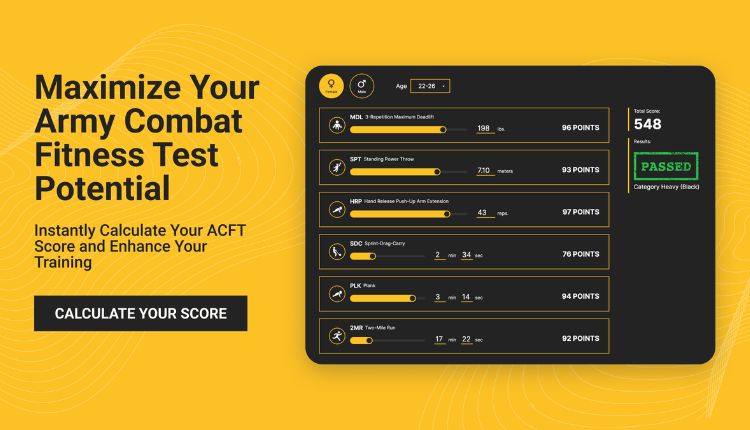
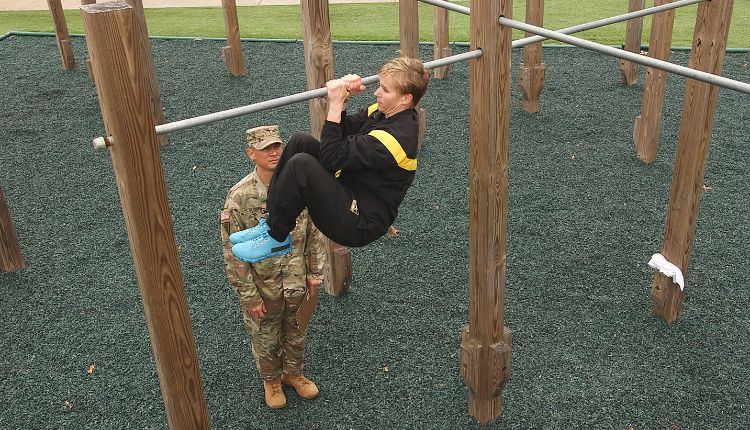
The ACFT consists of six events: deadlift, standing power throw, push-up with hand release, sprint and pull, leg pull or plank, and a two-mile run. Each event has a scoring system that aligns with the requirements of the military occupation and reflects the soldier’s ability to perform in combat scenarios.
Understanding how the ACFT scorecard works allows Soldiers to track progress, identify areas for improvement, and set realistic goals for overall fitness.
How the ACFT Score Chart Works
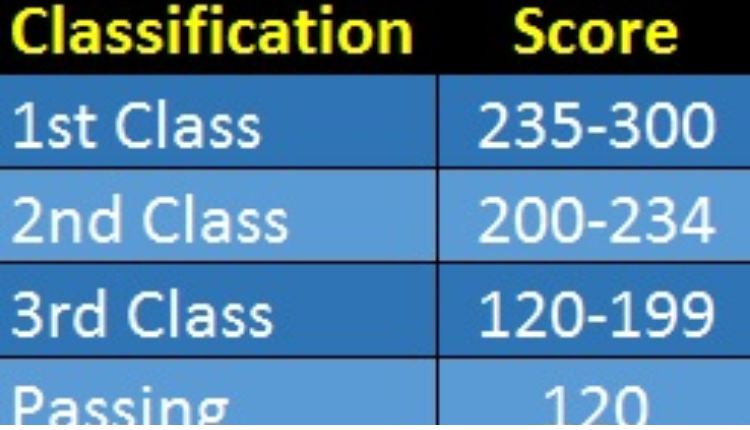
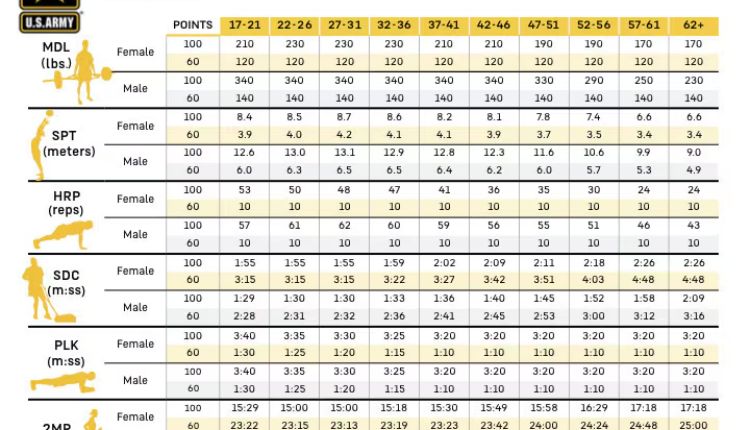
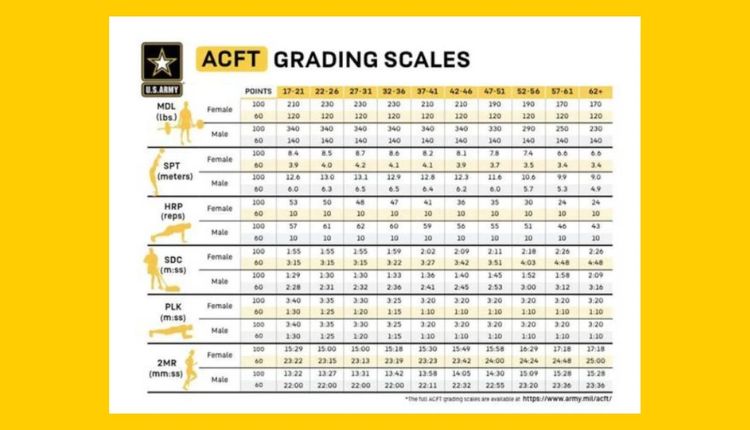
The ACFT Score Chart is designed to convert raw performance metrics into standardised scores that determine a Soldier’s overall fitness rating. Each event has a scoring range from 0 to 100, and the total possible score is 600. A minimum score is required in each event to pass, and higher performance results in higher scores.
The table takes gender and age into account and provides adjusted scoring to ensure fairness across a diverse soldier population. For example, a soldier who completes a certain number of push-ups with a hand release or reaches a certain distance in a standing throw will receive a corresponding score on the table. This standardisation ensures that all soldiers are evaluated consistently and objectively.
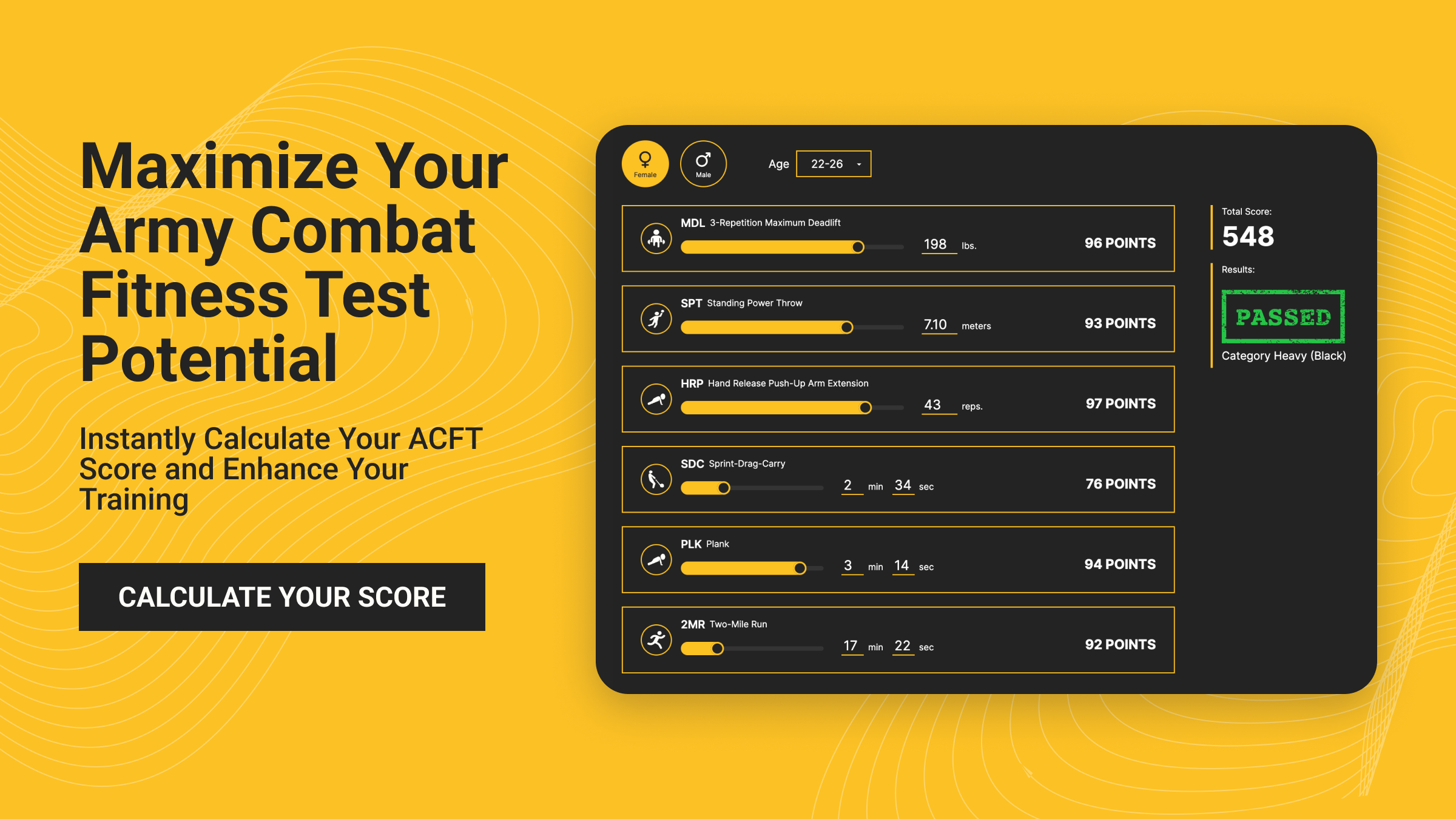
Understanding the ACFT scorecard isn’t just about passing the test; it’s also about gaining insight into your own strengths and weaknesses. Soldiers can identify which physical attributes they need to improve, whether it’s upper body strength, explosive power or cardiovascular endurance. By tracking performance against the chart, Soldiers can tailor their training programmes to address specific deficiencies and improve overall combat readiness.
Meaning of the ACFT Score Table
The ACFT Score Chart plays a key role in shaping Army fitness standards and maintaining operational readiness. Unlike previous fitness assessments, the ACFT provides a more realistic measure of a soldier’s ability to perform in combat situations. Each event is strategically designed to simulate the movements and tasks soldiers may encounter on the battlefield.
For military personnel, scoring high on the ACFT scoreboard can have career implications. Promotion, assignment of duties, and eligibility for certain positions may be affected by ACFT performance. Additionally, the chart serves as a motivational tool that encourages soldiers to maintain high levels of physical fitness and adopt training regimens that address both strength and endurance.
The scoreboard also ACFT Score Chart contributes to the Army’s overall mission of ensuring that Soldiers are physically capable of performing their duties under stressful and demanding conditions. By adhering to standardised scores, the Army can maintain consistency in assessing proficiency levels across units and ranks. This ensures that soldiers are ready for operational requirements, increasing unit effectiveness and readiness.
Factors affecting ACFT scores
Several factors can affect ACFT performance, and understanding them is essential for accurate interpretation of the ACFT score chart. The most obvious factor is physical fitness, but other elements such as nutrition, rest and mental readiness also play a significant role.
The specificity of the training is crucial. Soldiers who focus only on stamina can fight with strength-based actions such as deadlifts or sprint-drags. Conversely, for those who emphasise explosive power, a two-mile run can be challenging. The ACFT scorecard reflects the importance of balanced fitness and rewards Soldiers who demonstrate competency in all six events rather than excelling in just a few.
Age and gender also play a role in performance outcomes. While the ACFT scoring system is designed to be fair, physiological differences can affect the gross results of certain events. However, the score table provides adjusted score ranges to accommodate these variations and ensure fair evaluation for all participants.
Training strategies to improve scores
Improving performance on the ACFT and achieving favourable results on the ACFT score sheet requires a comprehensive approach to fitness. Strength training, cardiovascular conditioning, and flexibility exercises are all important parts of preparation.
Strength-based actions such as deadlifts and leg curls require a combination of muscular endurance and proper technique. Incorporating compound movements, resistance training, and core stabilisation exercises can help soldiers excel in these areas. In addition, strength events such as the standing power throw benefit from plyometric exercises and explosive lifting.
Cardiovascular ACFT Score Chart conditioning is essential for endurance events such as the two-mile run and sprint-drag-carry. Interval training, tempo runs and circuit training can increase aerobic capacity and anaerobic power. The combination of endurance and strength training provides a balanced approach that aligns with the holistic assessment reflected in the ACFT Score Chart.
Rest and regeneration are equally important. Overtraining can lead to reduced performance, fatigue and increased risk of injury. Following a structured training programme that includes rest days, proper sleep, and nutrition helps Soldiers optimise performance and achieve higher scores on the ACFT.
Using the ACFT Score Chart for Goal Setting
The ACFT Score Chart is an invaluable tool for setting realistic fitness goals. By comparing current performance to a graph, Soldiers can identify specific events that require improvement and track progress over time. This data-driven approach enables targeted training, maximising efficiency and results.
Setting goals based on a scoreboard also increases motivation. Soldiers can set short-term goals for individual events while striving for long-term improvements in overall fitness.
The chart can also inform unit-level training programmes. Commanders and fitness instructors can analyse score trends to identify collective weaknesses and design group workouts that address common deficits. This strategic use of the ACFT chart ensures that soldiers are not only improving individually but also contributing to the readiness of their entire unit.
Interpreting Your ACFT Score
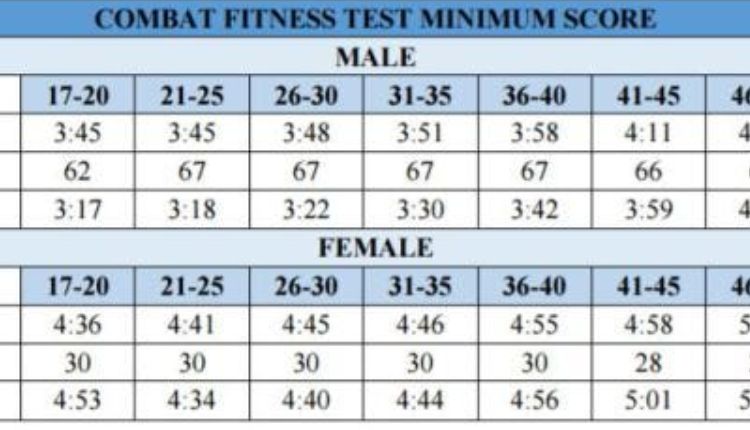
Interpreting the ACFT score chart requires understanding both the raw scores and the minimum standards required for each event. A passing score is not necessarily the same as achieving excellence. Soldiers should aim not only to meet minimum thresholds but also to optimise performance across all events.
The chart allows soldiers to see where they rank relative to peers and provides insight into areas of relative strength and weakness. For example, a soldier may excel in muscular strength but lag in aerobic endurance. Recognising these patterns enables the development of a balanced training regimen that targets underperforming areas while maintaining strengths.
Moreover, the ACFT chart serves as a benchmark for long-term fitness planning. Soldiers can set incremental goals for improving scores over months or years, using the chart as a roadmap to achieve peak physical readiness.
Common Misconceptions About the ACFT Score Chart
Many soldiers and civilians may misunderstand how the ACFT score chart functions. One common misconception is that the ACFT is only for elite athletes or soldiers in combat roles. In reality, the test is designed for all Army personnel, and the scoring chart accommodates diverse fitness levels through standardised scoring adjustments.
Another misconception is that the chart favours strength over endurance. While certain events test power and muscular capability, the ACFT is balanced, ensuring that endurance, agility, and overall fitness are equally important. Understanding the chart clarifies that excelling in one area alone is insufficient for achieving a high overall score.
Some believe that passing the minimum score is enough for success. While this ensures compliance with Army standards, aiming for higher scores on the ACFT chart provides long-term benefits in physical readiness, career progression, and overall health. Recognising the full potential of the chart encourages soldiers to strive for excellence in all events.
The Bottom Lines
The ACFT score chart is more than just a numerical ACFT Score Chart representation of physical performance; it is a vital tool for understanding, tracking, and enhancing a soldier’s fitness level. By interpreting scores accurately, focusing on balanced training, and setting realistic goals, soldiers can achieve success on the ACFT and maintain optimal readiness for operational demands.
The chart’s role extends beyond individual assessment, contributing to unit readiness and the Army’s overall mission of preparedness. For anyone involved in military fitness, mastering the ACFT chart is essential for achieving both personal and professional goals.
FAQs About the ACFT Chart
What does the ACFT chart measure?
The ACFT chart measures performance across six events, including strength, endurance, power, and agility, providing a standardised evaluation of overall fitness.
How is the ACFT scored?
Each event is scored from 0 to 100, with a total possible score of 600. Minimum scores are required in all events to pass, with higher performance yielding higher scores.
Does the ACFT chart adjust for age and gender?
Yes, the chart ACFT Score Chart provides adjusted scoring ranges to ensure fairness and equitable evaluation for all soldiers regardless of age or gender.
Why is the ACFT chart important for soldiers?
It helps soldiers identify strengths and weaknesses, set training goals, and maintain readiness for combat scenarios while influencing career progression and unit effectiveness.
How can I improve my ACFT score?
Balanced training that includes strength, endurance, and power exercises, combined with proper rest, nutrition, and recovery, is key to improving scores on the ACFT chart.