Army ACFT Score Chart
Designed to better assess soldiers’ combat readiness, the ACFT assesses strength, endurance, and overall fitness in a manner that reflects actual battlefield demands. Central to this process is the Army acft scorecard, a tool every Soldier must understand to track progress, prepare for testing, and meet Army standards. This article takes a deep dive into the Army ACFT score chart and explains what it is, how it works, and why it is essential for every soldier.
What is Army ACFT?
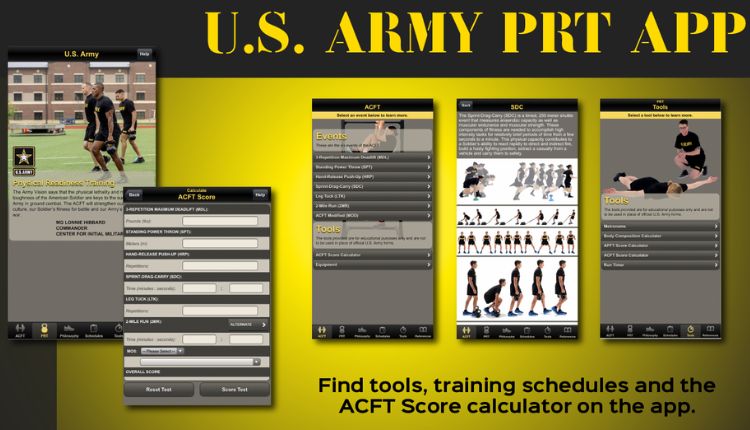
The Army ACFT score chart is the official physical test for US Army soldiers, replacing the older Army Physical Fitness Test (APFT). Unlike the APFT, which focused mainly on push-ups, sit-ups, and the two-mile run, the ACFT evaluates six different events:
- 3 rep maximum deadlift (MDL)
- Standing Throw (SPT)
- Hand Release Push-Up (HRP)
- Sprint-Drag-Carry (SDC)
- Leg Tuck (LTK) or Plank
- 2 Mile Run (2MR)
Each of these events measures a different aspect of fitness, and together they give a comprehensive picture of a soldier’s physical fitness. The army acft score table converts these results into standardised scores for assessment and evaluation.
Understanding the Army ACFT Score Chart
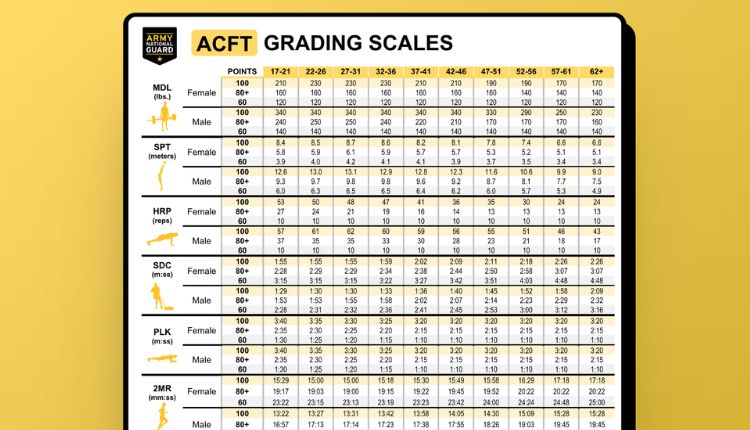
The Army ACFT score chart serves as a guide for soldiers and trainers. Converts raw performance metrics from six events into numerical scores, typically ranging from 0 to 100 per event. Achieving the minimum required score in each discipline is key to passing the test. Scores are also used for promotions, assignments, and overall career progression in the military.
Army ACFT Chart Key Points:
- Scores vary by age and gender, ensuring fair assessment while maintaining standards.
- A minimum score of 60 per event is usually required to pass.
- High performers can achieve a maximum score of 100, demonstrating excellent physical fitness.
- The chart is updated regularly to reflect changes in Army fitness standards.
The Army ACFT chart not only helps soldiers track progress but also identifies strengths and weaknesses in various physical areas.
ACFT Assessment Explained
ACFT scoring may seem complicated at first, but the Army ACFT score chart makes it simple. Each event has a corresponding performance metric that translates into a score:
3 rep maximum deadlift (MDL)
Measures lower body and core strength. Lifting heavier weights results in a higher score. Soldiers must clear at least the minimum requirement based on their category.
Standing Throw (SPT)
Explosivity is tested here. Throwing a 10-pound medicine ball also means a higher score.
Hand Release Push-Up (HRP)
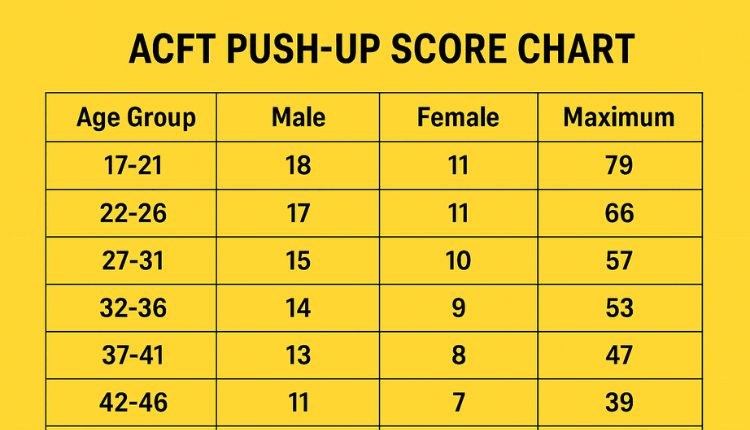
Upper body strength and endurance are assessed. The graph shows the number of push-ups required for minimum and maximum scores.
Sprint-Drag-Carry (SDC)
This event measures speed, agility, and muscular endurance. Faster completion times correspond to higher scores on the Army ACFT score chart.
Leg Tuck (LTK) or Plank
Core strength is key. The number of leg tucks or plank duration is mapped to a score chart.
2 Mile Run (2MR)
Cardiovascular endurance is measured here. Running faster results in a higher score according to the table.
Each event is scored individually and the sum of all six scores gives the total ACFT score.
Using the Army’s ACFT Score Chart for Training
Understanding the Army ACFT score chart is essential for effective training. Soldiers can use the chart to identify areas that need improvement. For example, if a soldier struggles with Sprint-Drag-Carry, targeted exercises like sled drag, sprint intervals, and resistance training can help increase performance.
Practical Tips for Using the Army ACFT Chart:
- Focus on weaker events rather than excel only in strong areas.
- Track weekly improvement on a graph and measure progress.
- Use the chart to set realistic goals for passing or reaching the maximum score.
By strategically training with the Army’s acft scorecard, soldiers can maximize their performance while reducing the risk of injury.
Why ACFT and the Scoreboard Matter
The introduction of the ACFT and the corresponding Army Acft Score Chart is not just about physical fitness; it’s about combat readiness. Army leaders emphasise that the test better reflects the physical demands of a soldier in operational environments. By following the map, Soldiers ensure they are physically prepared for combat tasks such as lifting, carrying, sprinting, and climbing.
The scorecard also provides a standardised yardstick for soldiers across units, ensuring fairness and consistency in grading. Essentially, it helps the military maintain a high standard of physical readiness.
Common misconceptions about Army ACFT score chart
Despite widespread awareness, several misconceptions about the Army ACFT score chart persist:
- Only strong soldiers pass: In reality, strategic training and developing endurance are equally important.
- Age Reduces Scores Drastically: The table adjusts for age and ensures fair grading.
- Plank is optional: While the plank may replace leg tucks for some, it is still scored and essential to the overall ACFT performance.
Clearing up these misconceptions helps Soldiers approach the test with confidence and reduces unnecessary stress.
Track progress with the Army ACFT Chart
One of the most valuable uses of the Army ACFT score chart is for ongoing performance monitoring. Soldiers can keep records of their weekly or monthly results and compare them to a chart to measure improvement.
Small points to remember for tracking progress:
- Consistency is key; regular assessments help identify trends.
- Combine strength, endurance and movement training to improve scores in multiple events.
- Use a chart to celebrate small milestones and increase motivation.
Regular monitoring ensures that soldiers are test-ready and physically fit throughout their service.
Conclusion
The Army ACFT score chart is more than just a scoring tool—it’s a blueprint for physical readiness, career growth, and operational efficiency. By understanding the chart, strategic preparation, and smart training, Soldiers can not only pass the ACFT but also improve their overall health, resilience, and battlefield readiness. With ACFT’s focus on functional fitness, the chart provides a clear and fair measure of success and ensures that all soldiers meet the rigorous requirements of military service.
Frequently Asked Questions about the Army ACFT Chart
Q1: What is the score to pass the ACFT?
A: Soldiers usually need a minimum score of 60 in each event according to the Army ACFT score chart. The total minimum required score is 360.
Q2: How often is the ACFT scored and recorded?
Answer: ACFT scores are recorded during official testing periods, which usually occur annually or as required by unit standards.
Q3: Does age affect my ACFT score?
A: Yes, the Army ACFT chart adjusts performance requirements based on age and gender, ensuring fairness.
Q4: Can I use the plank instead of the leg tuck?
A: Yes, for those unable to perform the leg tuck, the plank is an alternative and is scored accordingly.
Q5: How can I improve my ACFT score?
A: Focused training based on weaker events, consistent exercise routines, and proper nutrition are key strategies for improving ACFT scores, according to the chart.